
Executive Summary
Bathroom lighting problems are often misunderstood as simple visibility issues, but in reality, they directly affect how a person moves, pauses, and stabilizes in one of the highest-risk areas of the home. In many bathrooms, poor lighting shows up through hesitation, reaching for support, or misjudging distance near the toilet or shower. These are early warning signs. Uneven lighting, glare, or poorly placed fixtures can reduce visual clarity and disrupt depth perception—especially during nighttime use. Adjustments like layered lighting, reducing glare, and improving light placement can support safer movement, but effectiveness depends on layout, transitions, and individual mobility.
Introduction
It’s a familiar situation.
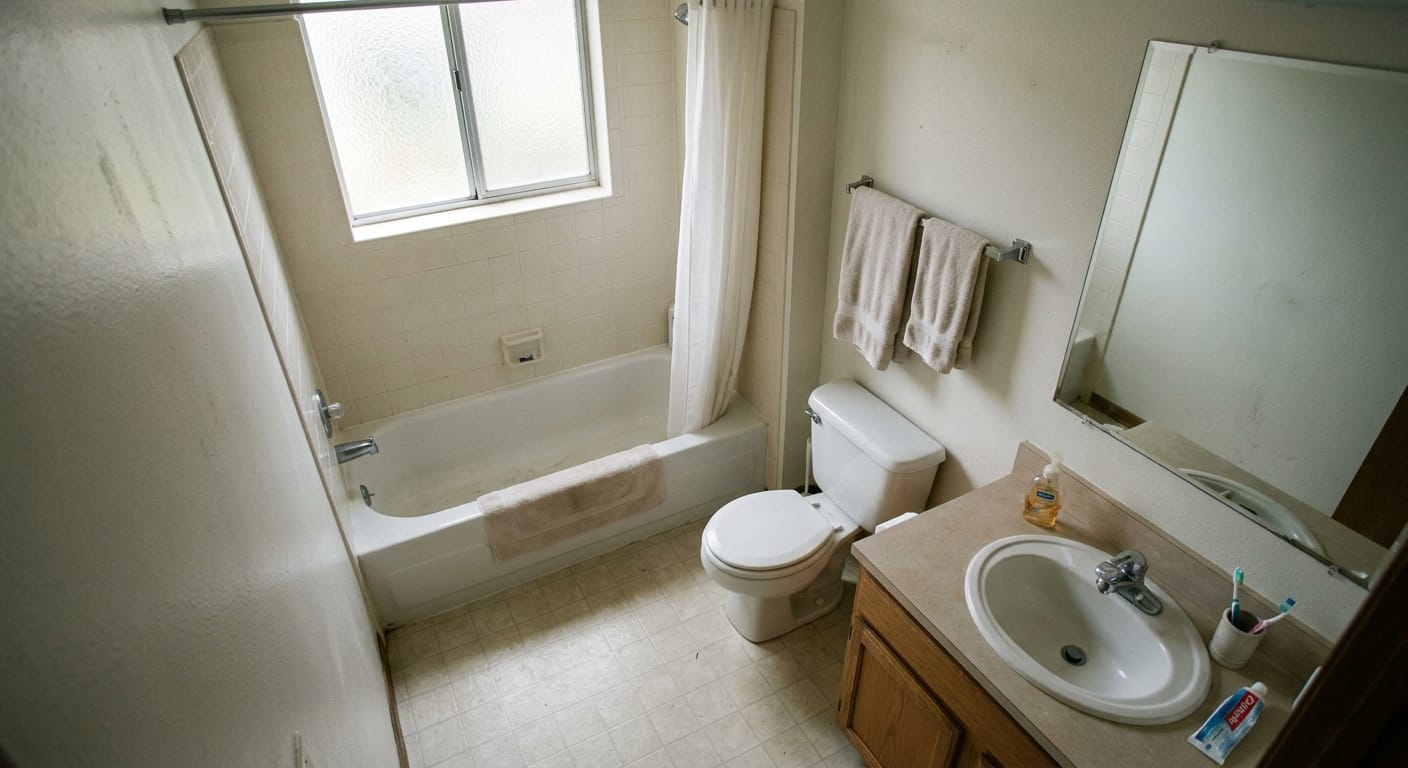
A person wakes up at night, walks down a dim hallway, and reaches the bathroom. The light switch turns on, but instead of clarity, there’s a moment of visual discomfort. The brightness feels uneven. Shadows appear where they shouldn’t. The floor looks slightly different than expected.
There’s a pause.
Not because the space is unfamiliar—but because it’s not visually reliable in that moment.
This is often where risk actually begins.
In many bathrooms, lighting is treated as an afterthought. If the bulb works, the assumption is that the space is safe. But bathroom safety depends less on brightness alone and more on how lighting supports movement—especially during transitions like entering, turning, or sitting.
This is usually overlooked.
And when lighting interacts with other risk factors—like slippery floors or tight layouts—the impact becomes more significant. For example, surface hazards discussed in Best Non-Slip Bathroom Floor Solutions That Actually Work can become far more dangerous when visibility is inconsistent.
AgingAuthority Safety LensBathroom lighting should be evaluated as part of a movement system: visibility, flooring, support placement, and transition zones must work together. A bright bulb alone does not make a bathroom safe if shadows, glare, or poor fixture placement disrupt movement.
Early Signs of Lighting-Related Risk
Before a fall happens, behavior often changes first.
In many homes, these signs are subtle and easy to dismiss. But they are often the earliest indicators that the environment is no longer supporting safe movement.
You might notice:
- Slower movement when entering the bathroom
- Pausing before stepping into the shower
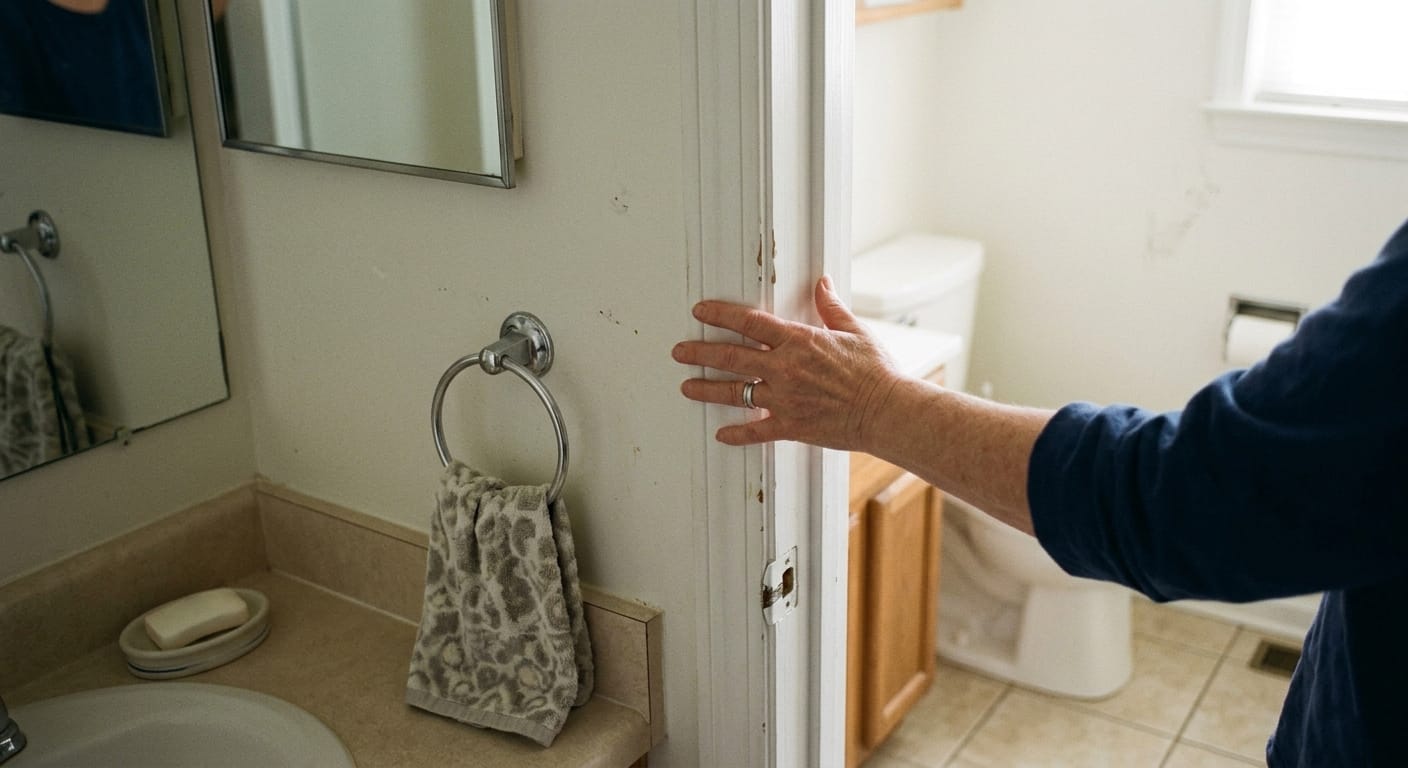
- Reaching for walls, sinks, or towel bars more frequently
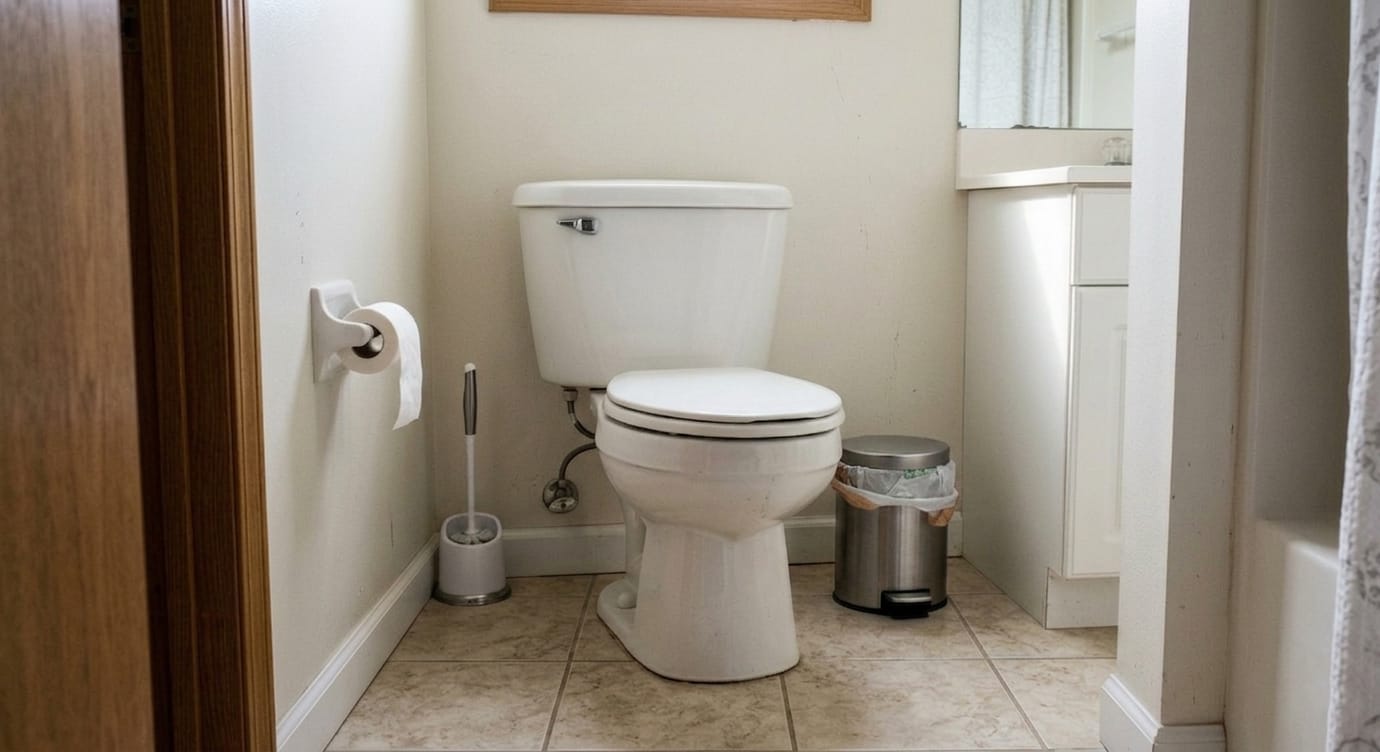
- Misalignment when sitting on the toilet
- Turning on lights and waiting before moving
- Avoiding bathroom trips at night
This is where hesitation starts.
This is not a minor detail.
Even if nothing has happened yet, the risk is already increasing.
These behaviors reflect a growing gap between what the person expects to see and what they can actually interpret in real time.
They also tend to overlap with other environmental risks. Many of these patterns are also seen in broader safety issues described in 7 Hidden Bathroom Fall Risks Most Families Miss, where multiple small factors combine to increase overall risk.
Plan Your Bathroom Project
Organize bathroom project priorities and questions before comparing written proposals.
What Actually Causes This Risk
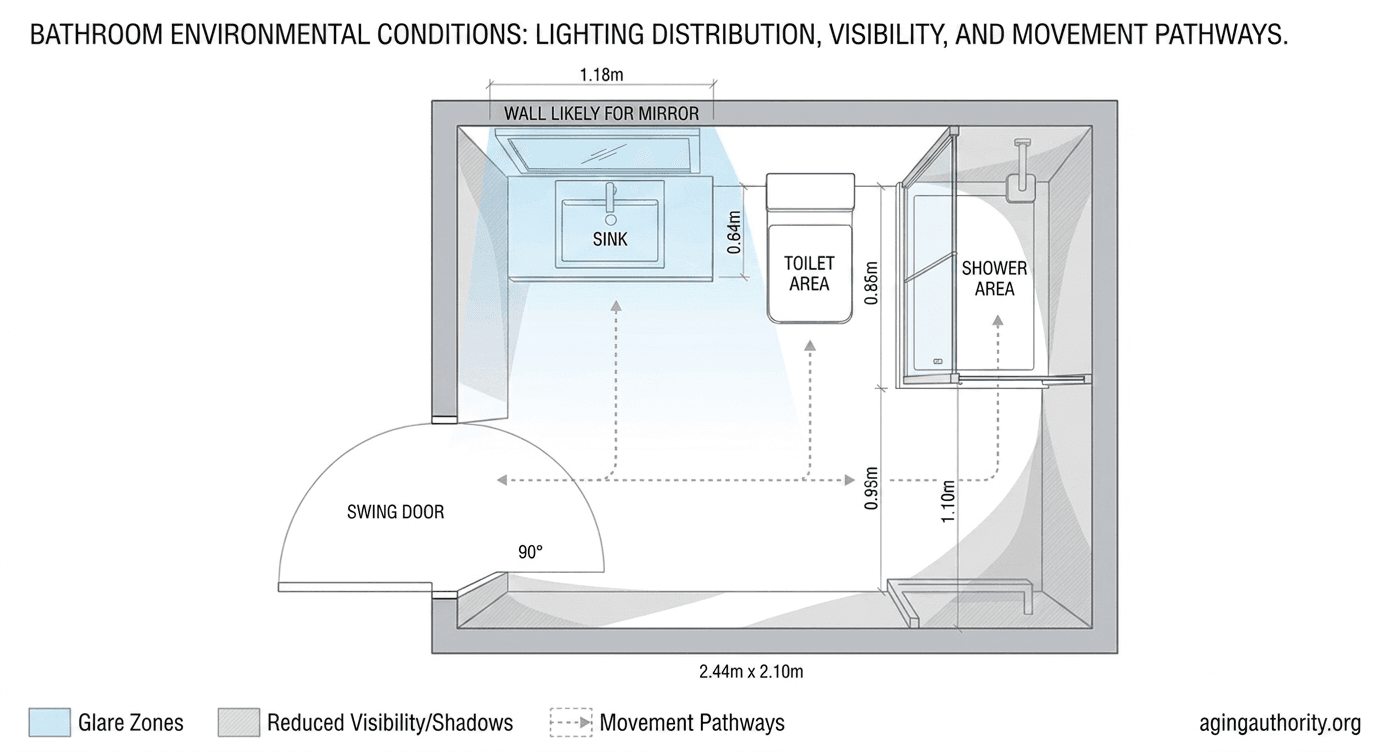
Lighting-related fall risk is not caused by darkness alone. It develops through a combination of visual changes, environmental conditions, and movement demands.
Reduced Contrast Sensitivity
Aging vision often struggles to distinguish between similar colors and tones. In bathrooms—where tiles, fixtures, and surfaces often blend visually—this becomes more noticeable.
Edges soften. Boundaries become less clear.
This is where depth perception begins to fail.
Increased Sensitivity to Glare
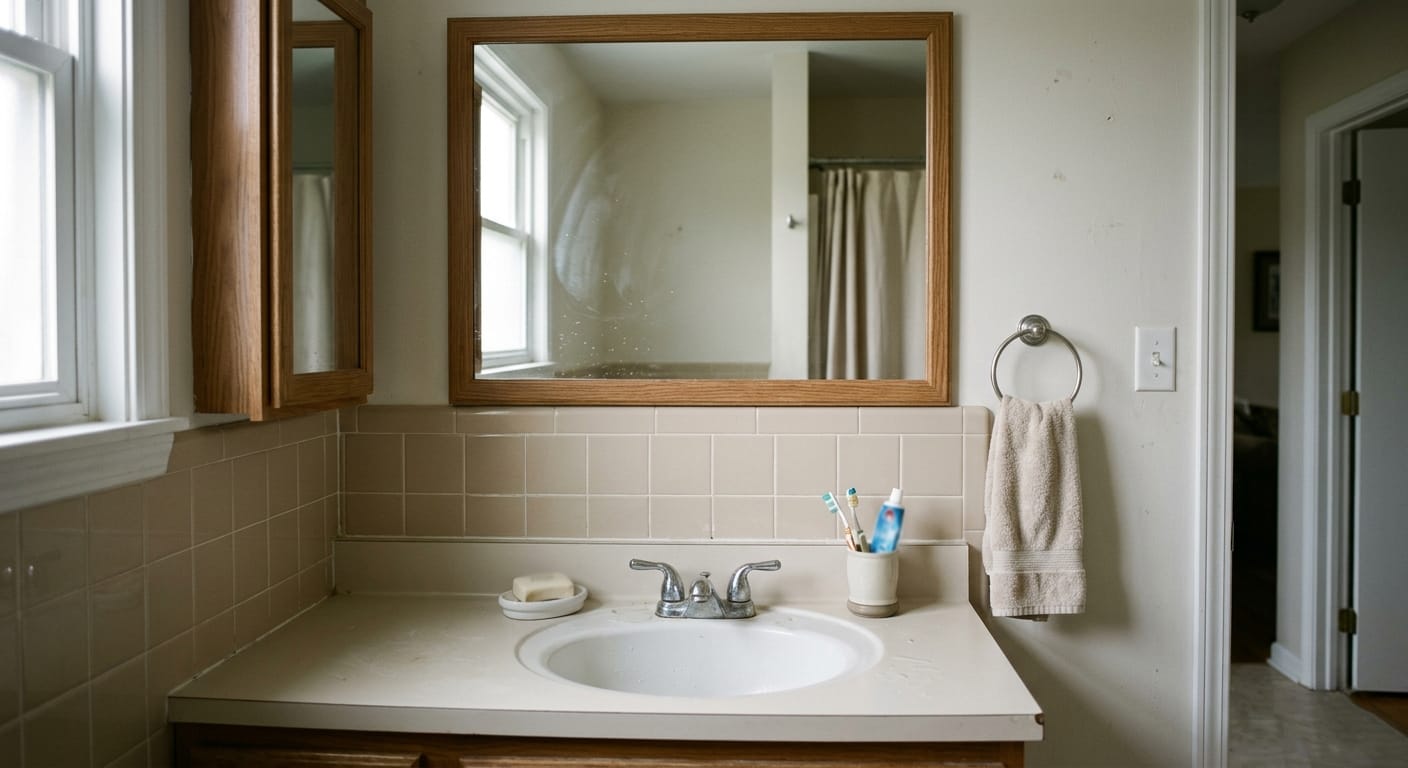
Bathrooms are full of reflective surfaces. Mirrors, glossy tiles, and metal fixtures can bounce light in unpredictable ways.
Instead of improving visibility, glare can reduce it.
At this point, visibility is no longer reliable.
Slower Adaptation to Light Changes
Moving from darkness to bright light—or vice versa—takes longer with age. That delay can disrupt movement during critical moments, especially at night.
During nighttime use, this becomes more pronounced.
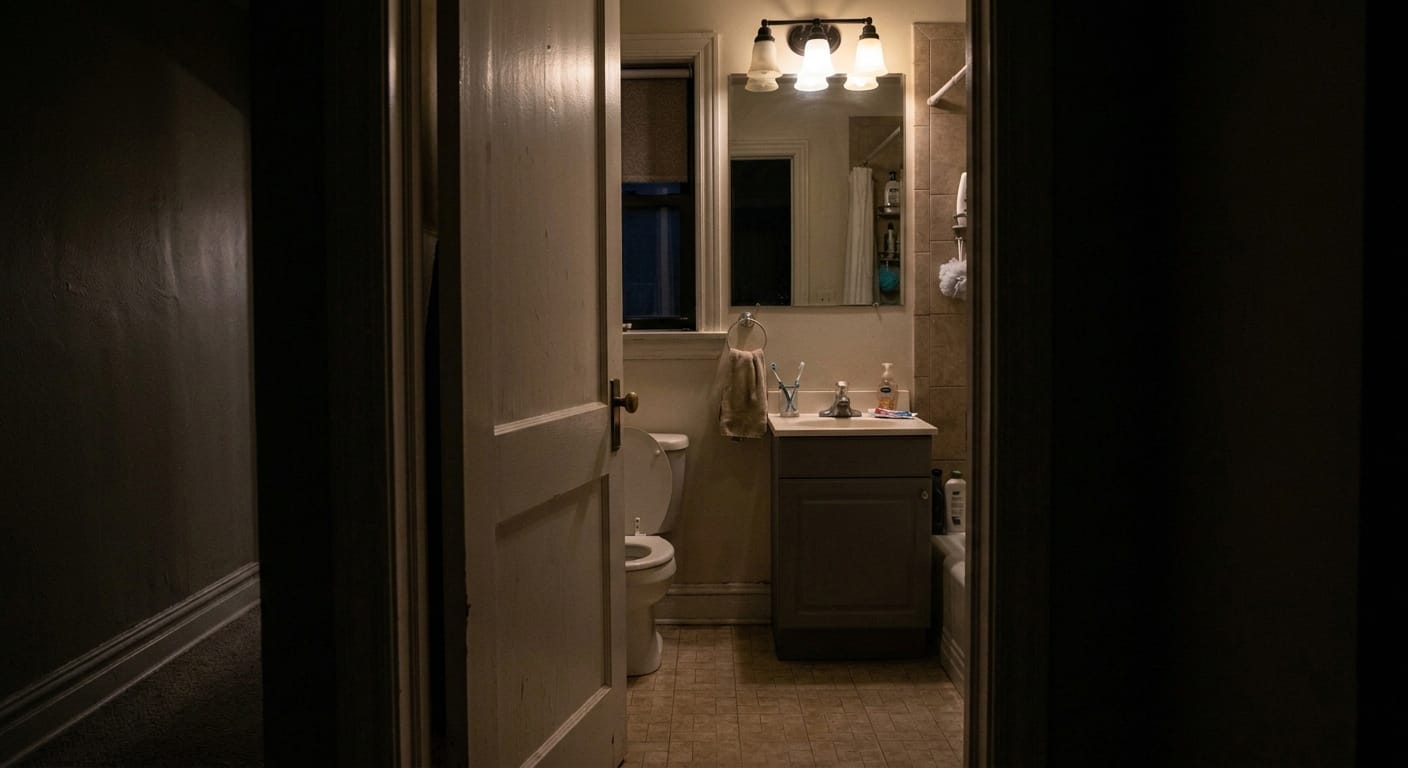
Layout and Spatial Constraints
Bathrooms are compact spaces where movement happens quickly and often in tight angles.
Light does not always reach where it’s needed most.
This often goes unnoticed in familiar spaces.
What These Lighting Issues Usually Mean
Lighting problems do not stay isolated. They affect how the body responds during movement.
When visual clarity is reduced:
- Steps become shorter and less confident
- Movement slows down unexpectedly
- Reaching becomes more frequent
- Balance shifts from controlled to reactive
This is where risk quietly accumulates.
Even in familiar bathrooms, the brain depends on clear visual input to guide movement. When that input becomes inconsistent, hesitation becomes part of the movement pattern.
This is often where hesitation becomes habitual.
Over time, hesitation itself can increase fall risk—not because of weakness, but because movement becomes less predictable.
What this usually means in real homesIf someone starts touching the wall, sink, towel bar, or door frame more often, the issue may not be “fear.” It may be a sign that the bathroom no longer gives enough visual information for confident movement.
Practical Lighting Adjustments That Can Improve Safety
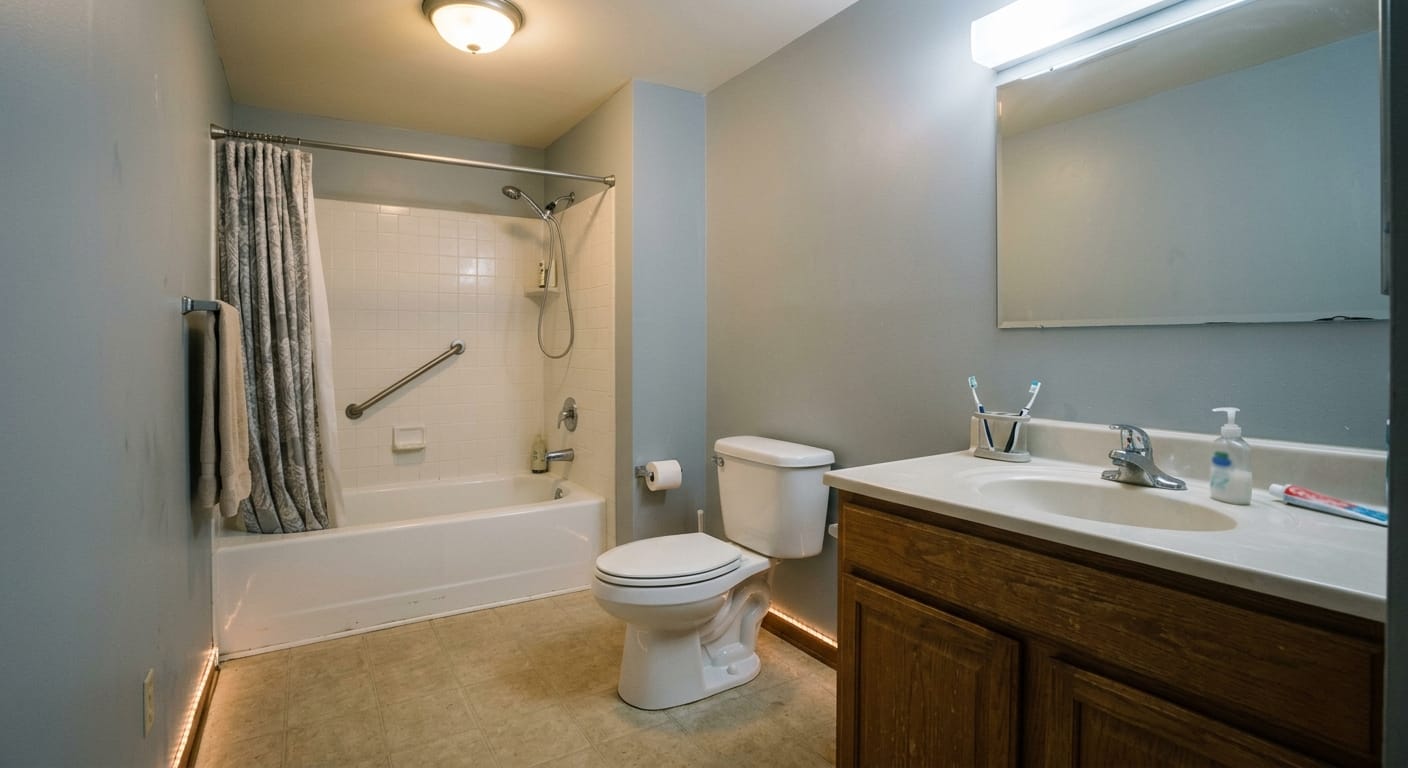
1. Add Layered Lighting (Highest Impact)
Combine overhead lighting with wall-mounted or task lighting.
This should be addressed first.
Layered lighting reduces shadows and improves depth perception across the space.
2. Install Motion Sensor Night Lighting
Low-level lighting provides continuous orientation without overwhelming brightness.
This is often the most overlooked fix.
It supports smoother transitions during nighttime movement.
3. Improve Lighting at Key Zones
Focus on:
- Toilet area
- Shower entry
- Sink
This has the highest impact.
These are the areas where movement transitions happen most frequently—and where visibility matters most.
Lighting improvements here should also align with support placement. For example, recommendations from Grab Bar Placement in Bathroom: Safe Locations for Seniors emphasize how visibility and physical support must work together.
4. Reduce Glare
Use:
- Matte finishes
- Diffused bulbs
- Indirect lighting angles
This can improve contrast and reduce visual confusion.
5. Maintain Consistent Brightness
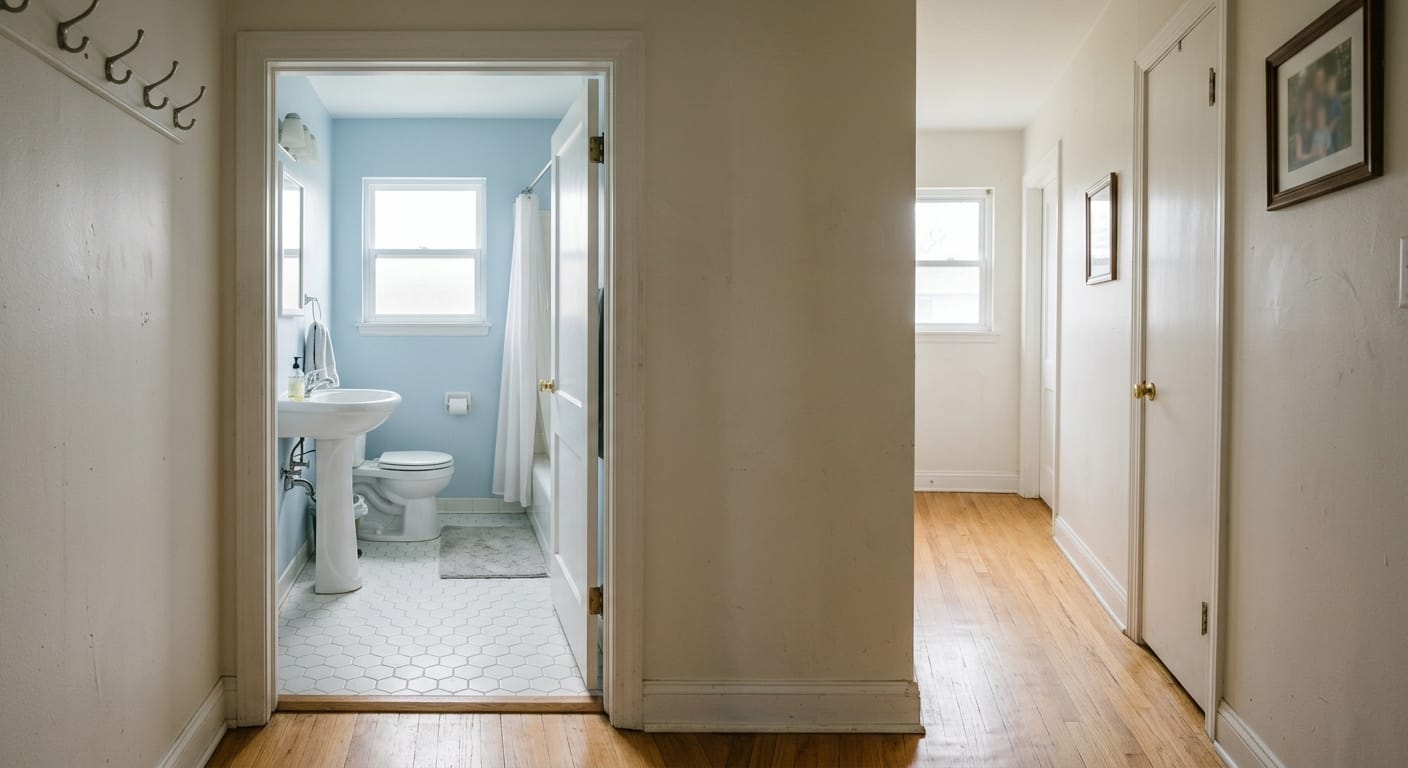
Ensure that lighting levels between the bedroom, hallway, and bathroom are similar.
This reduces visual shock and supports smoother movement.
6. Improve Light Access
- Place switches near entry
- Use easy-to-locate controls
This supports immediate visibility before movement begins.
Lighting Risk Interpretation Table
| Lighting Issue | What It Indicates | Why It Matters for Safety |
|---|---|---|
| Overhead-only lighting | Shadow zones | Hides edges and reduces depth perception |
| Glare | Visual overload | Reduces contrast and clarity |
| Dark toilet area | Poor alignment visibility | Affects sitting stability |
| No night lighting | Adaptation delay | First steps become unstable |
| Distant switch | Movement in darkness | Increases reliance on memory |
| Sudden brightness | Visual disorientation | Delays coordination |
| Uneven lighting | Conflicting visual cues | Leads to misjudged distances |
Cost-Effective Lighting Improvements
Not all changes require renovation.
In many bathrooms, simple upgrades can make a noticeable difference:
- Motion-sensor night lights
- LED strip lighting under cabinets
- Replacing bulbs with consistent brightness levels
- Clip-on lights for targeted areas
This is often the most practical starting point.
In smaller bathrooms, these adjustments become even more important, as limited space increases the impact of lighting gaps. Layout strategies discussed in Small Bathroom Safety for Seniors (No Renovation) often need to be combined with lighting improvements to fully support safe movement.
When to Consider Professional Evaluation
You may want to consider a professional assessment if:
- There are repeated near-falls, especially at night
- The person reports difficulty interpreting the space visually
- Lighting adjustments do not improve confidence
- The layout creates complex shadow or glare issues
- Electrical modifications are required
Professionals who can help include:
- Occupational therapists
- Home safety assessors
- Licensed electricians
- Aging-in-place specialists
Organizations like the Centers for Disease Control and Prevention and National Institute on Aging highlight environmental factors—including lighting—as contributors to fall risk in older adults.
These evaluations can identify risks that are not immediately visible.
Disclaimer
This content is for general educational purposes only and does not replace a professional home safety assessment, medical advice, or licensed contractor evaluation. If there are repeated falls, dizziness, new vision changes, or sudden mobility changes, consult an appropriate healthcare professional.
Reviewed by AgingAuthority Editorial Team
This content has been reviewed for clarity, safety logic, and real-world application in aging-in-place environments. Learn more about our editorial process.
Conclusion
Bathroom lighting rarely fails in obvious ways.
Instead, it creates small moments of uncertainty—hesitation, misjudgment, and slower movement.
Over time, those moments add up.
Lighting that supports clear and consistent visibility can improve how a person moves through the space—not by eliminating risk, but by reducing confusion and hesitation.
Early adjustments are often simpler, more effective, and easier to implement.
This is not about making the bathroom brighter.
It’s about making movement clearer.
Plan Your Bathroom Project
Organize bathroom project priorities and questions before comparing written proposals.
FAQ
Why is bathroom lighting important for seniors?
Bathroom lighting affects how clearly a person can identify edges, floor changes, fixtures, and support points. Poor or uneven lighting can increase hesitation, misjudgment, and reliance on walls or furniture during movement.
Is brighter bathroom lighting always safer?
Not always. Very bright lighting can create glare, especially around mirrors, glossy tile, and metal fixtures. Safer lighting is usually clear, even, diffused, and placed where movement transitions happen.
What is the most useful bathroom lighting upgrade for nighttime safety?
Motion-sensor night lighting is often one of the most practical upgrades because it provides low-level orientation before the main light is turned on. This can reduce sudden brightness changes and improve first-step confidence.
Where should lighting be improved first in a senior bathroom?
The toilet area, shower entry, sink, and bathroom entrance should usually be reviewed first because these are movement transition zones where sitting, standing, turning, stepping, and reaching often happen.
Can lighting improvements replace grab bars or non-slip flooring?
No. Lighting can improve visual clarity, but it does not replace physical support or traction. Bathroom safety works best when lighting, flooring, grab bars, and layout all support the same movement pattern.
Sources
- Centers for Disease Control and Prevention. About Older Adult Fall Prevention.
- National Institute on Aging. Preventing Falls at Home: Room by Room.
- National Institute on Aging. Home Safety Tips for Older Adults.
- National Council on Aging. How to Prevent Falls with Home Safety Modifications.
- UCLA Health. How to Prevent Falls in the Bathroom.
- Perlmutter MS, Bhorade A, Gordon M, Hollingsworth H, Baum MC. Home Lighting Assessment for Clients With Low Vision. American Journal of Occupational Therapy.