
What Aging in Place Really Means (And Why It Matters Now)

Executive Summary
Aging in place involves adapting a home as needs change. This guide helps you understand home modification options, plan projects, compare likely costs, and prepare questions for contractors while considering comfort, accessibility, and long-term needs.
Start Planning Your Home Modifications
Choose a whole-home project or focus on stairs, bathroom, entryway, bedroom, or kitchen. Get a preliminary budget range and a project brief to discuss with providers.
Table of Contents
What Aging in Place Really Means
Aging in place means continuing to live in your own home safely, independently, and with dignity as you grow older. It is not simply about staying in the same house—it is about adapting that environment so it continues to support your needs over time.
In 2026, this is no longer a lifestyle preference. It is a structured necessity.
Longer life expectancy, rising care costs, and limited access to full-time care are forcing families to rethink how homes function.
Many people want to stay in their homes—but don’t know how to make that safe.
This page is designed to solve that exact problem.
It will help you understand the system behind aging in place, guide you step-by-step, and show you exactly where to go next—without overwhelming you.
How This Guide Works
Aging in place is not one decision.
It is a system built on five interconnected pillars:
- Safety Assessment
- Home Modifications
- Safety Systems
- Mobility Aids
- Senior Technology
In real-world home safety evaluations, one pattern consistently appears:
Homes become safe through layers—not a single upgrade.
Each pillar answers a critical question:
- Where are the risks?
- What needs to change?
- What happens if something goes wrong?
- Can movement be done safely?
- How can independence be supported long-term?
Your Aging in Place Plan in 5 Steps
- Assess risks
- Modify the environment
- Add monitoring and alert systems
- Support safe movement
- Enhance daily life with technology
This is a progression—not a checklist you must complete immediately.
The 5 Pillars of Aging in Place
Safety Assessment

What It Means
A safety assessment identifies risks inside the home based on real daily movement—not assumptions.
It focuses on how people actually live: walking, bathing, reaching, standing, and transitioning.
Why It Matters
According to the CDC, most falls among older adults occur at home—and often in predictable areas like bathrooms and walkways.
In real home evaluations, the highest-risk zones are almost always the same: bathrooms, stairs, and nighttime pathways.
Risk is not random.
It is built into the environment.
Example Scenario
Imagine walking from the bedroom to the bathroom at night.
Low lighting.
No support points.
Objects slightly out of place.
This is where most accidents begin.
DIY vs Professional Home Safety Assessment
| Factor | DIY Assessment | Professional Assessment |
|---|---|---|
| Cost | Free or low-cost | Moderate to high |
| Depth | Basic observation | Detailed risk mapping |
| Accuracy | Depends on experience | Based on trained evaluation |
| Tools Used | Checklists | Measurement tools, mobility analysis |
| Best For | Early-stage awareness | High-risk homes or post-fall |
What Most Families Miss During Assessment
| Common Oversight | Why It Matters |
|---|---|
| Nighttime pathways | High fall risk due to low visibility |
| Bathroom transitions | Most dangerous movement zone |
| Furniture height | Affects sitting/standing stability |
| Lack of hand support | Increases fall probability |
| Entry points | Slips during transitions |
1.Home Modifications

What It Means
Home modifications are physical changes made to reduce environmental risk and improve usability.
These changes can be small—but highly impactful.
Why It Matters
According to the National Institute on Aging, targeted home modifications significantly reduce fall risk and improve independence.
Most hazards are predictable—and fixable.
Example Scenario
A bathtub with a high step becomes dangerous when balance declines.
A walk-in shower with support transforms the same activity into a controlled and safe movement.
Structural vs Adaptive Modifications
| Type | Description | Example |
|---|---|---|
| Structural | Permanent changes | Walk-in shower, stair lift |
| Adaptive | Add-on solutions | Grab bars, non-slip mats |
| Temporary | Short-term support | Portable ramps, shower chairs |
What To Do Next
Focus on high-risk zones first:
- Bathroom
- Stairs
- Entrances
Explore: /home-modifications/
Before making any changes, it is critical to understand your specific risk level.
Use the Home Safety Assessment Tool to guide your decisions based on real conditions—not assumptions.
2.Safety Systems

What It Means
Safety systems provide response mechanisms when incidents occur.
They do not eliminate risk—but they reduce consequences.
Why It Matters
Response time is critical.
In our evaluation of home safety systems, faster alerts consistently lead to better recovery outcomes after falls.
Example Scenario
A fall occurs in the kitchen.
Without assistance, help may be delayed.
With a monitoring system, alerts are triggered immediately.
Types of Safety Technologies Used Today
| Technology | Function |
|---|---|
| AI Fall Detection | Detects sudden movement patterns indicating a fall |
| Passive IR Sensors | Tracks motion and inactivity |
| Wearable Alert Devices | Manual emergency alerts |
| Smart Monitoring Systems | Tracks behavior patterns |
| Emergency Response Systems (PERS) | Connects to support centers |
What To Do Next
Start with essential coverage.
Avoid overcomplicating the system.
Explore: /safety-systems/
3.Mobility Aids
What It Means
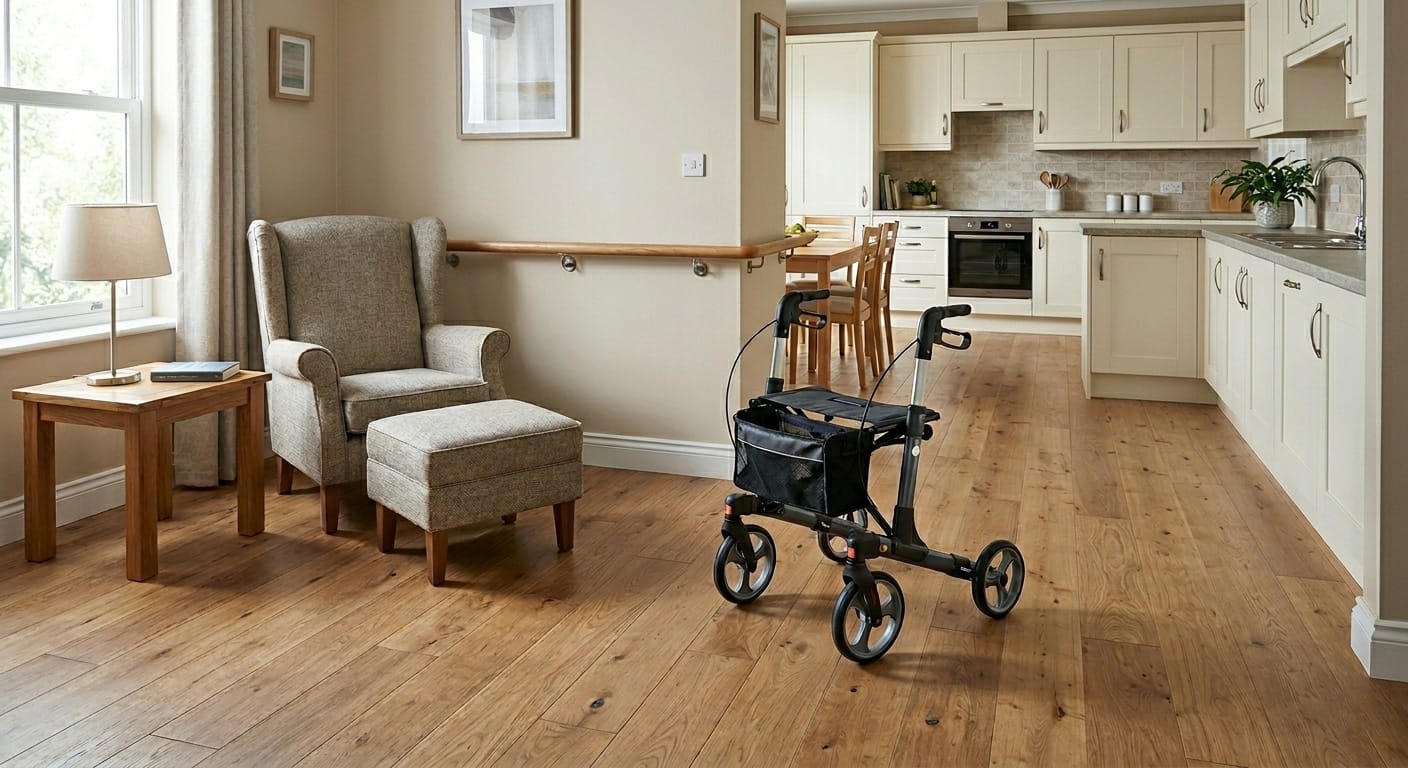
Mobility aids support safe movement during daily activities.
They enable independence—not limit it.
Why It Matters
According to the World Health Organization, mobility support is one of the most effective ways to reduce injury risk and maintain independence.
Most falls occur during movement—not while standing still.
Example Scenario
Standing from a chair becomes unstable.
With proper support, the same movement becomes controlled and safe.
Matching Mobility Aid to Need
| Need | Suggested Support |
|---|---|
| Mild instability | Cane |
| Moderate support | Walker |
| Limited mobility | Wheelchair |
| Stair difficulty | Stair lift |
What To Do Next
Focus on real movement challenges.
Do not choose based on assumptions.
Explore: /mobility-aids/
4.Senior Technology
What It Means
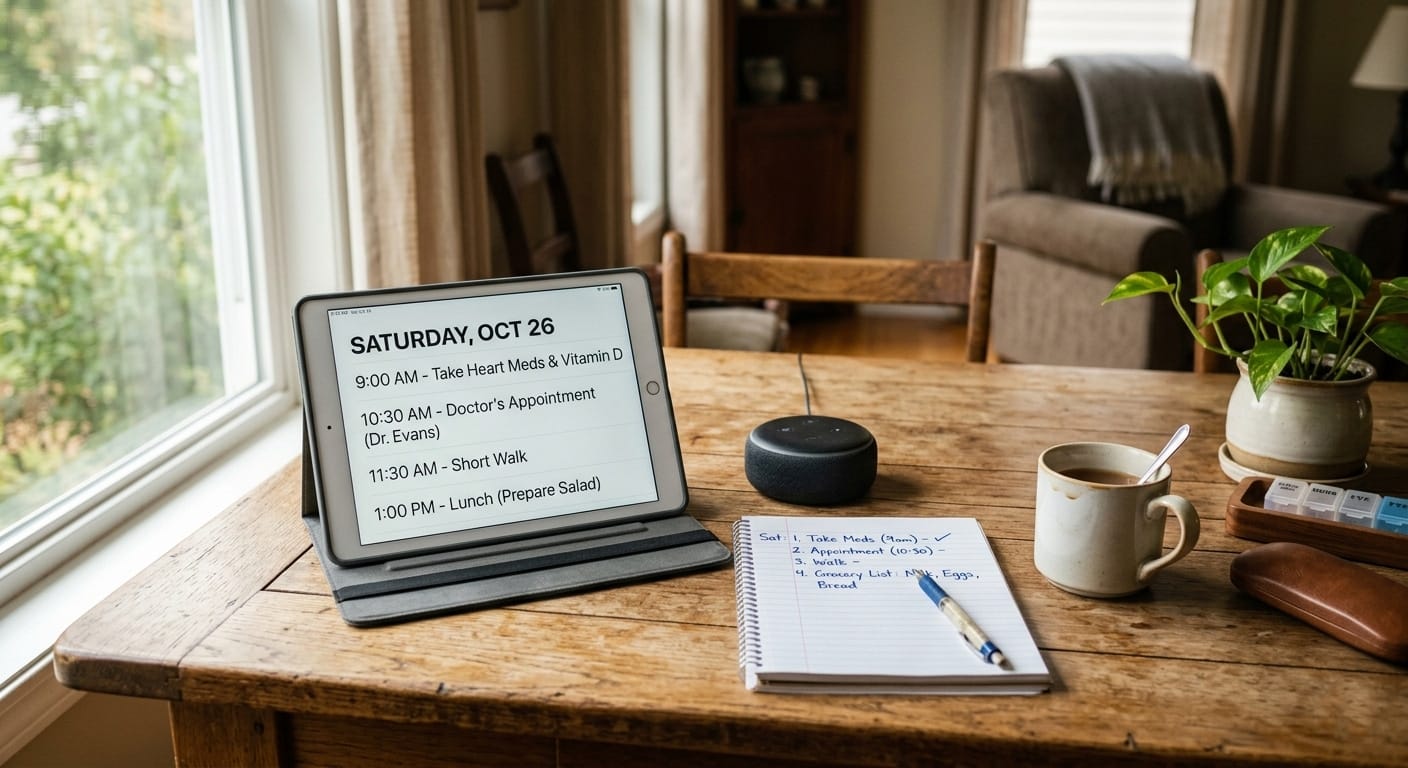
Senior technology enhances independence through monitoring, reminders, and automation.
It supports—not replaces—daily living.
Why It Matters
Modern systems are no longer complex or intrusive.
When properly selected, they reduce caregiver stress and improve quality of life.
Example Scenario
Forgetting medication or worrying about safety becomes a daily stress.
With automated reminders and monitoring, these concerns are reduced.
Types of Senior Technology
| Category | Purpose |
|---|---|
| Medication Reminders | Prevent missed doses |
| Smart Home Automation | Improve comfort and safety |
| Remote Monitoring Tools | Enable family oversight |
| Voice Assistants | Simplify tasks |
| GPS Tracking Devices | Support location safety |
What To Do Next
Start with one real need.
Avoid unnecessary complexity.
Explore: /senior-technology/
The 5 Critical Dimensions Most Guides Ignore
A complete system must consider:
- Environmental (Home Design)
- Functional (Movement & Ability)
- Technical (Monitoring & Systems)
- Psychological (Confidence & Independence)
- Financial & Legal (Planning & Protection)
Many older adults don’t fall because they are weak—they fall because the environment was never designed for aging bodies.
Cost of Aging in Place
Real Cost of Aging in Place (2026 Breakdown)
| Category | Typical Cost Range (USD) | Frequency | What Drives Cost | Notes |
|---|---|---|---|---|
| Basic Safety Upgrades | $150 – $800 | One-time | Lighting, non-slip mats, minor fixes | Highest ROI for fall prevention |
| Bathroom Modifications | $1,500 – $8,000 | One-time | Walk-in shower, grab bars, layout changes | Most critical safety zone |
| Stair Solutions | $2,000 – $12,000 | One-time | Stair lift, railings, ramp installation | Depends on home structure |
| Home Safety Systems | $20 – $80 / month | Recurring | Monitoring service, emergency response | Often subscription-based |
| Mobility Aids | $50 – $3,000 | One-time | Type (cane → wheelchair) | May need replacement over time |
| Senior Technology | $100 – $1,500 | One-time | Smart devices, reminders, monitoring tools | Optional but improves independence |
| In-Home Care (Part-Time) | $800 – $3,000 / month | Recurring | Hours per week, level of care | Major cost driver long-term |
| In-Home Care (Full-Time) | $4,000 – $10,000 / month | Recurring | 24/7 care needs | Can exceed assisted living costs |
Most families start with small improvements and expand over time.
Plan the Work Before You Request Quotes
Use the project planner to outline your priorities, estimate a starting budget range, and prepare questions before comparing contractor proposals.
Who Needs Aging in Place Now?
- Low Risk: Preventive safety improvements
- Medium Risk: Mobility challenges beginning
- High Risk: Post-fall or medical conditions
Understanding your level helps prioritize decisions.
About Our Approach and Sources
At AgingAuthority.org, our content is based on:
- Real-world home safety observations
- Aging-in-place specialist insights
- Evidence-based public health guidance
We rely on trusted institutions, including:
Sources
- CDC – Falls and Injury Prevention
- WHO – Falls Fact Sheet
- National Institute on Aging – Fall Prevention
- AARP – HomeFit Guide
- NHS – Falls Overview
Frequently Asked Questions
How much does aging in place cost per year?
Costs vary widely depending on the level of modification and support needed, ranging from a few hundred dollars to over $10,000.
What is the cheapest way to make a home safe for seniors?
Start with low-cost upgrades such as improved lighting, removing hazards, and adding non-slip surfaces.
At what point is aging in place no longer safe?
When daily activities cannot be performed safely even with modifications and support systems, alternative care options should be considered.
Is aging in place cheaper than assisted living?
In many cases, yes—but it depends on the level of care required and the condition of the home.
Your Next Step
If you feel unsure where to begin, this is normal.
The most effective starting point is simple:
Start with a home modification project plan.
Choose the areas you want to improve, review a preliminary budget range, and use your project brief when discussing options and written quotes.
About the Author
AgingAuthority Editorial Team creates research-based guides to help families plan home modifications for aging in place, compare project options and costs, and prepare informed questions for contractors and providers.