
Executive Summary
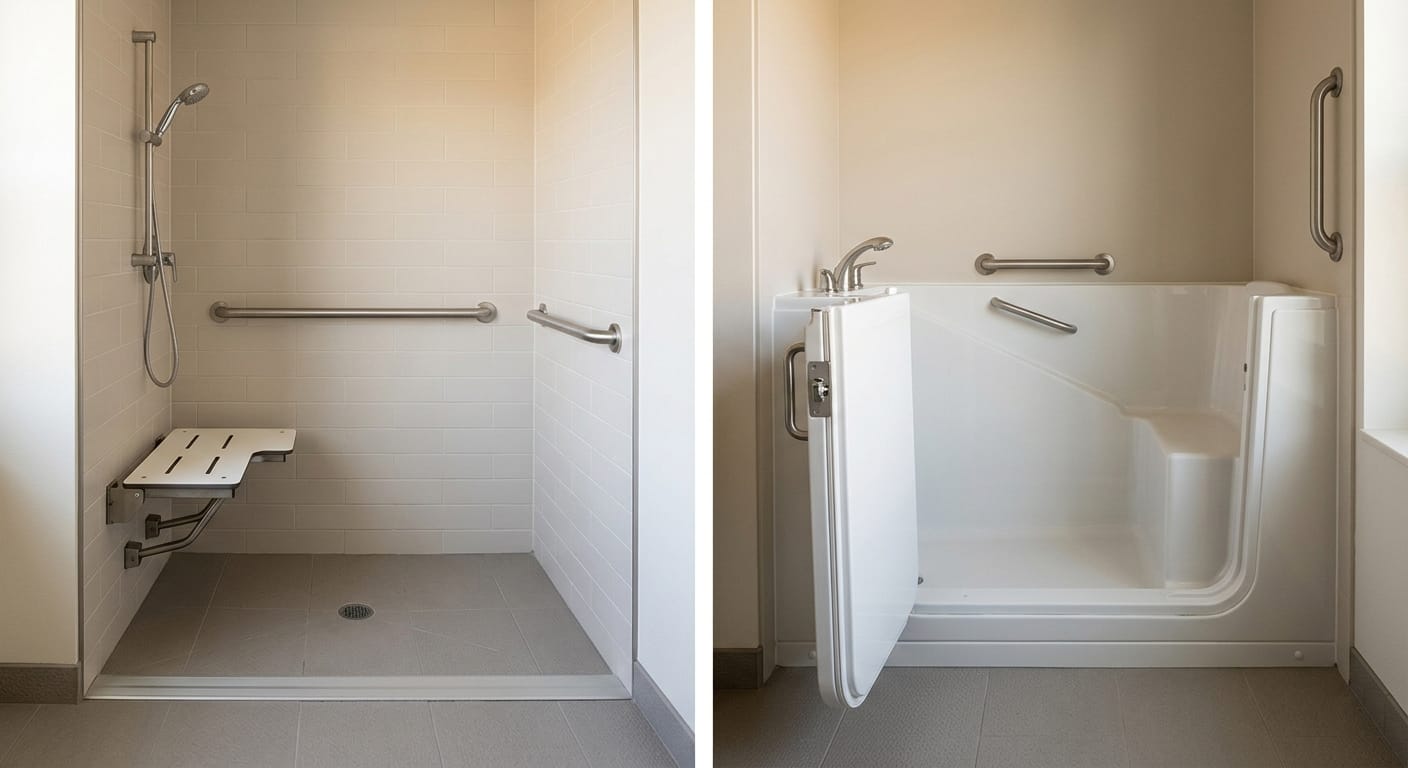
Walk-in showers are generally safer for seniors because they minimize stepping, allow easier entry and exit, and support flexible movement, including seated use. Walk-in tubs reduce fall risk during bathing but introduce higher risk during entry and delayed exit. Overall safety depends on mobility level, but showers provide better long-term adaptability and emergency accessibility in most real home environments.
Introduction
The decision between a walk-in shower and a walk-in tub is often treated as a lifestyle choice. In practice, it is a movement and safety decision that directly affects how a person navigates one of the most hazardous areas in the home.
Bathrooms combine hard surfaces, confined space, and water exposure—conditions that amplify even small balance issues. What matters is not which option looks more comfortable, but how the body enters, stabilizes, and exits the bathing space.
Every use involves a sequence of movements:
- Approaching and entering
- Adjusting balance on a wet surface
- Transitioning between standing and sitting
- Exiting safely
Each of these steps introduces risk. The safer system is the one that reduces the number of unstable transitions and allows recovery if balance is lost.
This article evaluates walk-in showers and walk-in tubs using a movement-based safety framework grounded in real residential environments—not idealized designs.
Plan Your Bathroom Project
Organize bathroom project priorities and questions before comparing written proposals.
Why This Decision Matters for Aging in Place
Aging in place depends on the ability to perform daily routines safely and independently. Bathing is one of the most physically demanding of these routines because it combines movement, water, and limited space.
The bathroom is also where many household injuries occur. According to the CDC, falls frequently happen during routine activities such as stepping over thresholds or turning on wet surfaces. These are not unusual situations—they are built into the design of the space.
The critical issue is movement complexity under unstable conditions:
- Stepping over barriers
- Turning in tight spaces
- Lowering into or rising from a seated position
- Maintaining balance on wet flooring
When these movements become difficult, independence declines rapidly. A poorly matched bathing setup can turn a manageable routine into a daily hazard.
For a complete overview of home safety upgrades, see our guide on Home Modifications for Aging in Place.
Walk-In Shower: Movement and Safety Analysis
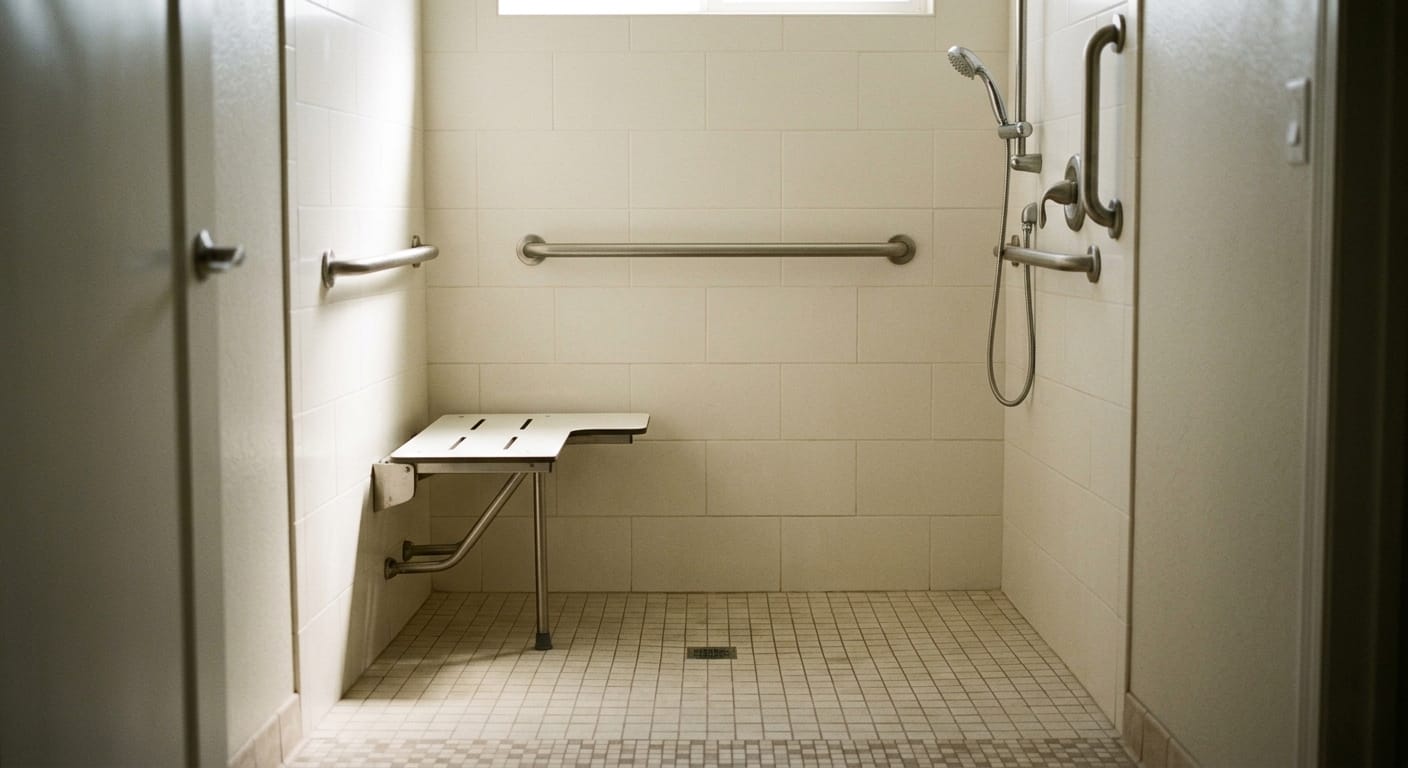
Walk-in showers are defined by low or zero-threshold entry, open interior space, and flexible usage.
Entry and Exit Mechanics
The primary advantage is the reduction or elimination of vertical stepping. In curbless designs, entry requires no step at all. Even with a low curb, the required movement is minimal compared to traditional tubs.
This reduces:
- Balance demand during entry
- Risk of tripping on a raised edge
- Joint strain during stepping
Exit follows the same simplified path, which is critical in wet conditions when stability is reduced.
Movement Within the Shower
Walk-in showers support multiple movement strategies:
- Standing with support
- Sitting on a fixed or portable seat
- Partial weight-bearing positions
This flexibility allows adaptation as mobility changes over time.
The open layout also enables:
- Wider stance for balance
- Easier repositioning
- Space for assistive devices or caregiver support
Balance and Surface Risk
The main risk is standing on a wet surface, which requires continuous balance control. Without support features, this can become hazardous.
However, this risk can be mitigated through:
- Proper flooring
- Stable seating
- Strategically placed grab bars
Proper grab bar placement plays a critical role in bathroom safety. See our detailed guide on Grab Bar Placement in Bathroom for Elderly.
Emergency Considerations
Walk-in showers allow immediate exit. There is no delay or mechanical constraint preventing the user from leaving the space if needed.
This becomes especially important in situations such as:
- Sudden dizziness
- Loss of balance
- Need for assistance
Walk-In Tub: Movement and Safety Analysis
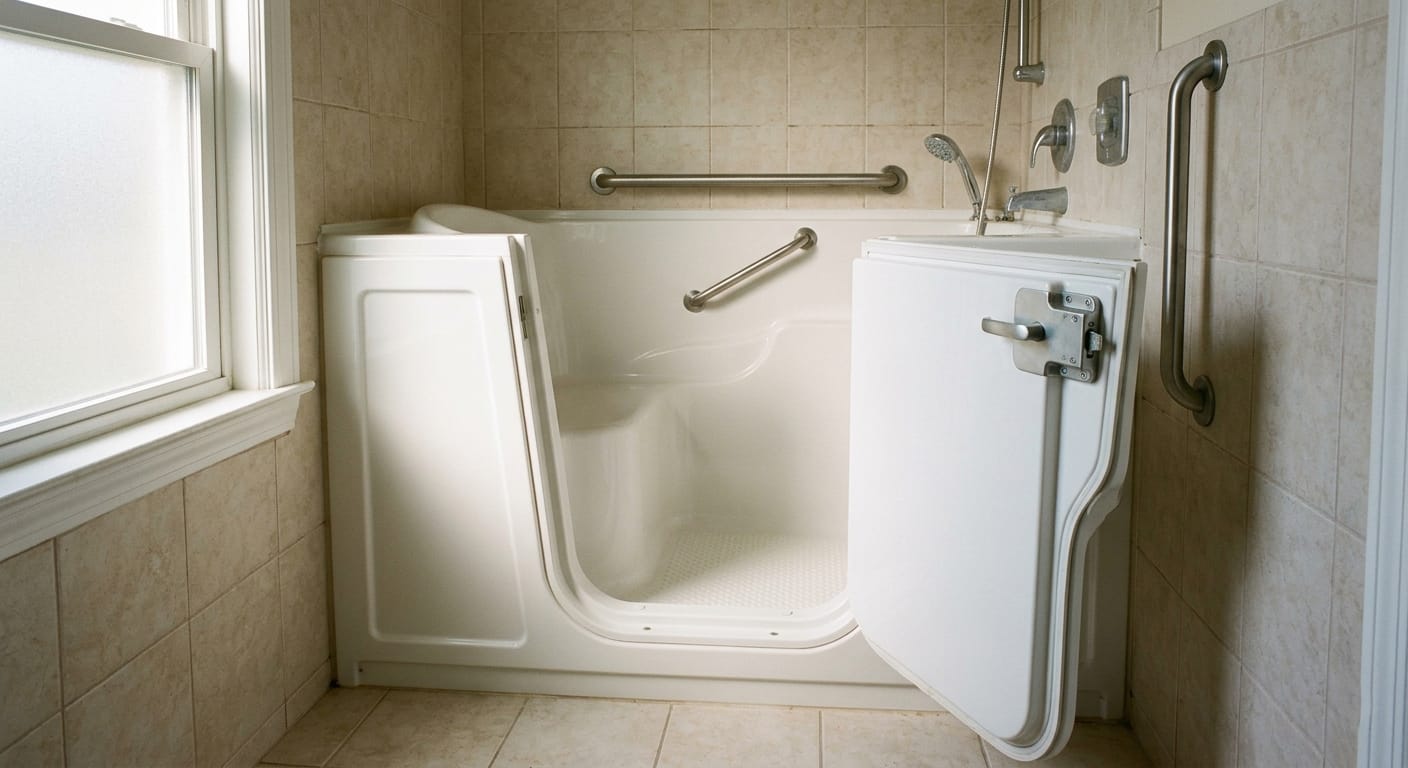
Walk-in tubs are designed around contained, seated bathing, using a side door to eliminate the need to climb over a traditional tub wall.
Entry Mechanics
Despite the “walk-in” label, entry typically involves:
- Stepping over a threshold
- Turning within a confined space
- Lowering into a seated position
This sequence requires:
- Balance control
- Leg strength
- Coordination
For many users, this is the most challenging part of the entire bathing process.
Seated Stability
Once seated, the environment becomes stable and controlled:
- No need to stand on wet surfaces
- Reduced risk of slipping during bathing
- Lower fatigue
This makes walk-in tubs appealing for individuals who cannot safely stand for extended periods.
Exit Limitations
A critical constraint is that the user must remain seated until the tub drains. This introduces several issues:
- Delayed exit in urgent situations
- Prolonged exposure to cooling air
- Inability to quickly reposition or stand
If instability occurs after bathing, the user cannot exit immediately.
Movement Constraints
The interior is confined, limiting:
- Repositioning
- Assistance from another person
- Recovery from imbalance
While the seated position reduces one type of risk, it introduces entry and exit dependency, which can become problematic as mobility declines.
Key Safety Differences
| Factor | Walk-In Shower | Walk-In Tub |
|---|---|---|
| Entry Method | Low or zero-threshold step | Step over threshold + door entry |
| Balance Requirement | Moderate (reduced with seating) | High during entry, low once seated |
| Fall Risk Points | Wet standing surface | Entry step and sit/stand transitions |
| Usability (Limited Mobility) | High with modifications | Moderate; depends on stepping ability |
| Emergency Exit | Immediate | Delayed (must drain before exit) |
Which Option Is Safer Based on Mobility Level
Mild Mobility Limitations
For individuals with minor balance issues or joint stiffness, walk-in showers are generally safer.
They allow:
- Simple entry and exit
- Fewer complex movements
- Faster recovery if balance is lost
Moderate Mobility Issues
At this stage, the decision becomes more nuanced.
Walk-in showers remain effective when equipped with:
- Seating
- Grab bars
- Stable flooring
Walk-in tubs provide seated stability but introduce entry complexity, which may offset their benefits.
The determining question is:
Can the user safely step in and lower themselves into a seated position without assistance?
Severe Limitations or Wheelchair Use
For advanced mobility limitations, curbless walk-in showers are typically the safest option.
They allow:
- Assisted entry
- Wheelchair transfer
- Caregiver access
Walk-in tubs are often impractical due to:
- Required stepping motion
- Limited internal space
- Restricted assistance capability
Space and Installation Constraints
Real homes impose limitations that influence what can be installed.
Walk-In Showers
- Adaptable to existing shower areas
- Can be designed for tight spaces
- Easier integration into older layouts
Walk-In Tubs
- Require specific dimensions and clearance
- May involve plumbing and structural adjustments
- Occupy more fixed space
Older homes often present additional constraints:
- Narrow bathroom layouts
- Limited turning radius
- Structural limitations behind walls
These factors can make walk-in tubs difficult to install without significant modification.
Cost Considerations
Walk-in tubs typically involve higher costs due to:
- Specialized construction and sealing systems
- Built-in seating and door mechanisms
- More complex installation requirements
Walk-in showers offer a wider cost range:
- Simpler designs can be relatively straightforward to install
- Custom configurations vary depending on materials and layout
Maintenance is also a factor. Walk-in tubs include mechanical components that may require servicing over time.
For a full breakdown of pricing and installation, see our Walk-In Shower Cost Guide.
When to Consider a Walk-In Shower or Walk-In Tub
When to Consider a Walk-In Shower
A walk-in shower is usually worth considering when the main safety concern is entry, exit, turning space, or future mobility change.
- The user has difficulty stepping over a tub wall
- The bathroom needs to support seated showering
- Caregiver access may be needed later
- The home needs a more adaptable aging-in-place layout
- Emergency exit and quick assistance are important priorities
When to Consider a Walk-In Tub
A walk-in tub may be worth considering when the user can still step safely through the door opening and the primary need is stable seated bathing.
- The user strongly prefers soaking rather than showering
- Standing for long periods is difficult
- The user can safely manage the entry threshold
- The bathroom has enough clearance for the door and installation
- Delayed draining and exit are not major safety concerns
When Neither Option Should Be Chosen Without Professional Input
Professional assessment becomes especially important when the user has frequent dizziness, recent falls, advanced weakness, wheelchair dependence, or difficulty transferring from sitting to standing. In those situations, the safest bathroom setup may depend on transfer technique, caregiver support, flooring, grab bar placement, and the exact bathroom layout.
Plan Your Bathroom Project
Organize bathroom project priorities and questions before comparing written proposals.
Common Mistakes When Choosing
Choosing Based on Appearance
Aesthetic preferences often override functional needs. A visually appealing setup does not ensure safe movement.
Ignoring Entry and Exit Mechanics
Most accidents occur during entry or exit, not during bathing. These transitions must be evaluated carefully.
Not Planning for Future Mobility Changes
Mobility tends to decline over time. Choosing a system that only fits current ability can lead to early replacement or increased risk.
Overlooking Support Features
Neither option is safe without:
- Proper grab bars
- Non-slip surfaces
- Adequate lighting
Safety depends on the entire environment, not just the fixture.
Reviewed by AgingAuthority Editorial Team
This content has been reviewed for clarity, safety logic, and real-world application in aging-in-place environments. Learn more about our editorial process.
Frequently Asked Questions
Is a walk-in shower safer than a walk-in tub for seniors?
In most aging-in-place situations, a walk-in shower is safer because it reduces stepping, allows immediate exit, and can adapt to seated use, caregiver help, and changing mobility needs.
When is a walk-in tub a safer choice?
A walk-in tub may be safer for someone who cannot stand comfortably for bathing but can still step through the tub door, turn, sit, and wait safely while the tub drains.
What is the biggest safety problem with walk-in tubs?
The biggest safety issue is usually the entry and exit sequence. The user must step through a threshold, turn in a confined space, sit down, and wait for drainage before leaving.
What features make a walk-in shower safer?
A safer walk-in shower usually includes a low or zero threshold, non-slip flooring, properly placed grab bars, stable seating, good lighting, and enough space for movement or assistance.
Should wheelchair users choose a walk-in shower or walk-in tub?
For many wheelchair users, a curbless walk-in shower is usually more practical because it supports transfer access, caregiver assistance, and open movement space.
Conclusion
The comparison between a walk-in shower and a walk-in tub is not about comfort or preference—it is about how safely a person can move within a constrained, wet environment.
Walk-in showers generally provide:
- Simpler entry and exit
- Greater adaptability
- Immediate emergency access
Walk-in tubs offer:
- Stable seated bathing
- Reduced need to stand
However, they introduce more complex entry and delayed exit, which can become critical limitations.
The safest choice is the one that aligns with the user’s movement patterns, strength, and future mobility trajectory. In most real residential conditions, walk-in showers provide broader long-term safety because they reduce movement complexity and allow for adaptation as needs change.
Plan Your Bathroom Project
Organize bathroom project priorities and questions before comparing written proposals.