
Executive Summary
Bathroom falls rarely come from one obvious hazard. In most homes, risk builds quietly through small mismatches—between how a person moves, what the space demands, and how the environment supports or fails to support that movement. Slippery transitions, poor lighting, awkward reach patterns, and subtle layout constraints can combine into unstable conditions long before anything visibly breaks.
Introduction
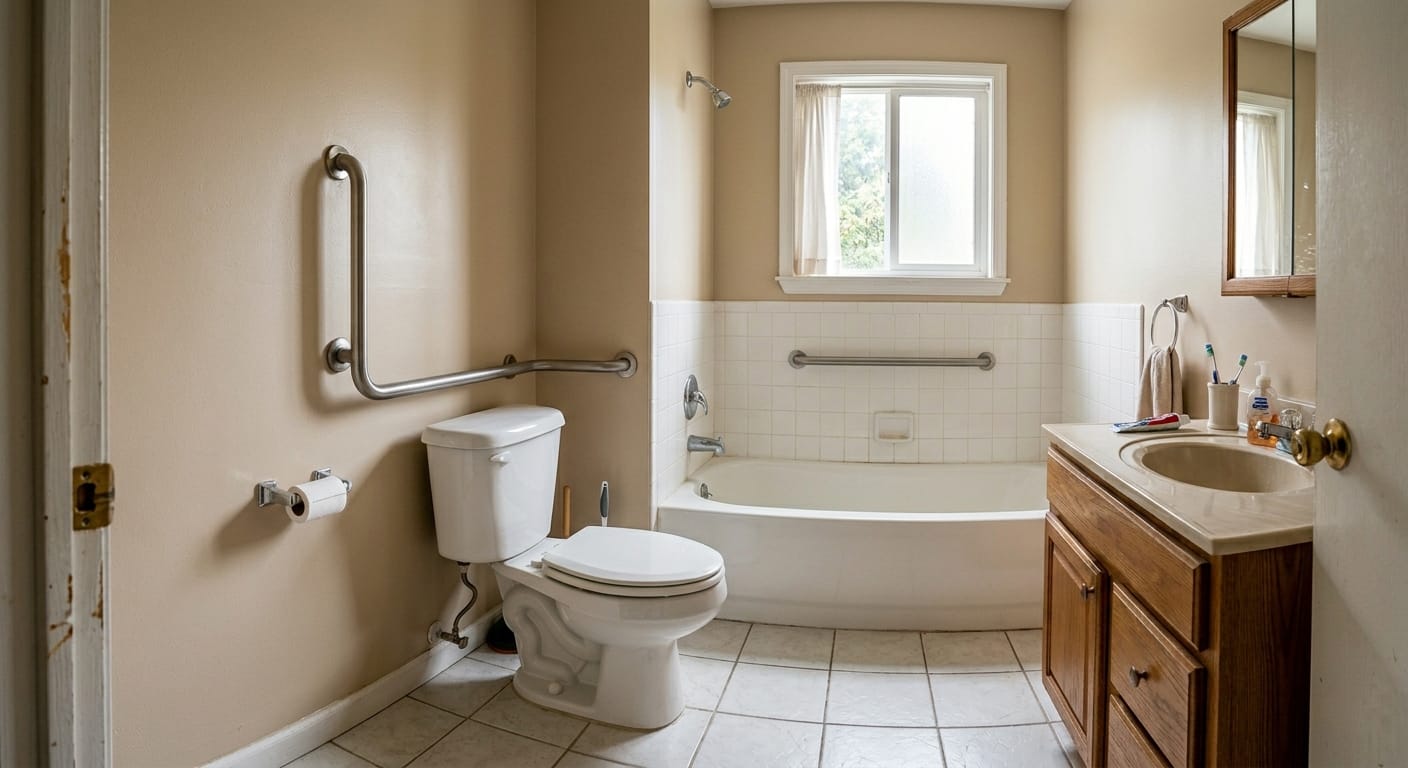
In many homes, the bathroom looks functional at first glance. The floor is clean. The fixtures work. Nothing appears damaged. But bathroom safety does not depend only on appearance. It depends on how movement actually happens inside that space—especially under time pressure, fatigue, wet conditions, or low visibility. This is often where risk actually begins. A bathroom is not used in a controlled way. People turn, reach, sit, stand, and step across wet surfaces, often in quick sequences. When those movements start to feel slower, less stable, or slightly uncertain, the environment can become a contributing factor. Even if nothing has happened yet, the risk may already be increasing.
Table of Contents
Early Signs That Risk Is Developing
Before a fall occurs, small behavioral changes usually appear. These are easy to dismiss, but they matter:
- Holding onto the sink or wall when standing up
- Pausing before stepping into the shower
- Avoiding nighttime bathroom trips
- Turning more slowly or using wider steps
- Leaving lights off but moving more cautiously
This is usually overlooked. These are not random habits. They are adjustments. The person is already compensating for instability or uncertainty in the space.
What Actually Causes Bathroom Fall Risk
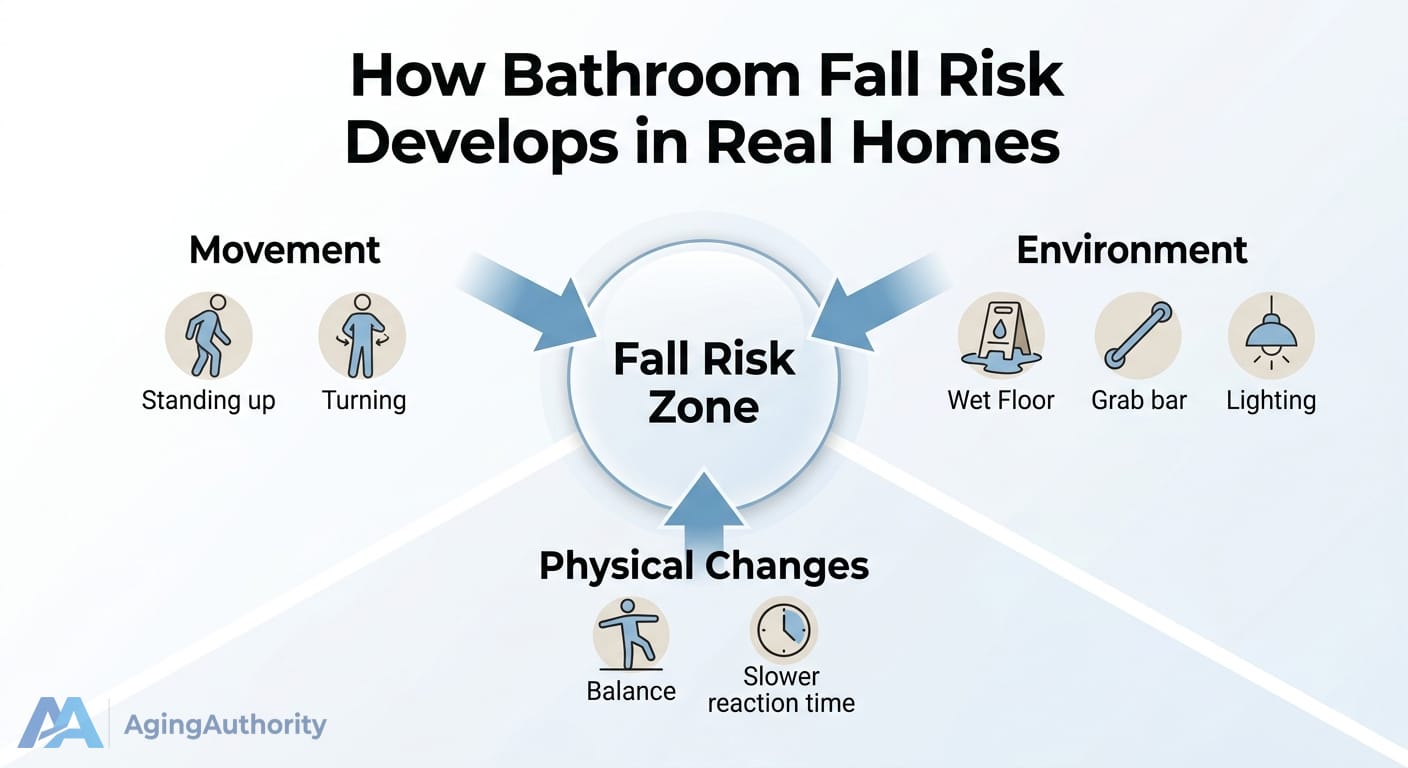
Bathroom fall risk is not just about slippery floors. It is usually the result of three interacting elements.
1. Movement Patterns
Standing up, turning, stepping over thresholds, reaching, and transferring in or out of the shower all require coordination and balance.
2. Environmental Conditions
Lighting, floor traction, spacing, thresholds, and support placement define how safely those movements can occur.
3. Physical Changes
Reduced strength, slower reaction time, decreased balance, joint stiffness, fatigue, or medication effects can change how the body responds in a small room. In many homes, these three elements slowly drift out of alignment. That mismatch is where instability forms.
Check Your Bathroom Safety Score in Under a Minute
Identify risks around toilet transfers, shower stability, and slippery surfaces before they become serious safety issues.
Overlooked Bathroom Fall Risks
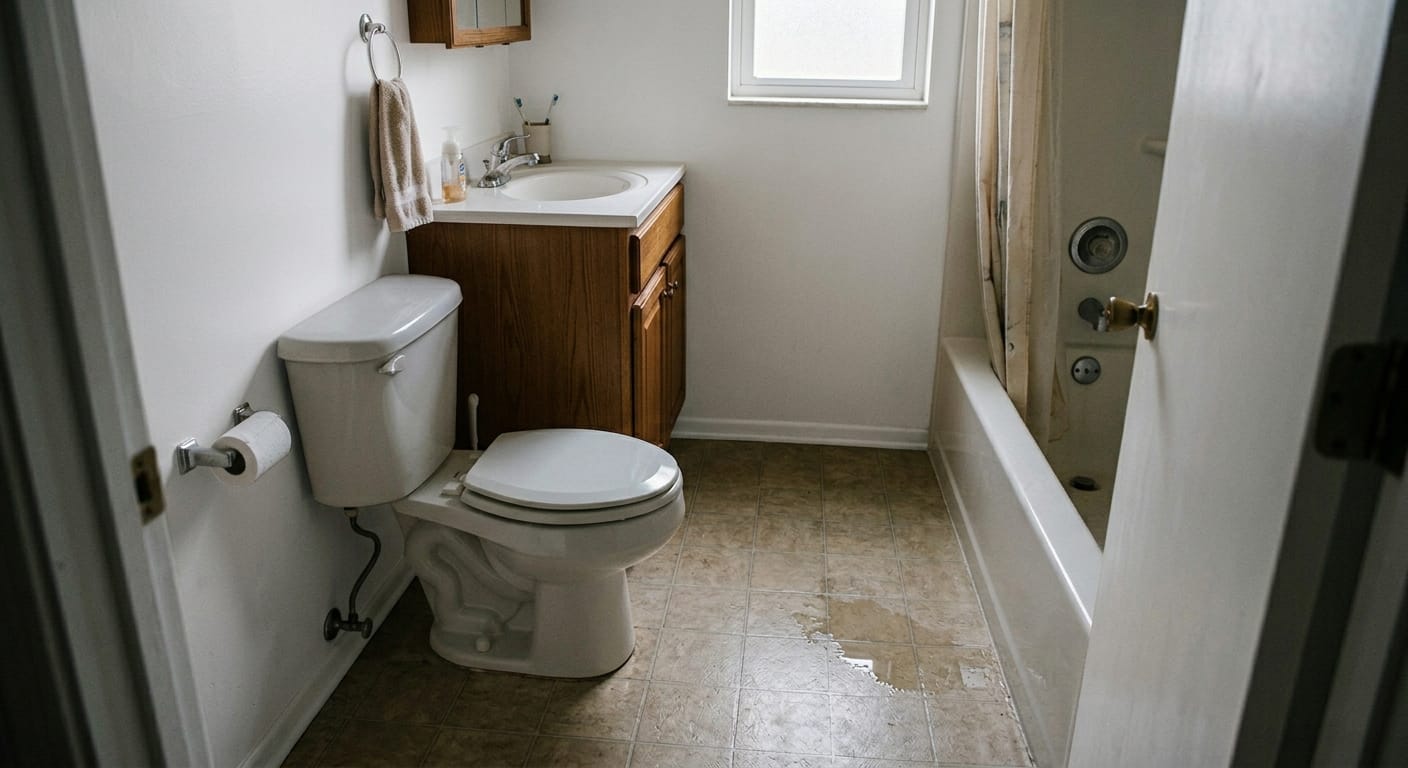
1. Slippery Transitions Between Dry and Wet Zones
What it looks like: A dry tile floor leading into a slightly wet area near the shower, bathtub, or sink.
Why it matters: The foot transitions from stable traction to reduced grip in a single step.
What it indicates: The environment is not supporting consistent movement. This is often where slips actually happen.
2. Poor Lighting Near the Toilet or Shower
What it looks like: Shadows near the toilet base, dim overhead lighting, or reliance on a hallway light.
Why it matters: Depth perception and surface visibility are reduced, especially at night.
What it indicates: The person is navigating without full visual feedback. In poorly lit areas, hesitation increases.
3. Absence or Poor Placement of Grab Bars
What it looks like: No grab bars near the toilet or shower, or bars placed too far from actual movement paths.
Why it matters: Support is not available at the moment it is needed.
What it indicates: The environment assumes stability instead of supporting it. This is usually overlooked because many families look for visible damage, not missing support.
4. Step-In Bathtubs or Shower Thresholds
What it looks like: A raised tub edge or shower lip that requires lifting the leg and shifting weight.
Why it matters: Balance is temporarily reduced during the step-over movement.
What it indicates: A high-risk transition point exists in daily use. This is not a minor detail. It is one of the most demanding movements in the bathroom.
5. Cluttered or Narrow Movement Space
What it looks like: Limited space between fixtures, items stored on the floor, laundry baskets near the path, or narrow walking space.
Why it matters: Turning and stepping require precision instead of natural movement.
What it indicates: The environment restricts safe motion. In small bathrooms, this becomes critical because there is less room to recover from a balance mistake.
6. Toilet Height Mismatch
What it looks like: A low toilet requiring extra effort to sit down or stand up.
Why it matters: More leg strength, balance control, and forward weight shifting are required during transitions.
What it indicates: The setup no longer matches the person’s physical capacity. At this point, the effort itself becomes a risk factor.
7. Reaching or Turning Instability
What it looks like: Twisting to grab towels, reaching behind for toilet paper, or turning in tight space.
Why it matters: Balance is disrupted during rotation and reach.
What it indicates: The layout forces unstable movement patterns. This is often where near-falls happen before families recognize the bathroom as unsafe.
What These Risks Mean
These risks are rarely isolated. They tend to stack:
- Slightly wet floor
- Low lighting
- No support nearby
- Tight turning space
Individually, each may seem manageable. Together, they create unstable conditions. Even if no fall has occurred, the safety margin may already be reduced. This is where intervention matters most.
Practical Adjustments That Can Help
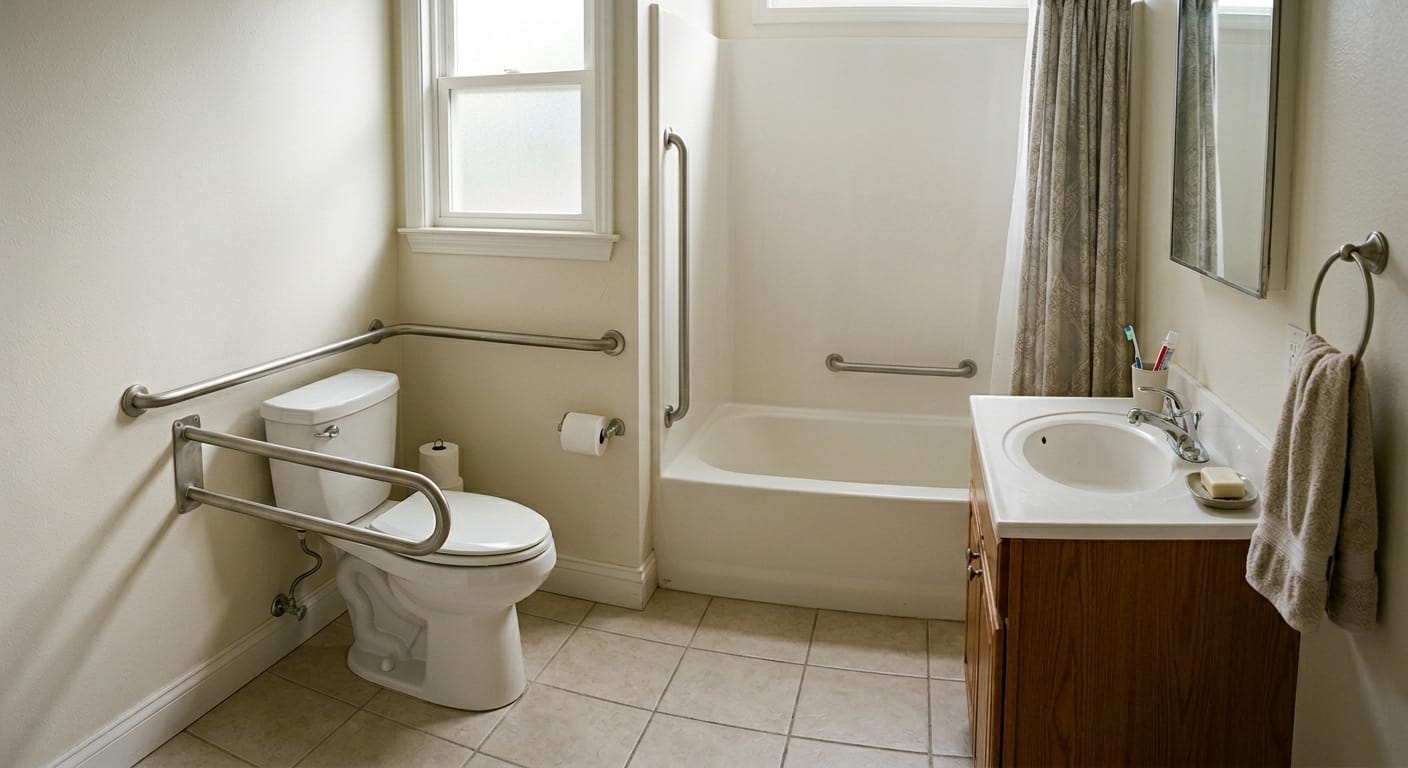
The right improvements depend on the home, the bathroom layout, and the person using the space. But common adjustments may include:
- Improving lighting near key movement zones
- Adding grab bars aligned with real movement paths
- Reducing clutter and widening walking space where possible
- Using non-slip surfaces in wet areas
- Adjusting toilet height or adding support frames
- Minimizing reach distance for towels, toilet paper, and daily-use items
These changes do not need to be complex. But they should be intentional. A grab bar in the wrong location, a mat that curls at the edge, or a light that still leaves shadows near the toilet may not solve the real problem.
Not Sure Which Bathroom Risk Matters Most?
Start with the areas where movement changes: standing from the toilet, entering the shower, turning near the sink, and walking at night. These are the points where small improvements can make the biggest practical difference.
Quick Risk Recognition Table
| Risk Factor | What You See | Why It Matters | What It Suggests |
|---|---|---|---|
| Wet/Dry Transition | Damp floor near shower or sink | Sudden traction loss | Increased slip risk |
| Poor Lighting | Shadows, dim areas, hallway light dependence | Reduced visibility | Slower, uncertain movement |
| Missing Grab Bars | No support near toilet or shower | No stabilization point | Higher fall potential |
| Step Threshold | High tub edge or shower lip | Balance disruption | Risk during entry and exit |
| Narrow Space | Tight layout or blocked path | Restricted movement | Turning instability |
| Low Toilet | Difficult sitting or standing | Increased effort | Reduced control |
| Reaching/Twisting | Awkward towel, paper, or storage access | Balance shift | Near-fall potential |
When to Consider Professional Evaluation
A professional home safety evaluation may be worth considering when:
- Movement in the bathroom is visibly slower or hesitant
- The person has had a near-fall or close call
- Support surfaces like walls, sinks, or door frames are used regularly
- Multiple risk factors exist at once
- The layout cannot be easily adjusted
An occupational therapist, aging-in-place specialist, or qualified home safety professional can assess how movement interacts with the environment and recommend targeted modifications. This depends on the home layout and the person’s needs.
Why Bathrooms Are High-Risk Spaces
Bathrooms concentrate multiple risk factors in one small area:
- Water, which reduces traction
- Hard surfaces, which can increase injury severity
- Tight layouts, which limit recovery space
- Frequent transitions, including sitting, standing, turning, and stepping
This combination makes bathrooms one of the most important areas to review when improving home safety for aging in place.
Conclusion
Bathroom safety is not defined by how the space looks. It is defined by how well the environment supports real movement. Most risks do not appear suddenly. They develop gradually through small mismatches between ability and environment. Recognizing those early signals can help families respond before a fall occurs. That is where safety decisions become most effective.
Executive Summary
Bathroom falls rarely come from one obvious hazard. In most homes, risk builds quietly through small mismatches—between how a person moves, what the space demands, and how the environment supports or fails to support that movement. Slippery transitions, poor lighting, awkward reach patterns, and subtle layout constraints can combine into unstable conditions long before anything visibly breaks.
Introduction
In many homes, the bathroom looks functional at first glance. The floor is clean. The fixtures work. Nothing appears damaged. But bathroom safety does not depend only on appearance. It depends on how movement actually happens inside that space—especially under time pressure, fatigue, wet conditions, or low visibility. This is often where risk actually begins. A bathroom is not used in a controlled way. People turn, reach, sit, stand, and step across wet surfaces, often in quick sequences. When those movements start to feel slower, less stable, or slightly uncertain, the environment can become a contributing factor. Even if nothing has happened yet, the risk may already be increasing.
Table of Contents
Early Signs That Risk Is Developing
Before a fall occurs, small behavioral changes usually appear. These are easy to dismiss, but they matter:
- Holding onto the sink or wall when standing up
- Pausing before stepping into the shower
- Avoiding nighttime bathroom trips
- Turning more slowly or using wider steps
- Leaving lights off but moving more cautiously
This is usually overlooked. These are not random habits. They are adjustments. The person is already compensating for instability or uncertainty in the space.
What Actually Causes Bathroom Fall Risk
Bathroom fall risk is not just about slippery floors. It is usually the result of three interacting elements.
1. Movement Patterns
Standing up, turning, stepping over thresholds, reaching, and transferring in or out of the shower all require coordination and balance.
2. Environmental Conditions
Lighting, floor traction, spacing, thresholds, and support placement define how safely those movements can occur.
3. Physical Changes
Reduced strength, slower reaction time, decreased balance, joint stiffness, fatigue, or medication effects can change how the body responds in a small room. In many homes, these three elements slowly drift out of alignment. That mismatch is where instability forms.
Check Your Bathroom Safety Score in Under a Minute
Identify risks around toilet transfers, shower stability, and slippery surfaces before they become serious safety issues.
Overlooked Bathroom Fall Risks
1. Slippery Transitions Between Dry and Wet Zones
What it looks like: A dry tile floor leading into a slightly wet area near the shower, bathtub, or sink.
Why it matters: The foot transitions from stable traction to reduced grip in a single step.
What it indicates: The environment is not supporting consistent movement. This is often where slips actually happen.
2. Poor Lighting Near the Toilet or Shower
What it looks like: Shadows near the toilet base, dim overhead lighting, or reliance on a hallway light.
Why it matters: Depth perception and surface visibility are reduced, especially at night.
What it indicates: The person is navigating without full visual feedback. In poorly lit areas, hesitation increases.
3. Absence or Poor Placement of Grab Bars
What it looks like: No grab bars near the toilet or shower, or bars placed too far from actual movement paths.
Why it matters: Support is not available at the moment it is needed.
What it indicates: The environment assumes stability instead of supporting it. This is usually overlooked because many families look for visible damage, not missing support.
4. Step-In Bathtubs or Shower Thresholds
What it looks like: A raised tub edge or shower lip that requires lifting the leg and shifting weight.
Why it matters: Balance is temporarily reduced during the step-over movement.
What it indicates: A high-risk transition point exists in daily use. This is not a minor detail. It is one of the most demanding movements in the bathroom.
5. Cluttered or Narrow Movement Space
What it looks like: Limited space between fixtures, items stored on the floor, laundry baskets near the path, or narrow walking space.
Why it matters: Turning and stepping require precision instead of natural movement.
What it indicates: The environment restricts safe motion. In small bathrooms, this becomes critical because there is less room to recover from a balance mistake.
6. Toilet Height Mismatch
What it looks like: A low toilet requiring extra effort to sit down or stand up.
Why it matters: More leg strength, balance control, and forward weight shifting are required during transitions.
What it indicates: The setup no longer matches the person’s physical capacity. At this point, the effort itself becomes a risk factor.
7. Reaching or Turning Instability
What it looks like: Twisting to grab towels, reaching behind for toilet paper, or turning in tight space.
Why it matters: Balance is disrupted during rotation and reach.
What it indicates: The layout forces unstable movement patterns. This is often where near-falls happen before families recognize the bathroom as unsafe.
What These Risks Mean
These risks are rarely isolated. They tend to stack:
- Slightly wet floor
- Low lighting
- No support nearby
- Tight turning space
Individually, each may seem manageable. Together, they create unstable conditions. Even if no fall has occurred, the safety margin may already be reduced. This is where intervention matters most.
Practical Adjustments That Can Help
The right improvements depend on the home, the bathroom layout, and the person using the space. But common adjustments may include:
- Improving lighting near key movement zones
- Adding grab bars aligned with real movement paths
- Reducing clutter and widening walking space where possible
- Using non-slip surfaces in wet areas
- Adjusting toilet height or adding support frames
- Minimizing reach distance for towels, toilet paper, and daily-use items
These changes do not need to be complex. But they should be intentional. A grab bar in the wrong location, a mat that curls at the edge, or a light that still leaves shadows near the toilet may not solve the real problem.
Not Sure Which Bathroom Risk Matters Most?
Start with the areas where movement changes: standing from the toilet, entering the shower, turning near the sink, and walking at night. These are the points where small improvements can make the biggest practical difference.
Quick Risk Recognition Table
| Risk Factor | What You See | Why It Matters | What It Suggests |
|---|---|---|---|
| Wet/Dry Transition | Damp floor near shower or sink | Sudden traction loss | Increased slip risk |
| Poor Lighting | Shadows, dim areas, hallway light dependence | Reduced visibility | Slower, uncertain movement |
| Missing Grab Bars | No support near toilet or shower | No stabilization point | Higher fall potential |
| Step Threshold | High tub edge or shower lip | Balance disruption | Risk during entry and exit |
| Narrow Space | Tight layout or blocked path | Restricted movement | Turning instability |
| Low Toilet | Difficult sitting or standing | Increased effort | Reduced control |
| Reaching/Twisting | Awkward towel, paper, or storage access | Balance shift | Near-fall potential |
When to Consider Professional Evaluation
A professional home safety evaluation may be worth considering when:
- Movement in the bathroom is visibly slower or hesitant
- The person has had a near-fall or close call
- Support surfaces like walls, sinks, or door frames are used regularly
- Multiple risk factors exist at once
- The layout cannot be easily adjusted
An occupational therapist, aging-in-place specialist, or qualified home safety professional can assess how movement interacts with the environment and recommend targeted modifications. This depends on the home layout and the person’s needs.
Why Bathrooms Are High-Risk Spaces
Bathrooms concentrate multiple risk factors in one small area:
- Water, which reduces traction
- Hard surfaces, which can increase injury severity
- Tight layouts, which limit recovery space
- Frequent transitions, including sitting, standing, turning, and stepping
This combination makes bathrooms one of the most important areas to review when improving home safety for aging in place.
Conclusion
Bathroom safety is not defined by how the space looks. It is defined by how well the environment supports real movement. Most risks do not appear suddenly. They develop gradually through small mismatches between ability and environment. Recognizing those early signals can help families respond before a fall occurs. That is where safety decisions become most effective.