
Executive Summary
Bathroom floor slip risk rarely comes from one obvious problem. In most homes, it develops gradually through the interaction between moisture, surface texture, and how a person moves—especially during transitions like stepping out of the shower, turning near the sink, or walking on damp tiles. Early signs often appear in behavior, not the floor itself: slower movement, cautious steps, or reaching for support. Recognizing how different non-slip solutions perform in real conditions can help families choose adjustments that may improve stability and reduce risk before a fall occurs.
Reviewed by AgingAuthority Editorial TeamThis content has been reviewed for clarity, safety logic, and real-world application in aging-in-place environments. Learn more about our editorial process.
Introduction
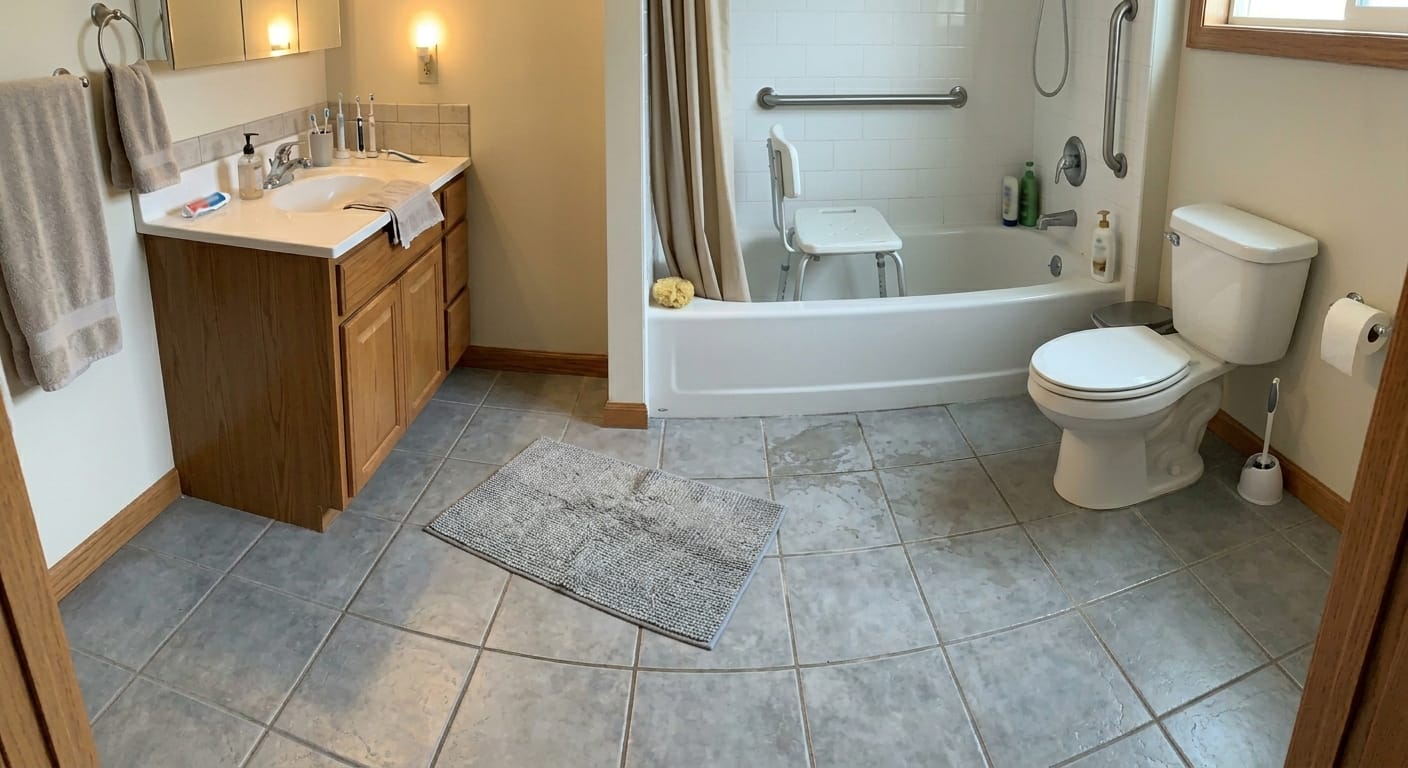
In many homes, the bathroom floor looks perfectly fine.
The tiles are clean. Nothing is broken. There are no visible hazards at first glance.
But that’s often where the misunderstanding begins.
Slip risk doesn’t usually come from damage—it builds from interaction. A smooth tile that feels stable when dry can behave very differently when slightly wet. A surface that seems safe when walking straight can become unpredictable during a turn.
This is often where risk actually begins.
What matters is not just the floor itself, but how the floor responds to real movement under real conditions.
Table of Contents
Where Bathroom Floor Slip Risk Usually Starts
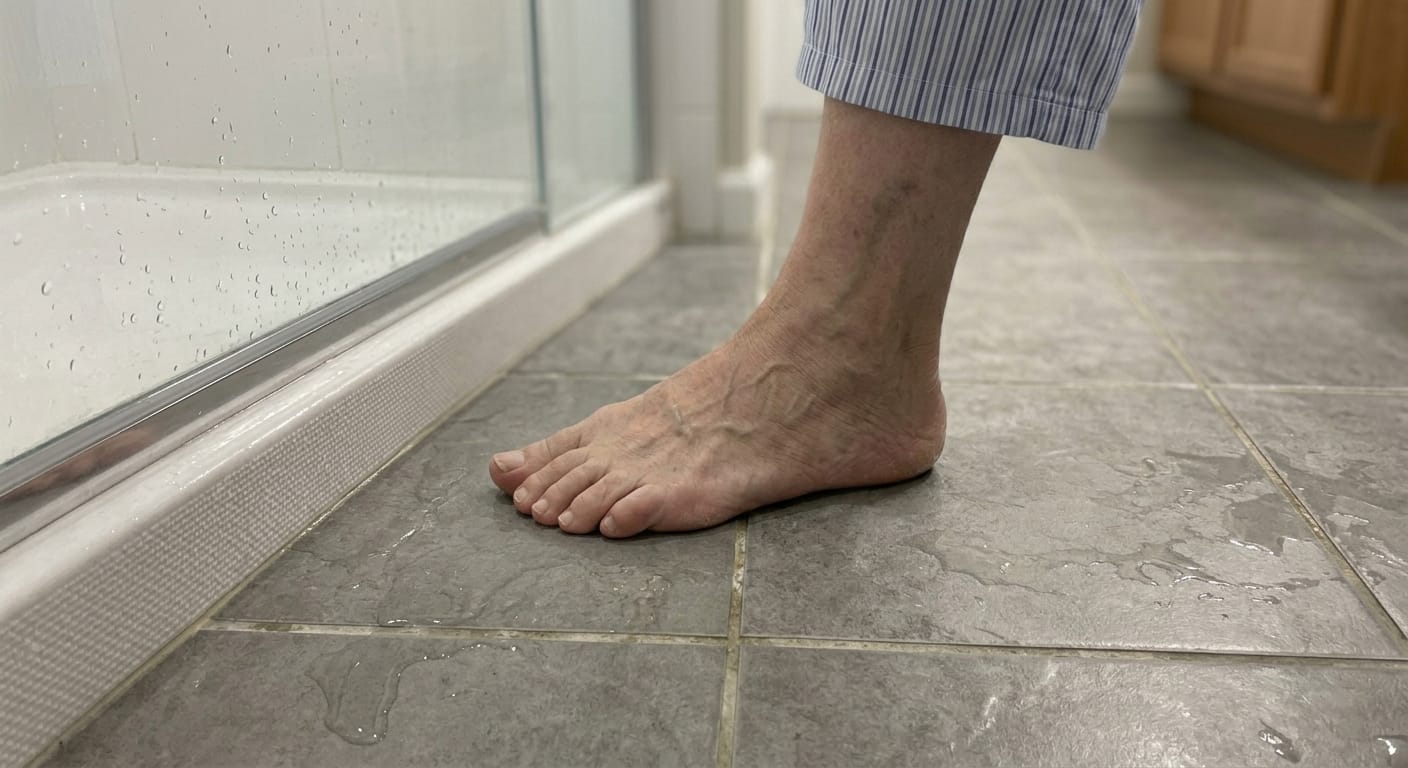
Slip risk often shows up first in subtle behavior changes:
- Slowing down when stepping out of the shower
- Placing feet more carefully on certain areas
- Reaching for walls, counters, or fixtures
- Avoiding certain spots when the floor is damp
These are early signals—not overreactions.
Even if nothing has happened yet, the risk is already increasing.
In many homes, these behaviors appear long before anyone considers changing the flooring.
This is usually overlooked.
Check Your Bathroom Safety Score in Under a Minute
Small bathroom risks often build around wet floors, transitions, missing support, and layout problems. Use the bathroom safety tool to identify which risks may matter most in your home.
What Actually Causes This Risk
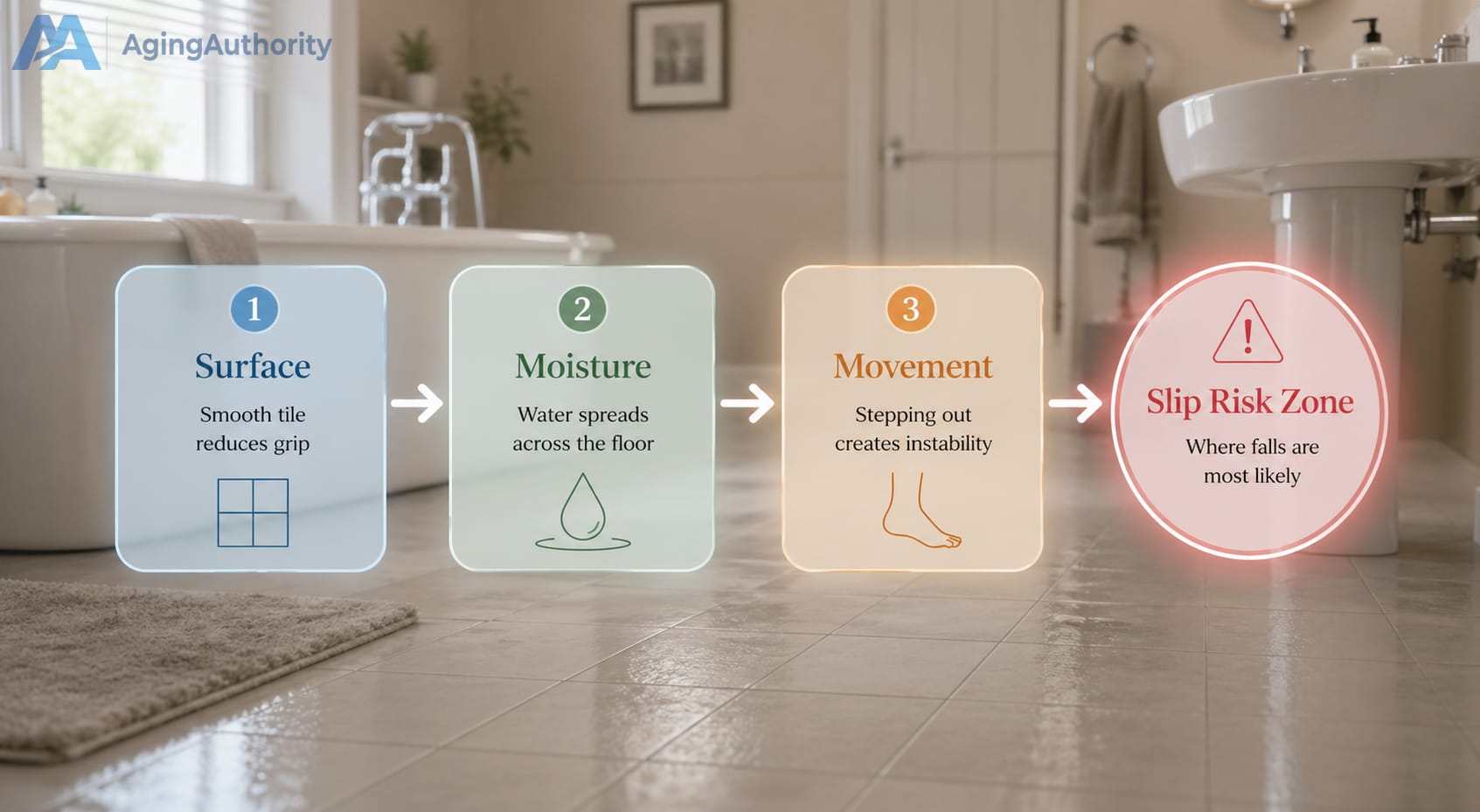
Bathroom floor safety is shaped by three interacting factors:
1. Surface Material
Some flooring materials lose traction when wet. Smooth ceramic tile, polished stone, or worn vinyl can feel stable dry but become slippery under moisture.
2. Moisture Patterns
Water doesn’t spread evenly. It collects in predictable areas:
- Just outside the shower or tub
- Near the sink
- Along walking paths
This creates inconsistent traction zones.
This is not a minor detail.
3. Movement Behavior
Slip risk increases during:
- Stepping out of the shower: wet feet plus weight shift
- Turning: reduced stability and less time to recover balance
- Walking quickly across damp areas
At this point, the setup is no longer fully safe.
For a broader look at how bathroom risk often hides in ordinary routines, see Bathroom Fall Risks Most Families Miss.
Non-Slip Solutions: What They Actually Do in Real Homes
1. Textured or Slip-Resistant Flooring
What it looks like: Matte tiles, textured vinyl, or flooring labeled as slip-resistant.
Why it matters: These surfaces increase friction, especially under light moisture.
What it indicates: This is one of the few solutions that addresses the root problem.
However, performance depends heavily on texture depth and wear over time.
In many older homes, flooring becomes smoother with use.
2. Anti-Slip Coatings
What it looks like: A clear or slightly matte treatment applied to existing floors.
Why it matters: Can improve traction without replacing flooring.
What it indicates: This is often a practical middle-ground solution.
But effectiveness depends on proper application and maintenance.
This is often the most overlooked fix.
3. Non-Slip Mats Inside and Outside the Shower
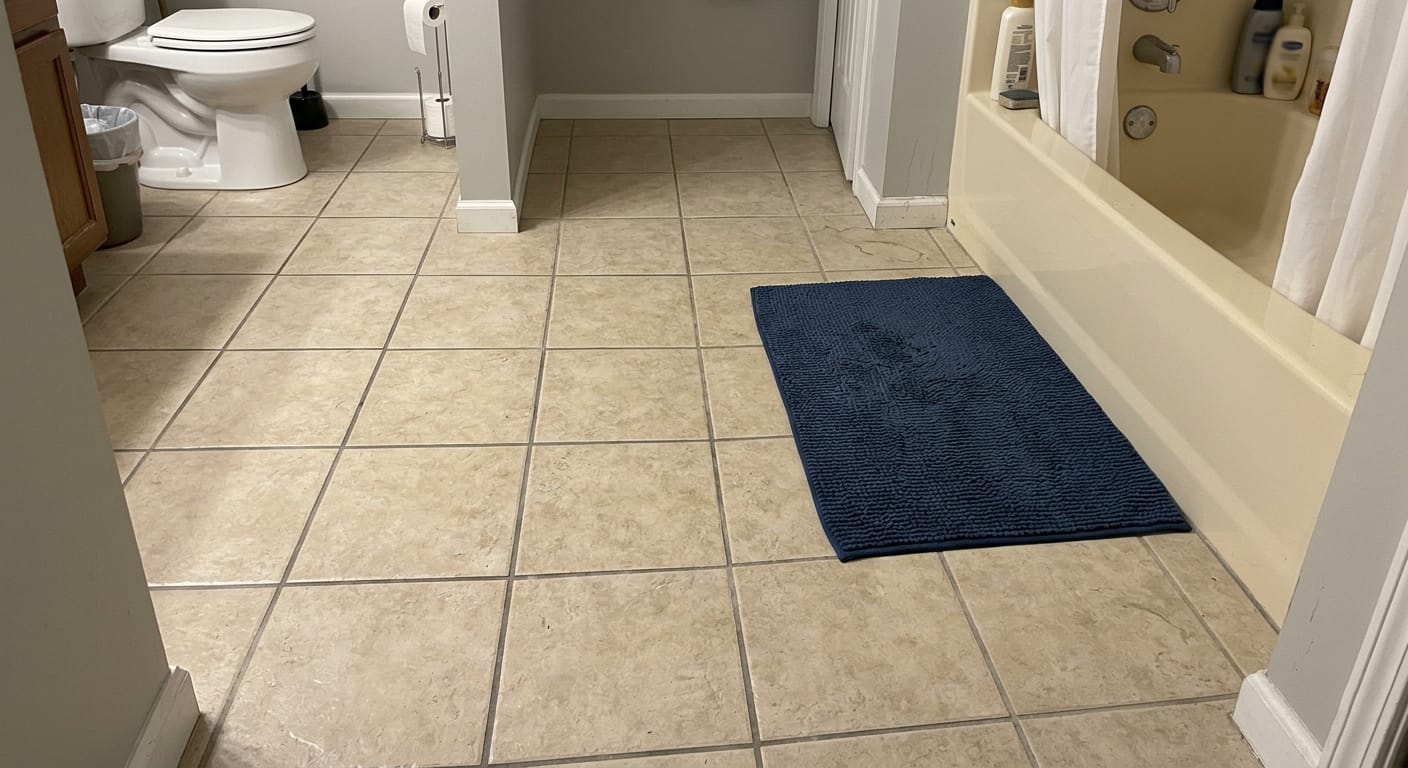
What it looks like: Rubber-backed or suction-based mats placed in high-risk zones.
Why it matters: Targets the highest-risk transition areas.
What it indicates: This has immediate impact when placed correctly.
But mats can introduce new risks if:
- They shift
- Edges curl
- Water gets trapped underneath
This is where many setups fail.
4. Adhesive Non-Slip Strips
What it looks like: Thin strips applied to the floor or inside the tub/shower.
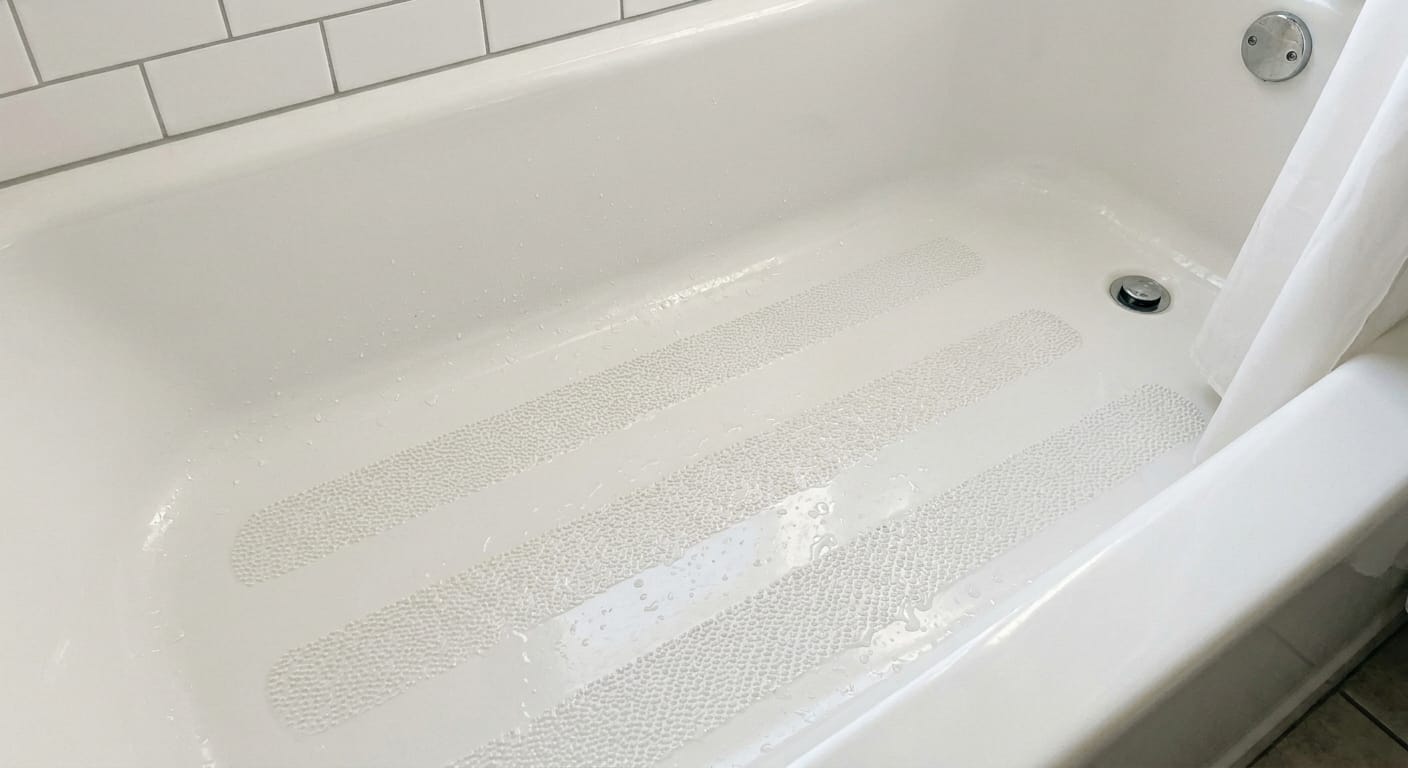
Why it matters: Adds traction exactly where needed.
What it indicates: Effective in controlled zones like:
- Shower floor
- Entry point from tub
Less useful for large walking areas.
5. Bathroom Rugs With Caution
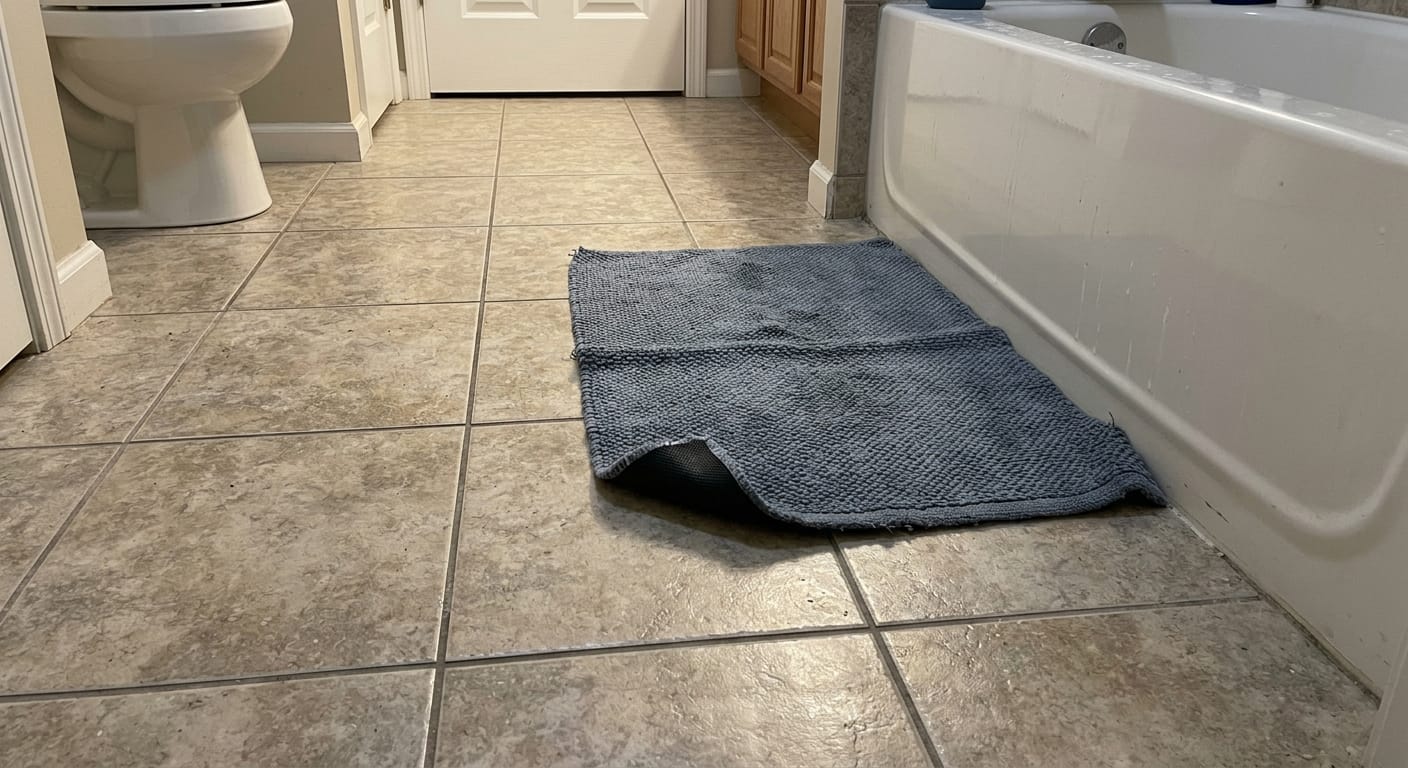
What it looks like: Soft rugs placed near sinks or showers.
Why it matters: Absorbs water, reducing surface moisture.
What it indicates: This can help—but only if the rug is stable.
Loose rugs are a known trip hazard.
In many homes, rugs create more risk than they reduce.
What These Patterns Usually Mean
When multiple small issues exist together, risk compounds:
- Slightly slippery floor
- Small amounts of water
- Slower or less stable movement
Individually, each may seem manageable.
Together, they create instability.
This is how most bathroom falls develop.
Not from one failure—but from accumulation.
This is usually overlooked until something happens.
Floor traction is only one part of bathroom safety. If a person also needs seated support while bathing, review Shower Chair for Seniors: Safety Guide. If support placement is the bigger issue, see Bathroom Grab Bar Placement.
Practical Adjustments That Often Have the Most Impact
1. Start with High-Risk Zones
Focus first on:
- Shower exit
- Immediate walking path
This should be addressed first.
2. Improve Surface Traction
- Apply anti-slip coating
- Use textured mats or strips
This has the highest impact.
3. Control Moisture Spread
- Improve drying habits
- Use absorbent, stable mats
Water control is just as important as surface texture.
4. Remove Unstable Elements
- Eliminate loose rugs
- Replace worn mats
This is not a minor upgrade—it’s risk removal.
5. Match the Solution to Movement
A person who:
- Moves slowly
- Has balance concerns
- Relies on support
Will need more consistent traction—not just spot fixes.
This depends on the home layout and the person’s needs.
Quick Comparison Table
| Solution | What It Indicates | Why It Matters | Main Caution |
|---|---|---|---|
| Textured Flooring | Long-term traction improvement | Addresses root surface issue | May require renovation or replacement |
| Anti-Slip Coating | Moderate traction upgrade | Useful without full renovation | Needs proper application and upkeep |
| Non-Slip Mats | Localized protection | Helps at key transition points | Can shift, curl, or trap water |
| Adhesive Strips | Targeted traction zones | Effective in small wet areas | Less useful for large walking paths |
| Loose Rugs | Possible trip hazard | May absorb water | Often introduces new fall risk |
When to Consider Professional Evaluation
In some cases, surface fixes alone may not be enough.
Consider professional input if:
- There are repeated near-falls in the bathroom
- Movement has noticeably slowed or become unstable
- Multiple small fixes have not improved confidence
- The bathroom layout creates unavoidable wet zones
- Structural changes such as flooring replacement or drainage improvement may be needed
Relevant professionals may include:
- Home modification contractors
- Occupational therapists
- Accessibility specialists
- Home safety assessors
A professional evaluation can help identify risks that are not immediately visible and recommend solutions tailored to the specific home and individual.
For broader planning beyond bathroom floors, see Home Modifications for Aging in Place.
Not Sure Which Bathroom Risk Matters Most?
Bathroom slip risk often overlaps with grab bar placement, shower access, toilet height, lighting, and layout. The bathroom safety tool can help you identify which area may need attention first.
Conclusion
Bathroom floor safety is not determined by one product or one decision.
It develops over time through how surfaces, moisture, and movement interact.
In many homes, the risk is already present—but not yet obvious.
The earlier these patterns are recognized, the easier it becomes to make adjustments that can help support safer daily movement.
No single solution guarantees safety.
But the right combination, applied in the right places, can significantly improve stability and reduce risk over time.
DisclaimerThis content is for general educational purposes only and does not replace a professional home safety assessment, medical advice, occupational therapy evaluation, or licensed contractor guidance. If someone has already fallen, is experiencing dizziness, sudden weakness, or major changes in balance, consult a qualified healthcare professional.
FAQ
What is the best non-slip solution for a bathroom floor?
The best solution depends on the floor surface, moisture pattern, and how the person moves. Textured flooring and anti-slip coatings address broader surface traction, while mats and strips are more useful in specific high-risk zones such as shower exits.
Are bathroom rugs safe for seniors?
Bathroom rugs can reduce moisture, but they may also create trip risk if they slide, curl, bunch up, or become uneven. For older adults, loose rugs are often less safe than stable, low-profile, non-slip mats designed for wet areas.
Do anti-slip coatings really work on bathroom tile?
Anti-slip coatings can improve traction on some existing tile floors, but their performance depends on the product, application quality, floor material, cleaning habits, and wear over time. They should be treated as part of a broader bathroom safety plan, not a complete guarantee.
Where is bathroom floor slip risk usually highest?
Risk is usually highest near the shower or bathtub exit, around the sink, and along damp walking paths. These areas combine moisture, weight shifts, turning, and reduced traction.
When should a family consider professional help?
Professional input may be useful when there are repeated near-falls, visible hesitation, unstable movement, unavoidable wet zones, or when surface fixes do not restore confidence. A home safety assessor, occupational therapist, or home modification contractor may help identify the right changes.