
Grab bars improve bathroom safety only when they are placed where the body actually loses balance.
For older adults, the highest risk moments occur during everyday movements—sitting on the toilet, stepping into a shower, or shifting weight on wet surfaces.
Areas to assess include the toilet, shower, and bathtub entry, based on the person’s movements and the room layout.
A qualified installer should check structural support, mounting method, reach, and the person’s transfer needs. No single placement eliminates fall risk.
Introduction
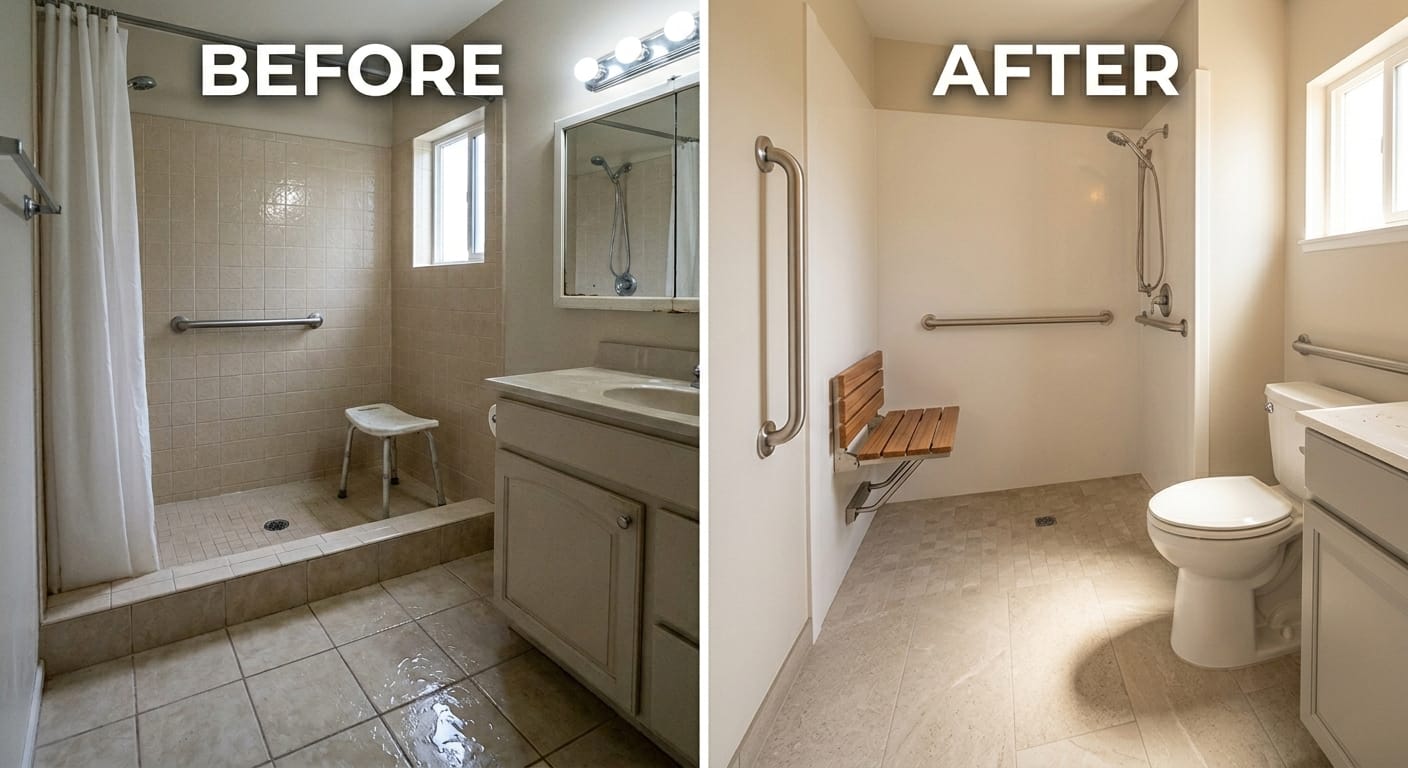
Most bathroom falls don’t happen because a home looks unsafe.
They happen during small, everyday movements—when sitting down on a toilet, stepping into a shower, or shifting weight on a wet surface.
In these moments, balance changes quickly. Without immediate support, even a minor loss of stability can lead to a fall.
Bathrooms combine several risk factors: hard surfaces, moisture, tight spaces, and frequent movement transitions. For older adults, this makes the bathroom one of the most dangerous areas in the home.
According to the Centers for Disease Control and Prevention (CDC), falls are the leading cause of injury among adults aged 65 and older, and many occur during routine bathroom use.
Grab bars are often recommended as a solution. However, their effectiveness depends entirely on where they are placed. As part of a broader safety approach, bathroom design should be evaluated alongside other risk areas in the home, as explained in our guide to Home Modifications for Aging in Place.
A poorly positioned grab bar may provide little to no support when it is actually needed.
This guide explains where grab bars should be installed to align with natural movement patterns—so they support the body exactly at the moments when balance is most vulnerable.
Plan Your Bathroom Project
Organize bathroom project priorities and questions before comparing written proposals.
Table of Contents
- Executive Summary
- Introduction
- Why Grab Bar Placement Matters for Bathroom Safety
- Where Should Grab Bars Be Installed in a Bathroom for Elderly Safety?
- Grab Bar Placement Near the Toilet
- Grab Bar Placement Inside the Shower
- Grab Bar Placement for Bathtubs
- Recommended Grab Bar Height and Position
- Common Grab Bar Placement Mistakes
- Common Grab Bar Placement Locations in Bathrooms
- How Grab Bar Placement Fits into Whole-Bathroom Safety
- Frequently Asked Questions
- Check Your Home Safety Risk
- Conclusion
- Sources
Why Grab Bar Placement Matters for Bathroom Safety
Many families recognize the importance of grab bars but underestimate how placement affects their effectiveness.
Bathroom falls often occur during movement transitions, such as:
- lowering the body to sit on a toilet
- pushing upward to stand
- stepping over a bathtub edge
- shifting weight on wet flooring
- turning while washing in the shower
These movements require a temporary shift in balance and body weight. When traction is reduced by moisture or when muscles are weaker with age, that shift can lead to instability.
A grab bar placed within reach at the moment balance changes allows the user to stabilize themselves during these transitions.
By contrast, grab bars installed randomly — or simply placed where wall space is available — may offer little support when it is actually needed.
Effective bathroom safety planning therefore focuses on movement-based placement, ensuring support is available exactly where balance shifts occur.
Where Should Grab Bars Be Installed in a Bathroom for Elderly Safety?
The safest locations for grab bars are areas where balance changes during normal bathroom use.
These locations typically include:
- next to the toilet
- inside the shower
- near the bathtub entry point
- along shower walls
- near shower seating areas
Rather than treating grab bars as decorative additions, they should be installed at movement transition points where the body shifts between standing, sitting, or stepping.
This approach allows the user to maintain stability throughout the entire movement sequence.
Grab Bar Placement Near the Toilet
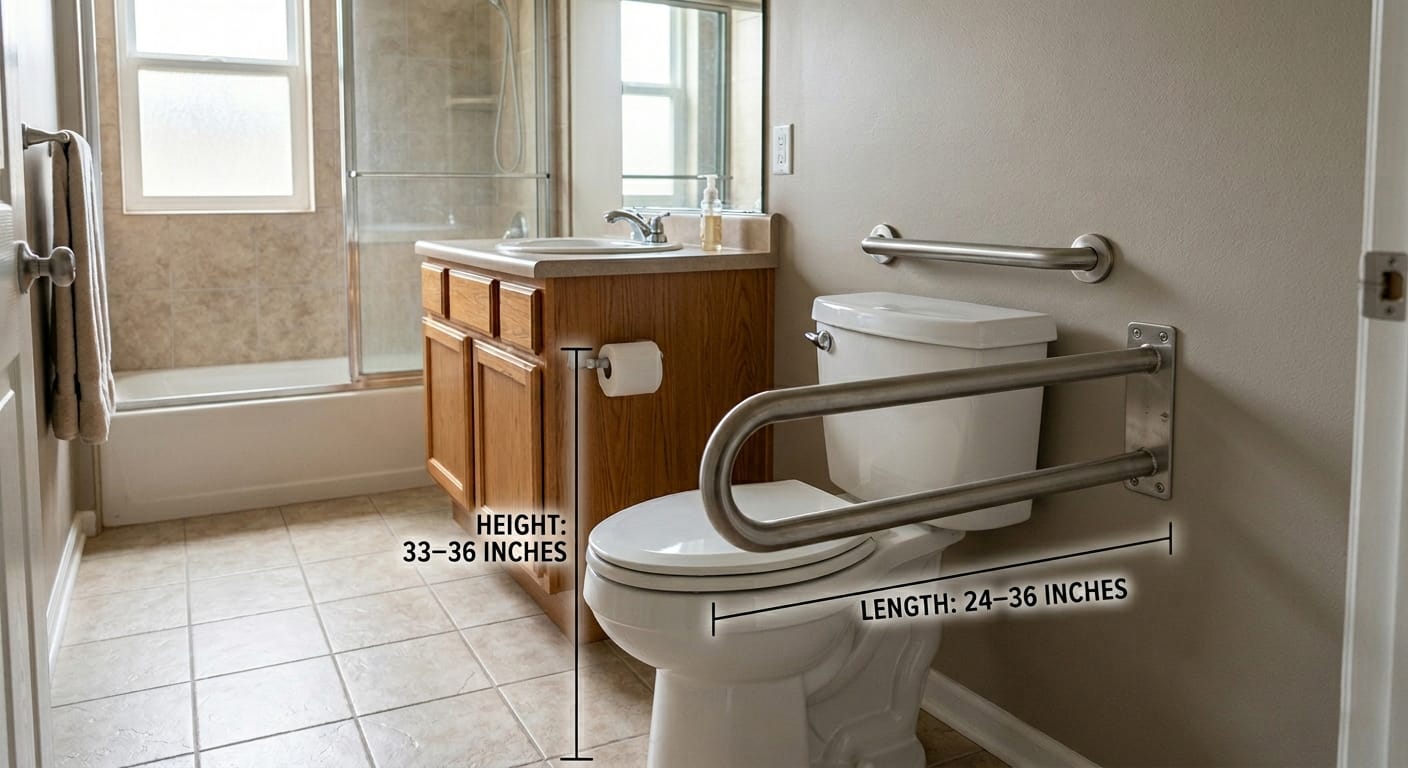
The toilet area is one of the most common locations where grab bars are installed because sitting down and standing up requires controlled body movement.
Toilet height and surrounding support also affect how safely a person can sit and stand. You can learn more in our guide to Best Toilet Height for Seniors.
For many older adults, these transitions involve:
- bending the knees and hips
- lowering body weight
- shifting balance forward when standing
Without support, these motions can feel unstable.
Side Wall Grab Bars
A grab bar installed on the side wall next to the toilet is often the most practical solution in residential bathrooms.
This bar allows the user to:
- support their body while lowering onto the seat
- push upward while standing
- maintain balance while adjusting posture
Side-wall bars are particularly effective because they align with the direction of movement during sitting and standing.
Rear Wall Grab Bars
Some bathrooms also allow installation on the rear wall behind the toilet.
Rear bars can provide stabilization while sitting down or adjusting body position, though they typically work best when combined with a side bar.
Dual-Bar Installations
In larger bathrooms, a side-wall and rear-wall arrangement may be worth discussing with a qualified installer, depending on the wall structure and transfer needs.
Check whether the proposed arrangement provides reachable support during the actual sitting and standing movements.
Grab Bar Placement Inside the Shower
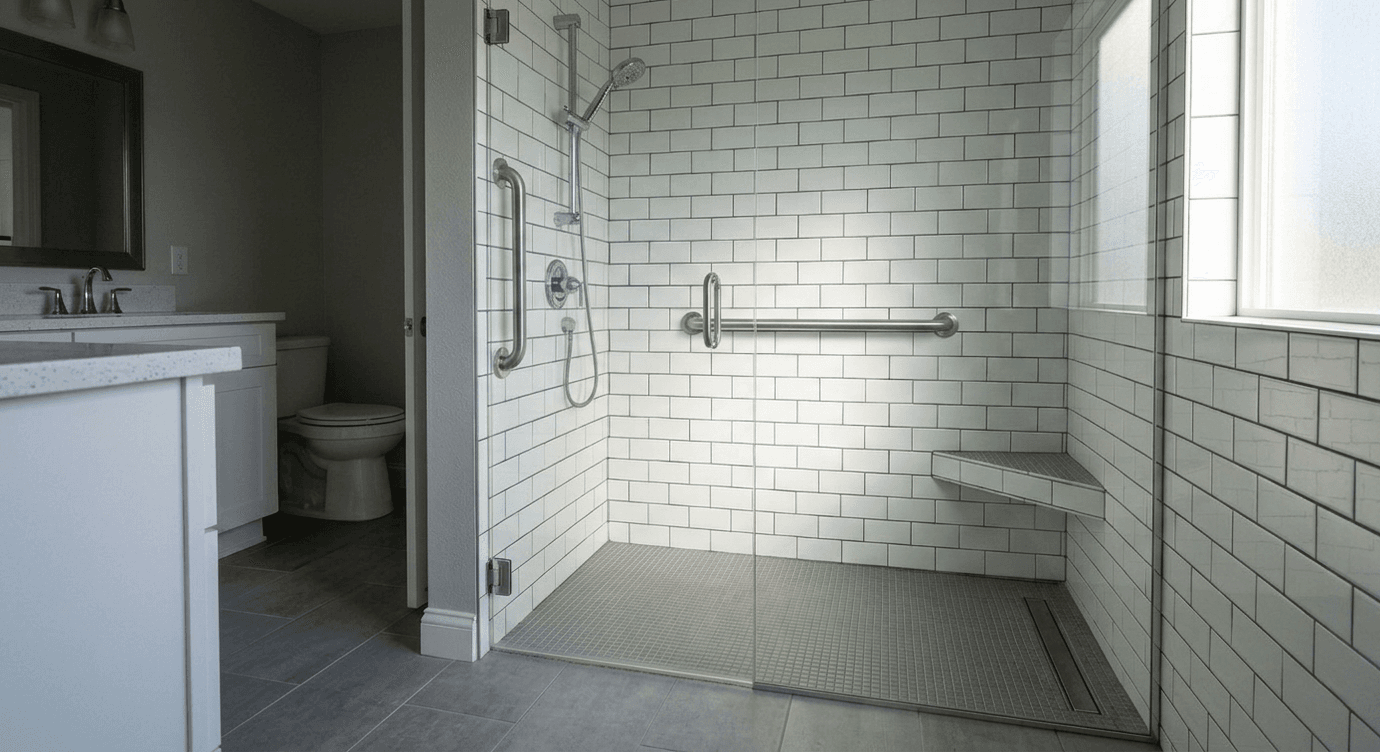
Showers present unique safety challenges because they combine water, soap, and smooth flooring — all of which reduce traction.
Choosing the right bathing setup can also affect safety and ease of movement. You can explore the differences in our guide to Walk-In Shower vs Walk-In Tub: Which Is Safer for Seniors?
Inside a shower, grab bars help support three common movements:
- entering the shower
- maintaining balance while standing or turning
- exiting onto the bathroom floor
Vertical Entry Grab Bar
A vertical grab bar near the shower entrance helps stabilize the body while stepping over the threshold or curb.
This type of bar is particularly helpful for:
- stepping into the shower
- shifting weight between feet
- steadying balance during entry
Vertical bars allow the hand to grip at different heights depending on the user’s reach and body position.
Horizontal Shower Wall Bar
A horizontal bar along the side wall of the shower provides support while standing, washing, or turning.
This placement helps users maintain balance when:
- reaching for soap or shampoo
- shifting weight while washing
- adjusting their stance
Bars Near Shower Seating
For showers that include a built-in seat or fold-down bench, a grab bar placed near the seating area supports safe sitting and standing movements.
This allows the user to transition between seated and standing positions without losing balance.
Grab Bar Placement for Bathtubs
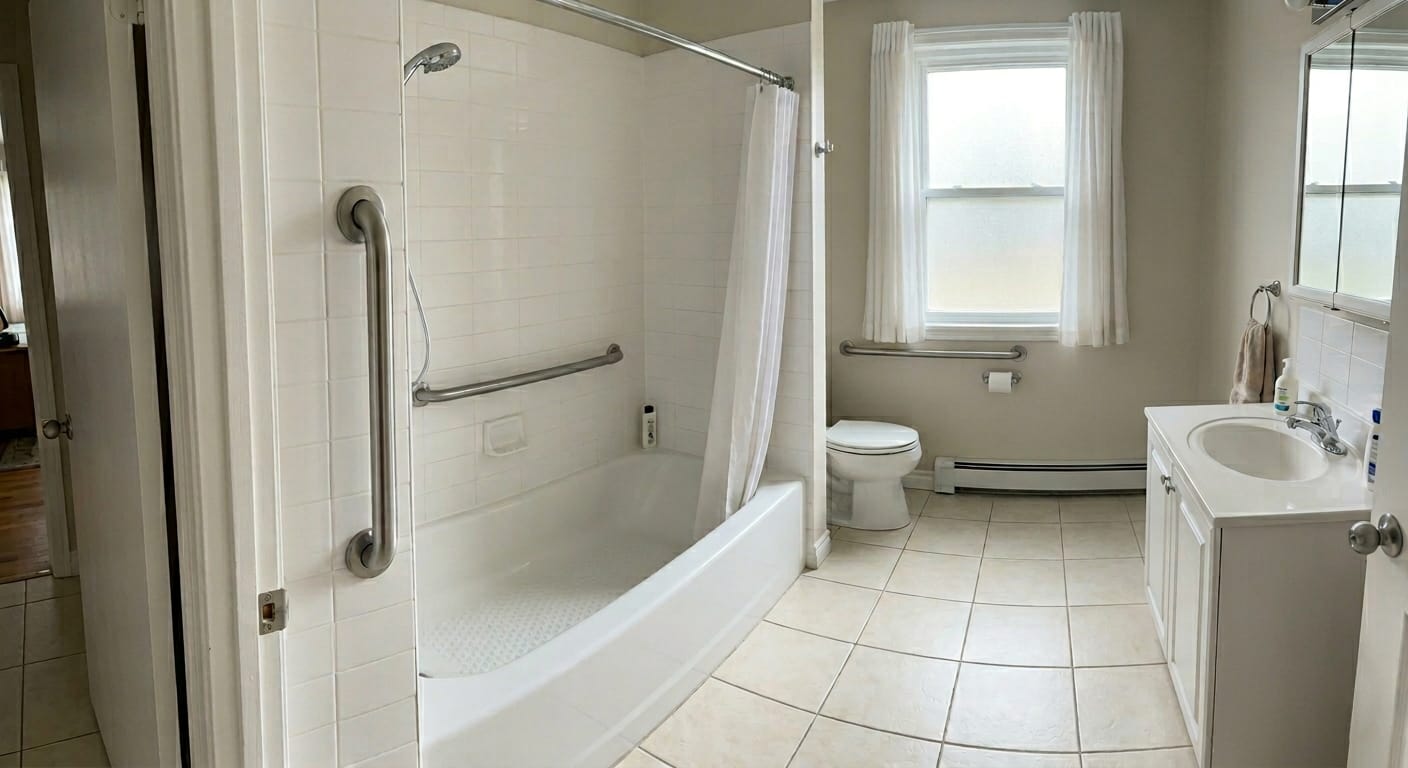
Bathtubs pose a different safety challenge because entering and exiting typically requires stepping over a raised edge.
This motion combines:
- stepping
- balancing on one leg
- shifting weight onto a wet surface
Without support, this can be one of the most dangerous bathroom movements.
Entry Grab Bar
A vertical grab bar near the tub entry point helps stabilize the body while stepping over the tub wall.
This placement allows the user to hold the bar while lifting a leg over the edge.
Interior Support Bar
Once inside the tub, a horizontal grab bar along the side wall can help maintain balance while standing or adjusting position.
This is especially important when the tub floor becomes slippery.
Exit Support
The same entry bar often assists with exiting the tub, allowing users to maintain balance while stepping back onto the bathroom floor.
Recommended Grab Bar Height and Position
While bathroom layouts vary, there are typical installation ranges that support safe use.
The ADA Standards specify 33 to 36 inches above the finished floor, measured to the top of the gripping surface, for covered horizontal grab bars. This is not a universal height for all grab bars in private homes, particularly vertical entry bars. The final position depends on the person, the layout, and the wall structure.
Vertical vs Horizontal Grab Bars
Vertical grab bars
- support stepping movements
- provide multiple grip heights
- useful at shower or tub entry points
Horizontal grab bars
- support pushing or pulling movements
- help maintain balance along a wall
- useful near toilets or along shower walls
Anchoring and Structural Support
Grab bars intended for body-weight support need a mounting method suited to the wall and the manufacturer’s instructions. Drywall alone is not adequate for a weight-bearing bar.
Improper installation can cause bars to loosen or detach when weight is applied. A qualified installer can check the wall and mounting method before the bar is used.
Common Grab Bar Placement Mistakes
Despite good intentions, some grab bar installations fail to improve safety because of incorrect placement.
Installing Bars Too Far From Movement Points
A grab bar that requires reaching or stretching may not help during a sudden loss of balance.
Bars should be located within immediate reach of transition movements.
Using Suction Grab Bars as Permanent Support
Suction bars are not a substitute for a securely mounted grab bar. For example, Moen’s suction balance bar instructions specify balance assistance only, not body-weight leverage. Do not rely on a suction bar to stand up, transfer, support body weight, or catch a fall. Follow the instructions for the specific product.
Installing Bars Too High or Too Low
Bars that are positioned outside the typical reach range may not support natural movement patterns.
Placement should reflect the user’s height and mobility level.
Insufficient Structural Support
A grab bar needs a mounting method and backing rated for its intended use; drywall alone generally cannot provide that support.
Without structural support, the bar may fail under pressure.
Common Grab Bar Placement Locations in Bathrooms
| Bathroom Area | Movement Supported | Typical Placement |
|---|---|---|
| Toilet area | Sitting and standing transitions | Side wall or rear wall grab bars |
| Shower entry | Step-in stability | Vertical grab bar near shower entrance |
| Shower wall | Balance while bathing | Horizontal grab bar along wall |
| Bathtub edge | Entering and exiting tub | Vertical or angled grab bar |
| Shower seating | Sitting and standing | Horizontal bar near shower bench |
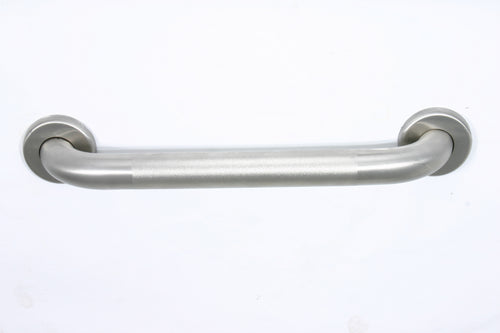
This placement framework helps ensure that grab bars align with the movements that create the greatest fall risk.
How Grab Bar Placement Fits into Whole-Bathroom Safety
Grab bars are one important part of a broader bathroom safety strategy.
Even with well-placed support bars, other environmental factors influence fall risk, including:
- slippery flooring
- poor lighting
- difficult-to-reach fixtures
- lack of seating during bathing
For this reason, bathroom modifications are most effective when considered as part of a whole-home safety plan.
Families evaluating bathroom improvements may also explore other safety upgrades such as non-slip surfaces, improved lighting, and accessible shower layouts as part of a broader home safety plan.
A complete overview of these safety upgrades can be found in our guide to Home Modifications for Aging in Place, and families can also use our Bathroom Safety for Seniors guide for a broader bathroom-specific safety framework.
Approaching bathroom design from a movement-based safety perspective helps ensure that the environment continues to support independence as mobility needs change.
Frequently Asked Questions
What is the safest grab bar placement in a bathroom?
The safest grab bar placement aligns with movement transitions where balance changes occur. These locations typically include next to the toilet, inside the shower, and near bathtub entry points.
How many grab bars should be installed in a bathroom?
There is no single number for every bathroom. Consider where the person needs a handhold near the toilet, shower, or bathtub, and whether each bar can be mounted securely.
What height should grab bars be installed?
For horizontal grab bars covered by the ADA Standards, the range is 33 to 36 inches above the finished floor, measured to the top of the gripping surface. It is not a universal height for every bar in a private home.
Are suction grab bars safe?
Do not rely on suction bars for body-weight support, standing up, transfers, or catching a fall. Follow the product instructions; use a properly mounted grab bar when weight-bearing support is needed.
Check Your Home Safety Risk
Many homes appear safe but still contain hidden fall risks—especially in high-use areas like bathrooms and stairs.
Our Home Safety Assessment Tool helps you quickly identify these risks and understand where simple changes can make a real difference.
Answer a few quick questions to get your personalized safety score:
Plan Your Bathroom Project
Organize bathroom project priorities and questions before comparing written proposals.
Conclusion
Installing grab bars is one of the most practical ways to improve bathroom safety for older adults.
However, the true benefit comes from strategic placement.
Grab bars that align with natural movement transitions — such as sitting on a toilet, stepping into a shower, or exiting a bathtub — provide meaningful support when balance is most vulnerable.
By focusing on these transition points, families can create bathroom environments that reduce fall risk while allowing older adults to maintain independence and confidence in their daily routines.
Published by AgingAuthority
This guide provides general information about bathroom grab bar placement. The final position and mounting method should be checked for the person and bathroom by a qualified professional. Learn more about our editorial process.
Sources
- Centers for Disease Control and Prevention — Older Adult Falls
- National Institute on Aging — Home Safety Tips for Older Adults
- AARP — HomeFit Guide
- U.S. Department of Housing and Urban Development — Aging in Place Home Modifications
- U.S. Access Board — Bathing Rooms and Grab Bar Guidance
- U.S. Access Board — ADA Standards, Section 609: Grab Bars
- Moen — Suction Balance Bar Instructions