
Executive Summary
Toilet height is often treated as a minor fixture detail. In practice, it directly affects one of the highest-risk movements in the home: transitioning from sitting to standing.
In real residential environments, this moment is not routine—it is one of the most common points of instability for older adults.
For older adults, this movement depends on lower-body strength, joint flexibility, balance, and the availability of stable hand support.
A toilet that is too low increases the physical effort required to stand and may lead to instability. A toilet that is too high can reduce control during sitting and compromise foot stability. The safest height is not universal. It emerges from how the individual’s body interacts with the surrounding bathroom environment.
At AgingAuthority, toilet height is evaluated as part of a transfer system—not as a standalone upgrade. Height improves safety only when combined with proper support, traction, and spatial layout.
1. Introduction
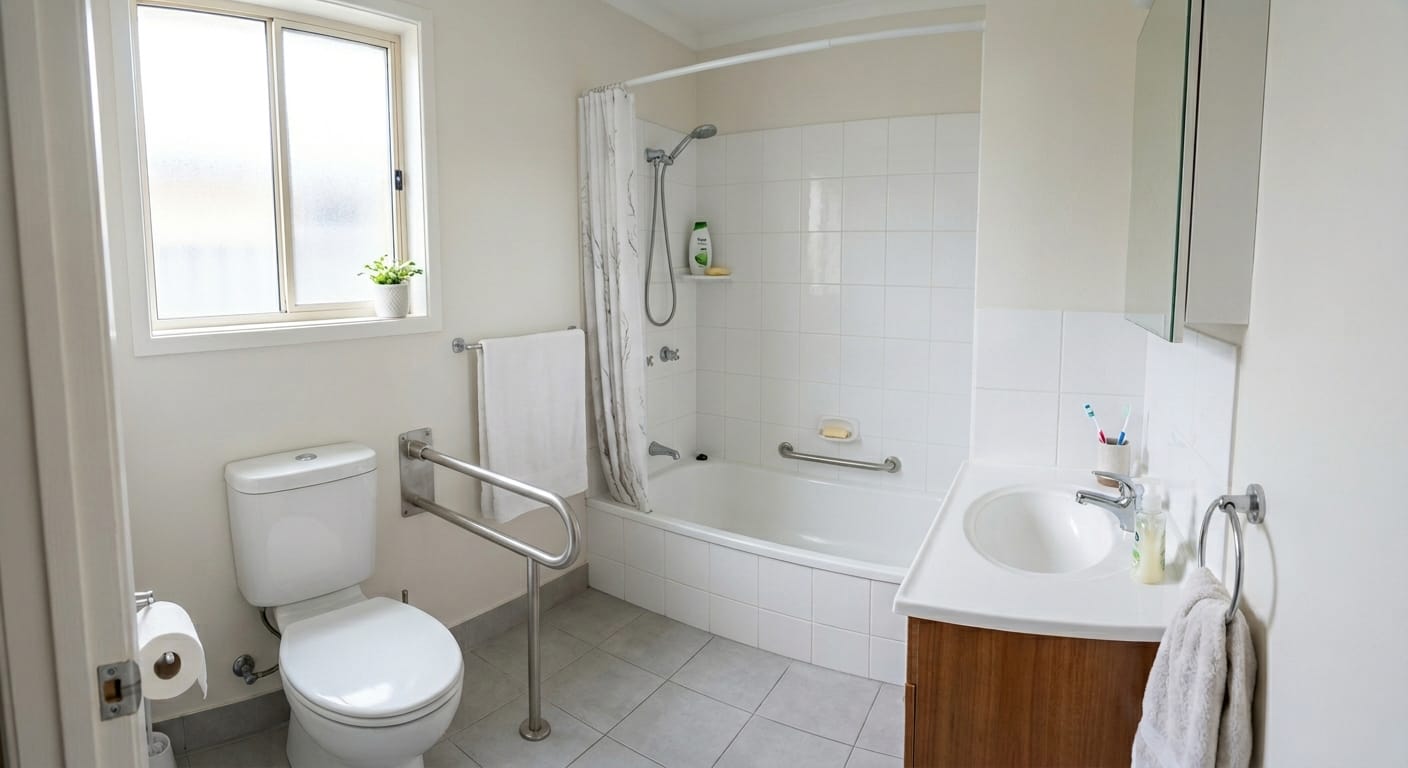
In bathroom safety planning, toilet height is often overlooked in favor of more visible modifications such as grab bars or walk-in showers. However, one pattern appears consistently in real homes: difficulty during bathroom use is frequently tied to the effort required to sit down and stand up safely.
This is not a comfort issue alone. It is a transfer safety issue.
As people age, several changes occur simultaneously:
- Reduced leg strength
- Joint stiffness, especially in the knees and hips
- Slower balance correction
- Increased urgency during nighttime bathroom visits
These factors converge at a single moment: standing up from the toilet.
When toilet height does not match the user’s physical capacity, that moment can shift from controlled to unstable. Small misalignments in height can increase effort, reduce control, and raise fall risk—especially in bathrooms where space is limited and surfaces may be slippery.
- Executive Summary
- 1. Introduction
- 2. What Is Considered the Best Toilet Height for Elderly Safety?
- 3. Why Toilet Height Matters More Than Many Families Expect
- 4. Deep Dive on Transfer Safety and Standing Stability
- 5. Standard Height vs Comfort Height Toilets
- 6. How to Choose the Right Toilet Height in a Real Home
- 7. Related Bathroom Safety Features That Matter
- 8. Typical Cost and Upgrade Options
- 9. When to Hire a Professional
- 10. Frequently Asked Questions
- 11. Conclusion
- 12. Sources
Plan Your Bathroom Project
Organize bathroom project priorities and questions before comparing written proposals.
2. What Is Considered the Best Toilet Height for Elderly Safety?
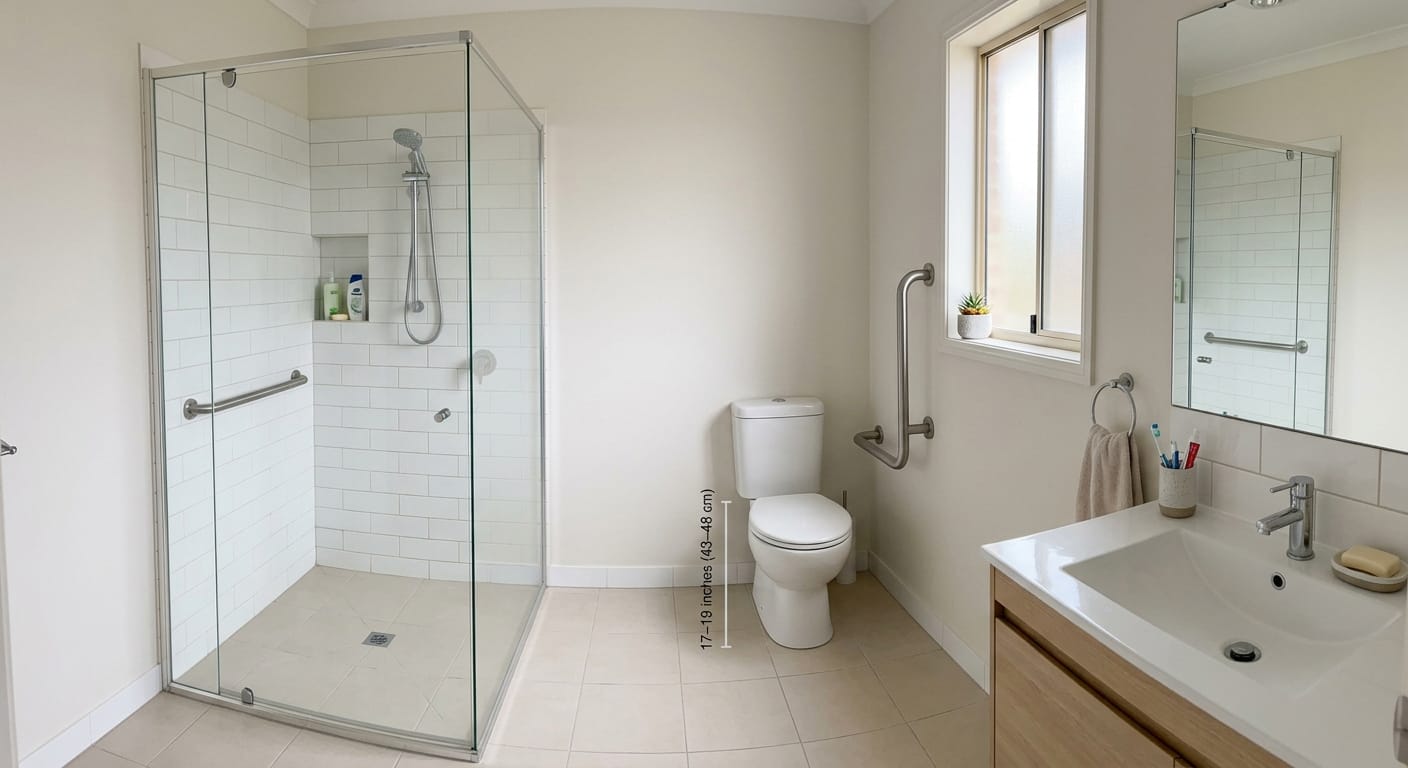
Toilet height is typically measured from the floor to the top of the seat.
There are three common categories:
| Toilet Type | Typical Height Range | Best Fit For | Main Limitation |
|---|---|---|---|
| Standard Height Toilet | 14–15 inches | Shorter individuals or those with strong mobility | Requires deeper bending and more effort to stand |
| Comfort (Chair) Height Toilet | 17–19 inches | Many older adults with reduced strength or joint stiffness | May feel too high for shorter users |
| Raised Toilet Seat | Adds 2–5 inches | Temporary support or transitional solution | Stability depends on installation and surrounding support |
| Toilet Safety Frame | N/A (adds arm support) | Users needing assistance pushing up | Requires adequate space around toilet |
In general, comfort height toilets (17–19 inches) align more closely with typical chair height, reducing the distance required to stand. This often decreases strain on the knees and hips.
However, the safest height is not defined by a single number. It depends on:
- The individual’s leg length
- Their ability to control movement
- The availability of hand support nearby
A toilet can be technically “higher” but still unsafe if it does not allow controlled movement.
3. Why Toilet Height Matters More Than Many Families Expect
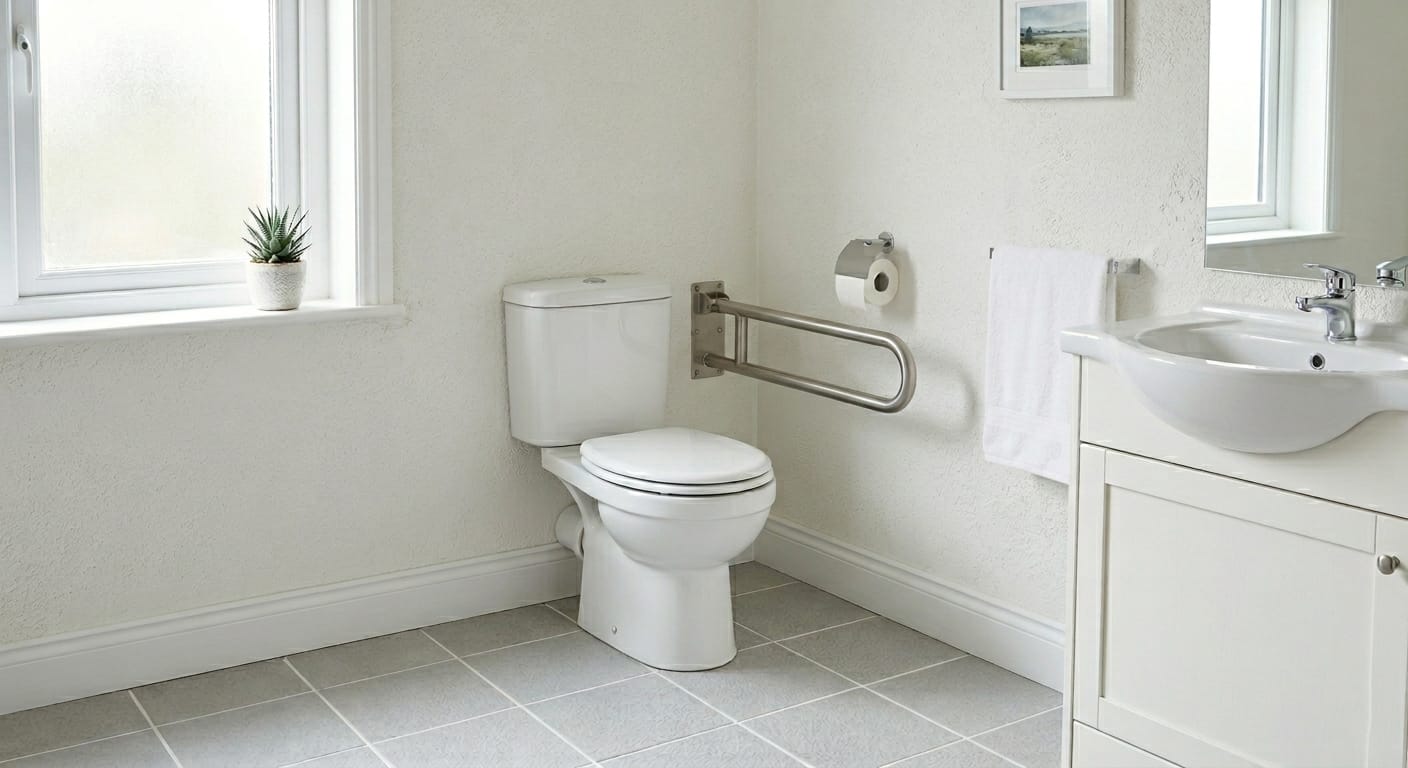
In many households, toilet height is only reconsidered after difficulty becomes noticeable. By that point, the user may already be compensating in ways that introduce risk.
Common patterns include:
- Pushing off unstable surfaces such as sinks or towel bars
- Dropping quickly into a seated position due to lack of control
- Leaning forward excessively to gain momentum when standing
- Avoiding using the bathroom independently
These are not isolated behaviors. They are adaptations to a mismatch between body capacity and fixture height.
The consequences are practical:
- Increased physical effort with each use
- Reduced stability during critical transitions
- Greater reliance on unsafe supports
- Elevated fall risk in a confined, hard-surface environment
Bathrooms amplify risk because they combine:
- Hard surfaces
- Limited space
- Moisture
- Urgency of use
Height influences how safely movement occurs within this environment.
4. Deep Dive on Transfer Safety and Standing Stability
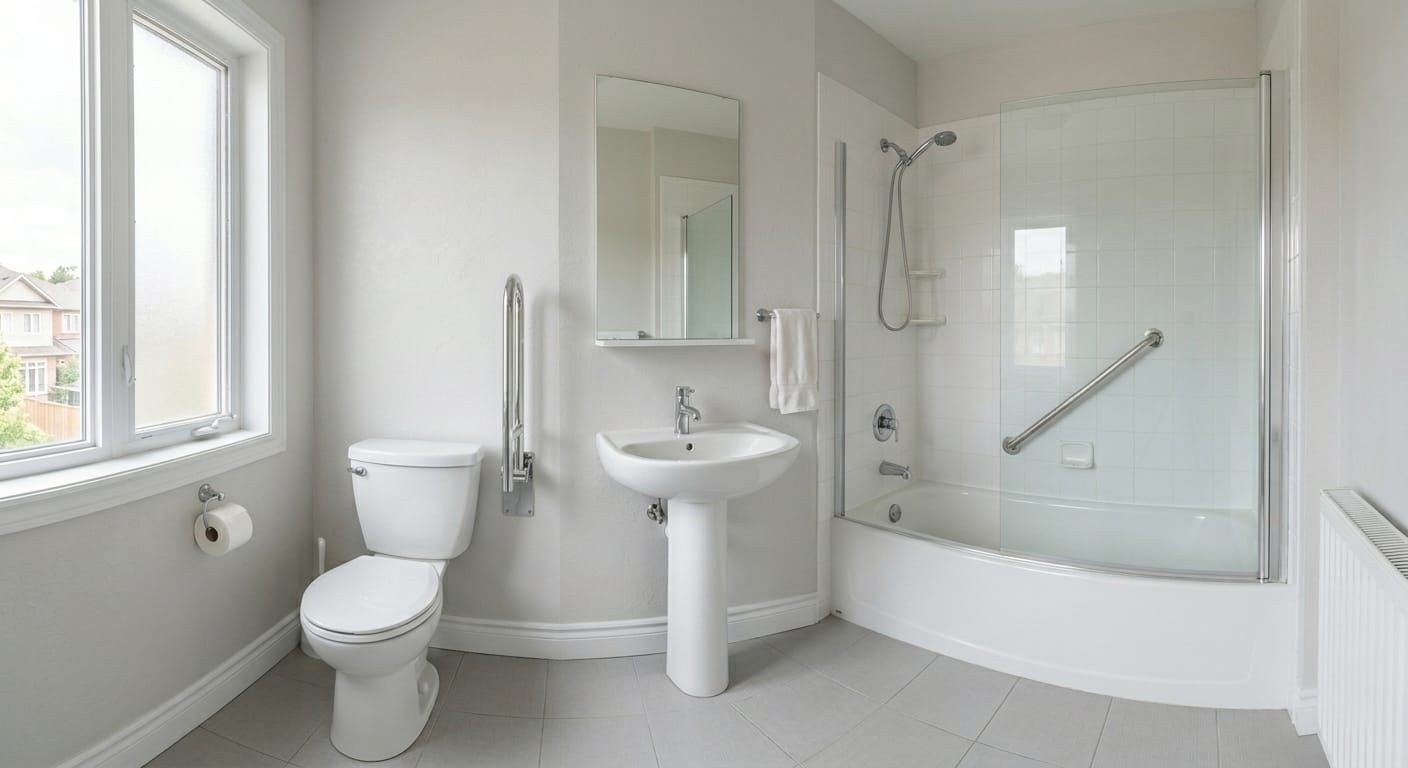
This is where toilet height becomes a functional safety factor rather than a comfort preference.
Transfer risk concentrates at the moment of standing.
Standing up from a seated position requires coordinated effort:
- The body shifts forward
- Weight transfers from the seat to the feet
- The knees and hips extend
- Balance must be maintained throughout
A lower toilet increases the required range of motion at the knees and hips. This demands more strength and control.
A higher toilet reduces that range—but introduces different challenges if not properly matched.
A toilet can be reachable but still not be safe.
Lower-Body Strength and Joint Demand
Standing from a low seat places significant load on:
- Quadriceps (front thigh muscles)
- Hip extensors
- Knee joints
For individuals with arthritis or muscle weakness, this can result in:
- Slow, unstable standing
- Use of momentum instead of control
- Increased risk of losing balance mid-transition
Balance During Movement
Balance is most vulnerable during movement transitions—not while sitting or standing still.
A slightly incorrect height can lead to:
- Forward instability when initiating standing
- Side-to-side sway when pushing off
- Difficulty correcting balance if the movement is uneven
The Role of Controlled Sitting
Safety is not only about standing.
Lowering onto the toilet also requires control.
A toilet that is too high may:
- Prevent full foot contact with the floor
- Reduce stability during descent
- Increase the likelihood of abrupt or uncontrolled sitting
Nighttime Use and Urgency
Bathroom use at night introduces additional constraints:
- Reduced visibility
- Faster movement due to urgency
- Lower alertness
In these conditions, precision decreases.
Height mismatches become more dangerous because:
- Movements are less controlled
- Reaction time is slower
- Environmental awareness is reduced
Hand Support as a Critical Factor
Height alone does not determine safety.
Height helps only when the rest of the transfer environment supports control.
Hand support plays a central role:
- Grab bars allow controlled push-off
Proper placement of these supports is critical to their effectiveness. This is why grab bar positioning plays such an important role in bathroom safety (see Grab Bar Placement in Bathroom: Safe Locations for Seniors).
- Arm support reduces load on the legs
- Stable contact points improve balance
Without proper support, even an optimal height may not prevent instability.
Environmental Interaction
Real bathrooms are not designed as open movement spaces.
Constraints include:
- Narrow clearance
- Nearby fixtures
- Limited positioning options
These factors influence how a person approaches the toilet and how they stand up.
Toilet height must be evaluated within this environment—not in isolation.
5. Standard Height vs Comfort Height Toilets
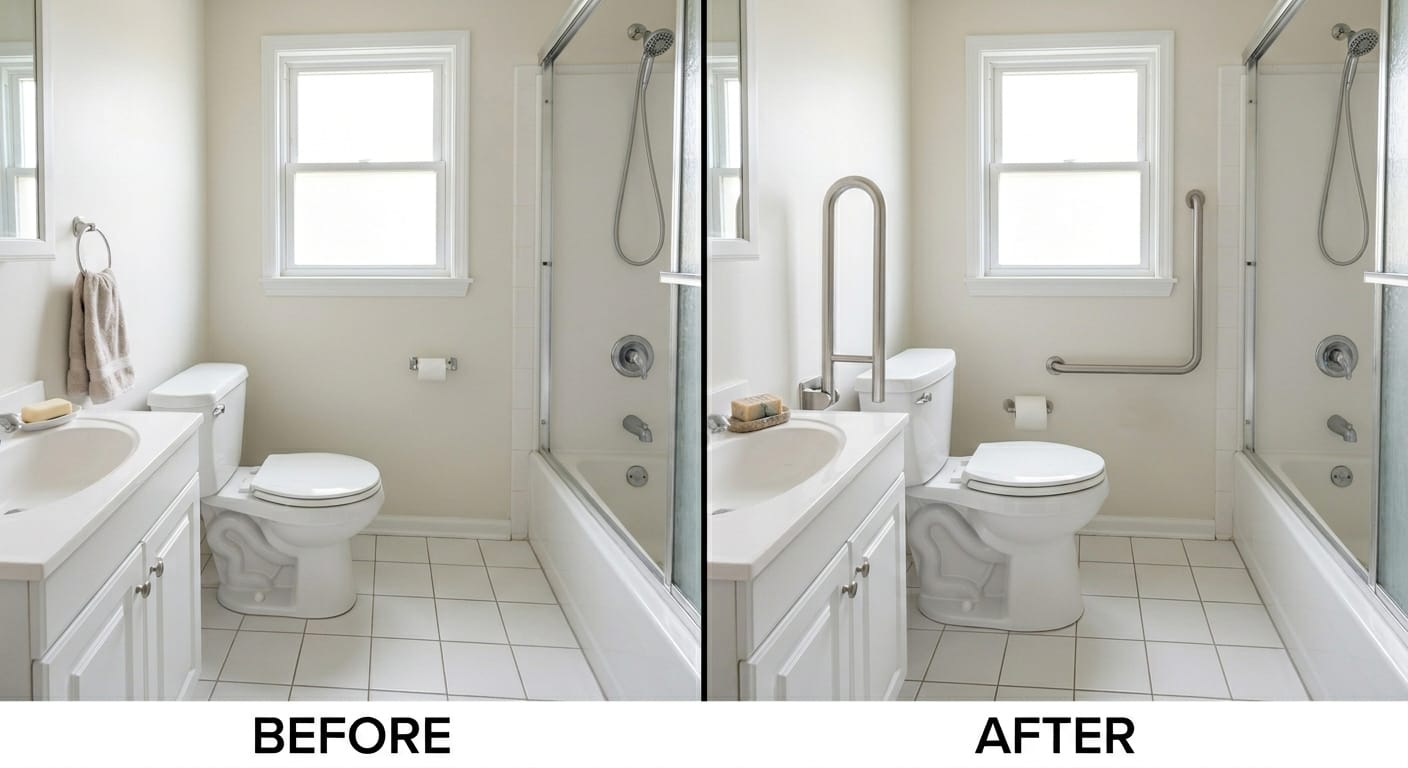
The distinction between standard and comfort height toilets is often presented as a simple upgrade decision. In practice, the choice depends on functional compatibility.
Standard Height (14–15 inches):
- Requires deeper bending
- May be manageable for individuals with strong mobility
- Can provide better foot stability for shorter users
Comfort Height (17–19 inches):
- Reduces effort required to stand
- Aligns more closely with typical chair height
- Often preferred for individuals with knee or hip limitations
However, higher is not always better.
Situations where comfort height may still be insufficient or inappropriate:
- When no grab bars are present
- When the user cannot stabilize their feet properly
- When balance is already compromised
The goal is controlled movement—not simply reduced effort.
6. How to Choose the Right Toilet Height in a Real Home
Selecting the appropriate toilet height requires observing how the individual currently moves.
Key factors to evaluate:
- User height and leg length
Feet should remain flat on the floor when seated. - Lower-body strength
Difficulty standing suggests a need for height support or hand assistance. - Joint mobility
Limited knee or hip flexibility may require reduced bending. - History of falls or instability
Past incidents indicate higher sensitivity to transfer difficulty. - Use of surrounding surfaces
If the user pushes off sinks or walls, support is inadequate. - Bathroom layout
Limited space may restrict safe positioning and movement. - Presence of grab bars
Properly installed bars can significantly improve safety regardless of height. - Temporary vs long-term needs
A raised toilet seat may be sufficient in early stages, while permanent replacement may be more appropriate later.
Observation is often more informative than measurement alone.
7. Related Bathroom Safety Features That Matter
Toilet height should always be evaluated alongside the broader bathroom environment.
| Bathroom Factor | Why It Matters for Toilet Safety | What to Check |
|---|---|---|
| Grab bars | Provide controlled support during standing and sitting | Proper placement near toilet and secure mounting |
| Flooring | Reduces slip risk during transfers | Non-slip surface, especially near base |
| Lighting | Improves visibility during nighttime use | Path lighting and accessible switches |
| Clearance | Affects positioning and movement | Enough space for stable stance and hand access |
Additional considerations include:
- Toilet paper placement within easy reach
- Absence of obstacles near the transfer area
- Stable seating surface without movement
For detailed guidance on how support should be positioned in real bathrooms, see our guide to Grab Bar Placement in Bathroom: Safe Locations for Seniors.
8. Typical Cost and Upgrade Options
Toilet height can be adjusted through several upgrade paths, each with different cost levels and functional impact:
Full toilet replacement
Installing a comfort-height toilet provides a stable, long-term solution.
Typical cost ranges from $150–$400 for the unit, with $150–$300 for installation, depending on plumbing conditions.
Raised toilet seats
A low-cost, temporary option that increases seat height by 2–5 inches.
Most units cost between $20–$80 and require no installation.
Toilet safety frames
Freestanding or attached frames add arm support without modifying the toilet itself.
Costs typically range from $50–$150, depending on stability and build quality.
Grab bar installation
Often more impactful than height alone, as it directly supports the sit-to-stand movement.
Professional installation typically ranges from $100–$300 per bar, depending on wall structure and reinforcement needs.
What Actually Drives Cost
Total cost varies based on:
- Type of solution (temporary vs permanent)
- Installation complexity (DIY vs professional)
- Wall structure and need for reinforcement
- Bathroom layout constraints
Practical Insight
In real home environments, height alone rarely solves the problem.
The safest outcomes usually come from combining:
- moderate height adjustment, and
- reliable hand support (grab bars or frames)
This combination reduces strain during standing while maintaining control during sitting—two factors that directly influence fall risk.
9. When to Hire a Professional
Professional input becomes valuable when:
- Transfer difficulty is already affecting independence
- Falls or near-falls have occurred
- Multiple modifications are being considered
- The bathroom layout presents structural limitations
Relevant professionals include:
- Occupational therapists
- Home safety specialists
- Accessibility-focused contractors
These evaluations focus on how movement occurs within the space—not just on fixture specifications.
10. Frequently Asked Questions
What is the best toilet height for seniors?
The best toilet height is typically between 17 and 19 inches, as it aligns more closely with standard chair height and reduces the effort required to stand. However, the safest height depends on the individual’s strength, balance, and ability to use stable hand support.
Is a comfort height toilet always safer for seniors?
Not always. While comfort height toilets reduce the distance needed to stand, they can feel too high for shorter individuals or those who cannot keep their feet fully flat on the floor. Safety depends on proper alignment between the user’s body and the environment.
Can a raised toilet seat improve safety?
A raised toilet seat can improve safety temporarily by increasing height and reducing strain. However, its effectiveness depends on secure installation and the presence of nearby support, such as grab bars or a safety frame.
Do grab bars matter more than toilet height?
In many cases, yes. Grab bars provide controlled support during sitting and standing, which can significantly reduce fall risk. Even a properly adjusted toilet height may not be safe without stable hand support.
How do I know if my toilet height is unsafe?
Signs of an unsafe setup include needing to push off unstable surfaces, difficulty standing without momentum, feeling unsteady when sitting down, or avoiding independent bathroom use. These indicate a mismatch between height and physical capacity.
Should I replace the toilet or use an add-on solution?
This depends on the situation. Raised seats and safety frames are suitable for temporary or early-stage needs. For long-term safety and stability, a properly installed comfort height toilet combined with grab bars is often more effective.
Plan Your Bathroom Project
Organize bathroom project priorities and questions before comparing written proposals.
11. Conclusion
Toilet height plays a meaningful role in bathroom safety, but only when understood within the full context of movement, strength, and environment. The most effective approach is not to select the highest available option, but to identify the height that allows:
- Controlled sitting
- Stable standing
- Proper foot support
- Safe use of handholds
The best toilet height is the one that improves transfer control safely within the realities of that specific bathroom and person.
12. Sources
- Centers for Disease Control and Prevention (CDC) – Older Adult Fall Prevention
- National Institute on Aging (NIA) – Home Safety and Aging in Place
- AARP – HomeFit Guide for Aging in Place
- Americans with Disabilities Act (ADA) – Accessibility Guidelines for Bathrooms
Reviewed by the AgingAuthority Editorial Team — specialists in senior home safety and aging-in-place planning.