
For a complete overview of safer stairs, explore our Complete Stair Safety Guide for Aging in Place .
Stairlift vs First-Floor Living: Which Option Makes More Sense?
Executive Summary
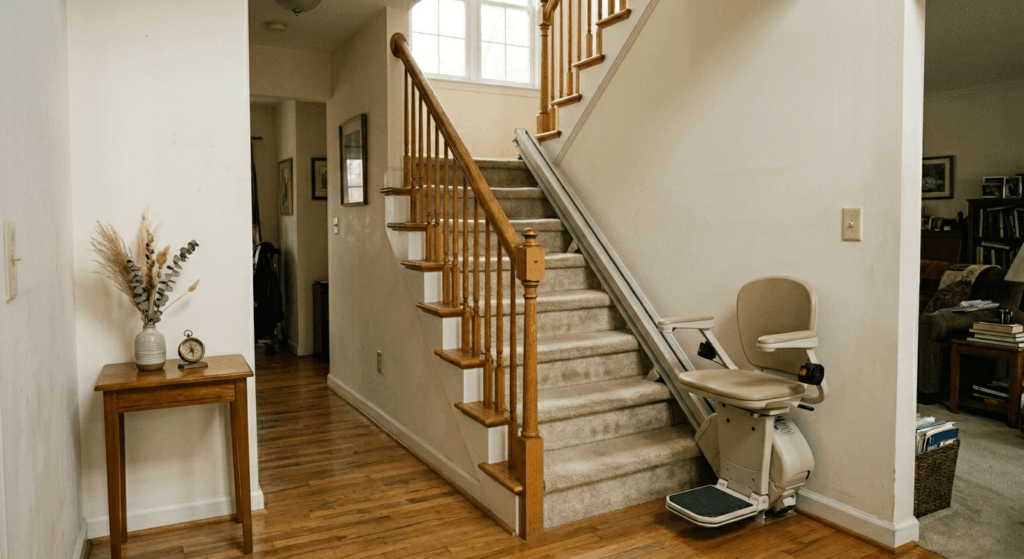
When stairs become difficult, families often face a choice between installing a stairlift or moving daily living activities to the first floor. Neither solution is universally better. The right decision depends on mobility, home layout, long-term needs, safety considerations, and personal priorities. In many cases, the most successful aging-in-place strategy involves looking beyond the staircase itself and evaluating how the entire home functions day to day.
Introduction
One of the most common challenges families face while planning for aging in place is deciding what to do when stairs become increasingly difficult.
For some households, the solution appears straightforward: install a stairlift and continue using the entire home. For others, relocating essential living spaces to the first floor seems like the simpler and more practical answer.
In reality, the decision is rarely that simple.
Many families focus almost entirely on the staircase itself while overlooking how the rest of the home functions. A staircase may be the most visible challenge, but it is often only one part of a larger accessibility picture. If the concern is still at the early warning stage, it can help to review the signs that stairs are becoming unsafe before making a major decision.
The best choice depends on factors such as:
- Current mobility abilities
- Home design and room placement
- Bathroom accessibility
- Expected future health changes
- Household routines
- Caregiver involvement
- Financial considerations
- Personal preferences
Understanding these factors can help families avoid expensive decisions that solve one problem while creating others.
Check Stair Safety Before Choosing a Stairlift
Review handrails, lighting, step condition, transfer risks, and daily stair use before deciding whether equipment or first-floor living makes more sense.
Plan My Stair Project →Why This Decision Is More Complex Than It Appears
At first glance, the question seems simple:
However, the real question is often:
A stairlift addresses vertical movement between floors.
First-floor living changes how the home is used.
These are fundamentally different approaches.
One preserves access to existing spaces.
The other reorganizes daily life around a more accessible area of the home.
Both approaches can be effective. Both can also create limitations depending on the situation.
For example, a homeowner may install a stairlift and regain access to an upstairs bedroom but still struggle with a narrow bathroom, poor lighting, or difficult transfers.
Conversely, someone may move downstairs successfully only to discover that the available space feels isolated, cramped, or inconvenient for long-term living.
The challenge is not simply reaching a different floor.
The challenge is maintaining a workable daily routine.
Comparing Stairlifts and First-Floor Living
The following comparison highlights major differences families should consider.
| Factor | Stairlift | First-Floor Living |
|---|---|---|
| Initial Cost | Moderate to high depending on staircase design | May be low or high depending on modifications needed |
| Access to Entire Home | Preserves access to multiple levels | May reduce use of upper floors |
| Independence | Can maintain existing routines | May simplify daily movement |
| Daily Convenience | Requires using lift repeatedly | Eliminates most stair use |
| Installation Complexity | Usually less disruptive than remodeling | May require room conversions |
| Long-Term Adaptability | Depends on future mobility changes | Often supports progressive mobility decline |
| Caregiver Support | May still require assistance later | Can simplify caregiving tasks |
| Emotional Impact | Preserves familiar home use | May feel like giving up part of the home |
| Future Planning | May require additional modifications later | May support broader accessibility goals |
The table illustrates why neither option automatically wins.
The details matter.
When a Stairlift May Make More Sense
A stairlift can be a highly practical solution in many homes.
Importantly, some homeowners install stairlifts not because stairs have become completely unusable but because stair use has become uncomfortable, tiring, or risky. This often happens after smaller changes in balance, endurance, lighting needs, or confidence begin to appear. Families who want to understand that progression more clearly may find it useful to read why stairs can become more dangerous with age before falls occur.
In these situations, preserving access to the entire home may provide substantial benefits.
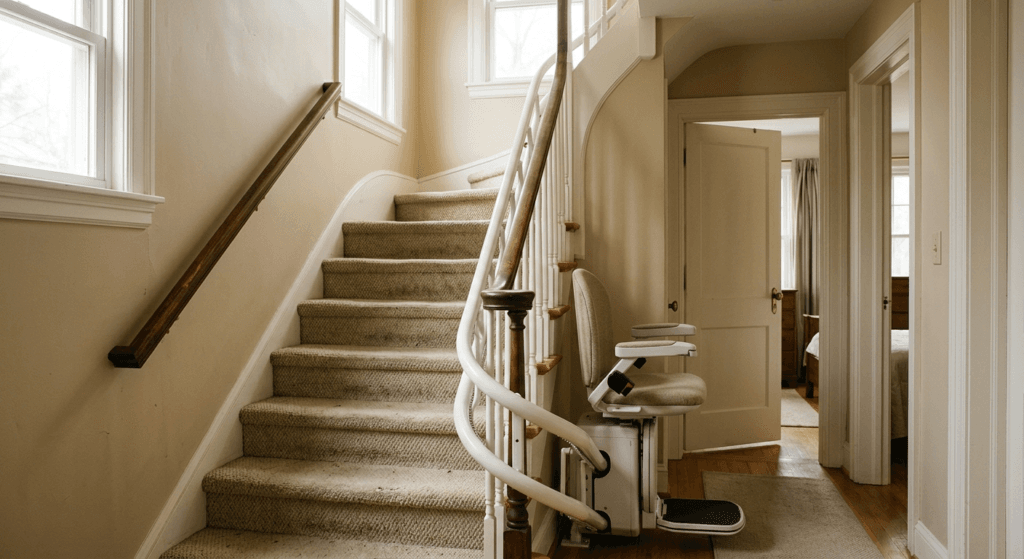
The Bedroom and Main Bathroom Are Upstairs
This is one of the most common scenarios.
If both essential spaces are located upstairs, moving downstairs may require:
- Creating a temporary bedroom
- Converting another room
- Remodeling a bathroom
- Giving up important living areas
In some homes, installing a stairlift may involve far less disruption than redesigning the first floor.
The Home Layout Functions Well Otherwise
Some houses simply work.
The homeowner likes the bedroom location.
The bathroom is appropriate.
The living spaces are comfortable.
The social areas remain accessible.
When the primary challenge is the staircase itself, a stairlift may preserve a successful living arrangement.
Transfers Remain Manageable
Using a stairlift generally requires the ability to:
- Sit safely
- Stand safely
- Transfer onto and off the seat
For individuals who can still perform these movements reliably, a stairlift may provide years of continued access.
Major Remodeling Would Otherwise Be Necessary
In some homes, creating a first-floor living arrangement is not simple.
Families sometimes assume moving downstairs is inexpensive.
However, costs can increase quickly if the home lacks:
- A suitable bedroom
- A full bathroom
- Adequate privacy
- Enough space for medical equipment
In these situations, a stairlift may represent a more practical investment. The actual cost can also depend heavily on whether the staircase is straight, curved, narrow, or interrupted by landings. For that reason, families comparing equipment options should review the differences between straight vs curved stairlifts before assuming one price range applies to every home.
Emotional Benefits
An often-overlooked factor is emotional attachment.
Many homeowners view unrestricted access to their entire home as part of their independence.
The emotional impact of losing access to an upstairs bedroom, home office, hobby room, or family space can be greater than many families anticipate.
For some individuals, maintaining access helps preserve normalcy and quality of life.
Estimate the Stairlift Side of the Decision
If a stairlift is still one of the options, estimate the likely cost range before comparing it with room conversion, bathroom changes, or a first-floor living setup.
Open Stairlift Cost Calculator →When First-Floor Living May Make More Sense
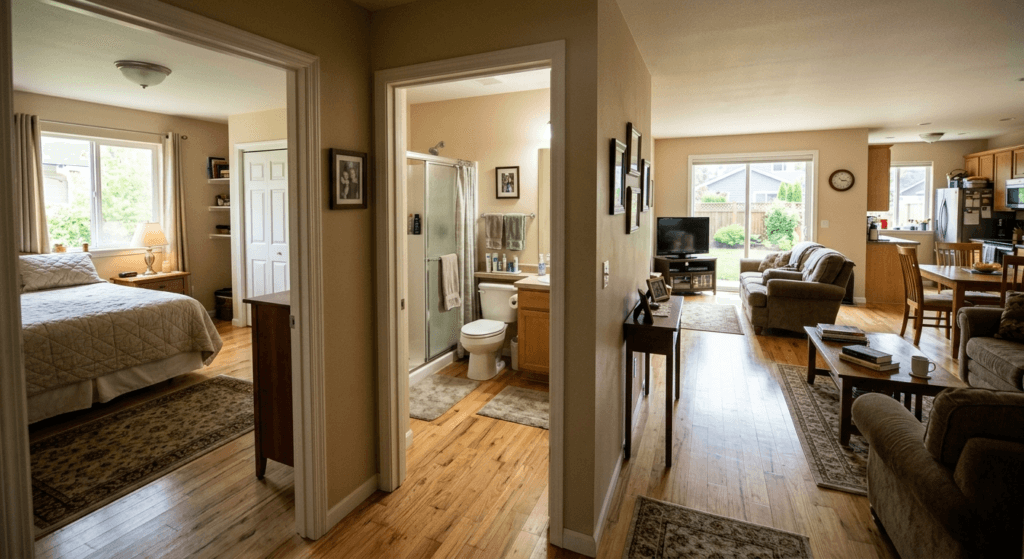
There are also situations where relocating daily living activities to the first floor becomes the more practical choice.
A Suitable Bedroom Already Exists Downstairs
The decision becomes much easier when a first-floor bedroom already exists.
A guest room, office, den, or spare bedroom may provide a relatively straightforward transition.
The less modification required, the more attractive first-floor living becomes.
A Full Bathroom Is Available on the First Floor
Bathroom access often determines whether first-floor living is realistic.
Without a usable bathroom nearby, the arrangement may fail regardless of how convenient the bedroom appears.
Families frequently underestimate how often bathroom access influences daily independence.
Stair Use Has Become Exhausting
Some individuals can technically climb stairs but experience:
- Significant fatigue
- Pain
- Shortness of breath
- Recovery time after climbing
In these situations, reducing stair use entirely may improve comfort and energy levels throughout the day.
Long-Term Mobility Decline Is Expected
If mobility limitations are likely to progress, first-floor living may offer better long-term practicality.
This can be especially relevant when future needs may include:
- Walkers
- Rollators
- Increased caregiver support
- Reduced endurance
A stairlift may help today but may not address future accessibility challenges.
Household Routines Can Function on One Level
The most successful first-floor arrangements often occur when nearly all essential activities can take place on the same floor.
This includes:
- Sleeping
- Bathing
- Meal preparation
- Relaxation
- Social interaction
When daily life can occur comfortably on one level, the advantages become more significant.
Situations Where Neither Option Fully Solves the Problem
Some homes present challenges that neither stairlifts nor first-floor living can adequately address.
Narrow Bathrooms
Bathroom accessibility often becomes a limiting factor.
A person may successfully reach the bathroom but still struggle with:
- Tight clearances
- Difficult transfers
- Small shower spaces
- Poor maneuverability
The staircase may not be the primary problem.
Doorway Limitations
Many older homes contain narrow doorways that restrict mobility equipment use.
Even if stairs are eliminated, movement throughout the home may remain difficult.
Significant Wheelchair Needs
Wheelchair users often require broader accessibility planning.
Challenges may include:
- Turning space
- Entry access
- Bathroom design
- Kitchen usability
- Floor transitions
A stairlift alone rarely addresses these broader requirements.
Multi-Level Homes With Essential Spaces Everywhere
Some homes distribute key functions across multiple levels.
Examples include:
- Laundry downstairs
- Bedroom upstairs
- Main living area on another level
In these situations, larger accessibility modifications may eventually be necessary.
Common Family Assumptions and Practical Reality
Assumption: “If We Install a Stairlift, the Problem Is Solved”
Practical Reality: A stairlift addresses stair travel.
It does not automatically improve:
- Bathroom accessibility
- Entry access
- Fall hazards elsewhere
- Mobility inside rooms
Accessibility challenges often extend beyond the staircase.
Assumption: “Moving Downstairs Is Always Cheaper”
Practical Reality: Costs vary dramatically.
A ready-made first-floor bedroom may make relocation inexpensive.
However, converting rooms, adding bathrooms, or remodeling spaces can become costly.
The answer depends heavily on the home.
Assumption: “One Decision Will Last Forever”
Practical Reality: Aging-in-place planning often occurs in stages.
The solution that works today may require adjustments later.
Many families benefit from viewing accessibility planning as an evolving process rather than a one-time project.
Assumption: “The Staircase Is the Main Problem”
Practical Reality: Sometimes it is.
Sometimes it is not.
Families often focus on the visible challenge while overlooking other daily obstacles that may ultimately become more significant.
Practical Steps Before Making a Decision
Rather than rushing into a major change, families can gather useful information first.
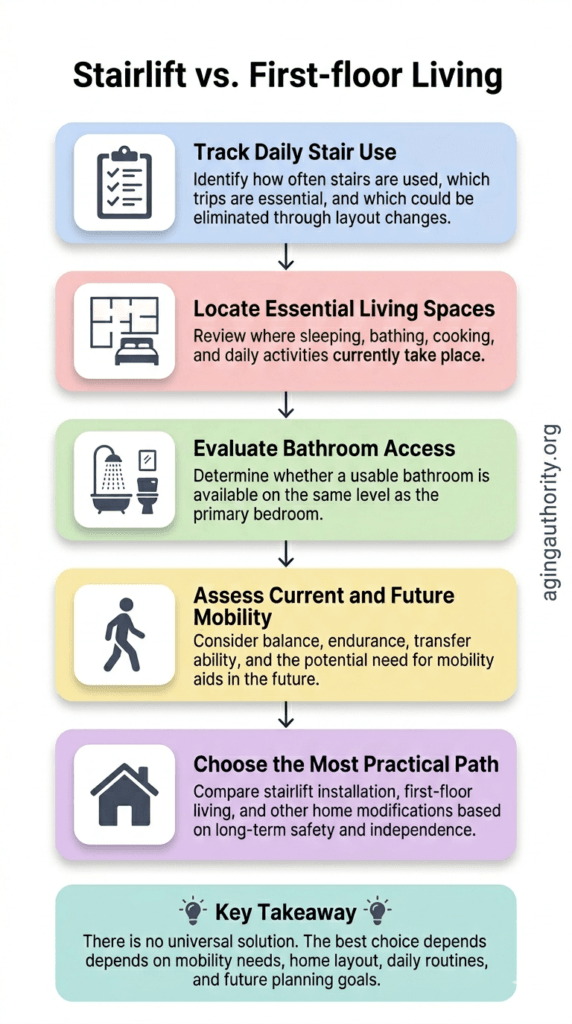
Track Stair Usage
Observe:
- How often stairs are used
- Which trips are essential
- Which trips could be eliminated
Patterns often reveal practical solutions.
Identify Essential Activities
Determine where important daily activities occur.
Consider:
- Sleeping
- Bathing
- Cooking
- Relaxing
- Socializing
The location of these activities matters more than many families realize.
Evaluate Bathroom Accessibility
Bathroom access frequently determines whether a plan succeeds.
Review:
- Location
- Entry width
- Shower design
- Transfer requirements
Assess Nighttime Mobility
Nighttime bathroom trips often present unique challenges.
Families should evaluate:
- Lighting
- Distance
- Fatigue
- Fall risk
Review Caregiver Requirements
Current and future caregiver needs can significantly influence which option works best.
Accessibility that benefits the homeowner often benefits caregivers as well.
Consider Future Scenarios
Ask practical questions:
- What if balance worsens?
- What if endurance declines?
- What if a walker becomes necessary?
- What if temporary recovery from illness occurs?
Thinking beyond current abilities can prevent repeated modifications.
How the Decision Changes as Mobility Needs Progress
Early Mobility Limitations
At this stage, a stairlift may effectively preserve access while maintaining existing routines.
The homeowner remains largely independent.
The goal is often reducing effort rather than eliminating stair use entirely.
Moderate Mobility Decline
As stair use becomes more difficult, first-floor living may become increasingly attractive.
Reducing daily physical demands can improve comfort and safety.
Significant Mobility Challenges
When mobility becomes substantially limited, broader accessibility planning may be necessary.
The conversation often shifts from stair access toward whole-home accessibility.
At this stage, neither stairlifts nor room relocation should be evaluated in isolation.
When to Consider Professional Evaluation
Families sometimes overlook important issues because they are too familiar with their own homes.
Professional assessments can identify challenges that are not immediately obvious.
Consider seeking guidance from:
Occupational Therapists
Occupational therapists can evaluate how physical abilities interact with daily home activities.
They often identify practical barriers that families miss.
Aging-in-Place Specialists
These professionals focus specifically on adapting homes for changing mobility needs.
They can help evaluate multiple solutions rather than focusing on a single modification.
Accessibility Consultants
Accessibility consultants can assess whether current layouts support long-term independence.
Their recommendations may reveal alternatives that homeowners had not considered.
Home Safety Assessors
A comprehensive safety review can identify risks beyond the staircase itself.
This broader perspective is often valuable.
Qualified Home Modification Contractors
Experienced contractors can explain what modifications are realistically possible within the home’s existing structure.
Professional input can prevent costly mistakes and improve long-term planning.
Final Thoughts
The question is not whether stairlifts are better than first-floor living or vice versa.
The better question is:
For some homeowners, a stairlift preserves independence and access to a home they know and love.
For others, consolidating daily life onto the first floor reduces effort, simplifies routines, and better supports future mobility changes.
The most successful decisions usually come from evaluating the entire living environment rather than focusing only on the staircase.
Aging in place is rarely about a single modification.
It is about creating a home that continues to support changing needs over time.
Make the Decision With the Whole Home in Mind
Before choosing a stairlift or first-floor living, review staircase safety, bathroom access, lighting, transfers, and daily routines together.
Plan My Stair Project →Frequently Asked Questions
Is a stairlift usually better than moving to the first floor?
Not always. A stairlift may be better when the upstairs bedroom and bathroom still function well and the main problem is stair travel. First-floor living may be better when daily routines can safely happen on one level or mobility decline is expected to progress.
Is first-floor living always cheaper than installing a stairlift?
No. First-floor living may be inexpensive if a suitable bedroom and bathroom already exist downstairs. It can become costly if the home needs room conversions, bathroom remodeling, privacy changes, or accessibility upgrades.
What should families check before buying a stairlift?
Families should check staircase shape, landing space, transfer ability, bathroom access, caregiver needs, and whether the home has other hazards that a stairlift will not solve.
When does first-floor living become the more practical option?
First-floor living often becomes more practical when stair use causes fatigue, pain, or fear, when a usable downstairs bathroom already exists, or when future mobility needs may involve walkers, rollators, or more caregiver support.
Reviewed by AgingAuthority Editorial Team. AgingAuthority publishes practical, safety-focused aging-in-place guidance for families planning safer homes. Learn more about our editorial standards on the AgingAuthority Editorial Team page.
Disclaimer
This content is for general educational purposes only and does not replace a professional home safety assessment, medical advice, occupational therapy evaluation, or licensed contractor guidance. Stairlift installation, remodeling, and accessibility decisions should be reviewed with qualified professionals familiar with the home and the person’s needs.
Sources
The following sources were used to support general aging-in-place, home safety, fall prevention, and accessibility planning context in this article.