How to Make Wooden Stairs Less Slippery Without Carpet
Practical ways to improve grip on indoor wooden stairs while keeping the look of the wood and knowing when the surface is only part of the problem.
Executive Summary
Indoor wooden stairs can be made less slippery without carpet. Compatible non-slip strips or adhesive treads can add grip to sound steps, while a suitable traction-enhancing finish may make sense when refinishing is already planned. Before choosing, check the existing finish, clean the stairs appropriately, and notice when slipping occurs. Surface traction matters, but handrails, lighting, and tread condition also belong in a complete stair safety review.
Why Wooden Stairs Can Feel Slippery
A wooden staircase may feel comfortable in shoes but uncertain in socks. The wood has not changed between those two trips; the contact between the foot and the surface has. That distinction matters when choosing a fix. A treatment aimed at the finish may be unnecessary if the problem occurs only with a particular pair of smooth-soled slippers.
Glossy or very smooth finishes can contribute to a slick feeling. Cleaning and polishing products may also leave residue, while wear can make some steps behave differently from others. Pay attention to whether the concern appears across the whole staircase, on one tread, after cleaning, or mainly while going downstairs.
Look beyond the shine. Poor lighting can make the edge of a wooden tread harder to judge. A loose handrail or damaged step may also affect how secure the staircase feels. Better grip on the surface will not correct those separate problems.
If you are still deciding whether to keep the wood exposed or change the stair surface, our carpet versus wooden stairs comparison looks at traction, visibility, and maintenance across both options.
Three Ways to Add Grip Without Carpet
Clear or Low-Profile Non-Slip Strips
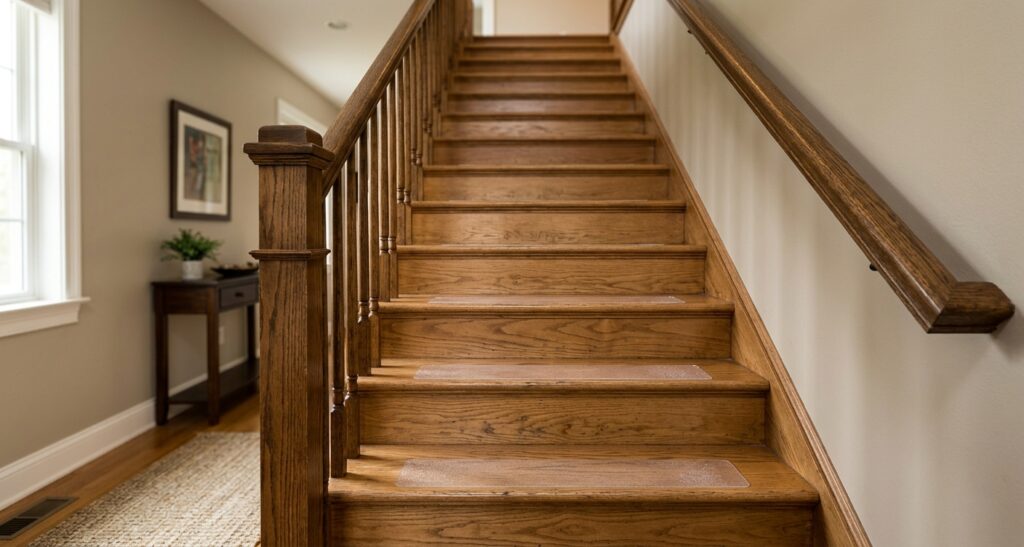
These add a narrow band of texture while leaving most of each wooden tread visible. They may suit a sound staircase when homeowners want a relatively discreet change. Even clear strips can catch the light, so “invisible” is not a realistic expectation.
The important questions are whether the adhesive is suitable for the existing finish and whether the edges remain firmly attached. A lifting edge can become a problem of its own. Check the manufacturer’s guidance on surface preparation, cleaning, wear, and removal before applying strips across the full staircase.
Adhesive Non-Slip Stair Treads
An adhesive tread covers more of the step than a narrow strip. This may fit a household where people place their feet in different areas of a wide tread. It also makes a more visible change to the wood, depending on the color and design selected.
More coverage means more adhesive touching the finish. Choose a product intended for indoor finished wooden stairs, follow its installation instructions, and inspect its edges over time. A tread that looks secure when first applied still needs to hold up to everyday traffic and cleaning.
Traction-Enhancing Coating or Refinishing
A suitable coating can retain a continuous wood appearance without separate pieces attached to each step. This approach is particularly relevant when the stairs already need refinishing. Its appearance, texture, and maintenance needs depend on the product and the existing surface.
A new coating should not simply be applied over an unidentified finish. Compatibility, preparation, drying time, and the instructions for stair use all matter. If you do not know what is currently on the wood, a flooring professional can help assess the options before work begins.
Which Option Fits Your Stairs?
Start with the condition of the staircase. If the treads are sound and preserving the current finish is the priority, compatible low-profile strips may be worth considering. If a larger grip area would better match normal foot placement, adhesive treads offer more coverage. When the finish is worn or refinishing is already planned, discussing a traction-enhancing finish may be more sensible than applying an adhesive product first.
| Option | Appearance | When it may fit | Main limitation |
|---|---|---|---|
| Non-slip strips | Most of the wood stays visible | A defined area on each sound tread needs more grip | Adhesion, edge wear, and finish compatibility |
| Adhesive treads | More of each step is covered | A wider traction area is useful | Greater visual change and adhesive contact |
| Coating or refinishing | Continuous wood appearance | The finish already needs work | Surface compatibility and application requirements |
Think about future maintenance as well as the first day’s appearance. An adhesive product may leave residue or affect some finishes during removal. A coating may alter the sheen and require different cleaning. The better choice is the one that fits the actual stairs and the people who use them, rather than the one that looks least noticeable in a product photo.
A Practical Order for Making Changes
Inspect the staircase. Check for damaged, uneven, or moving treads and make sure the handrail is secure.
Clean the existing finish correctly. Follow the finish manufacturer’s guidance and let every step dry fully.
Notice the pattern. Identify where slipping occurs and what footwear people normally wear on the stairs.
Choose a compatible treatment. Confirm that it is intended for the current surface and for indoor stair use.
Install and maintain it as directed. Recheck strips or treads for lifting and watch for changes in the treated finish.
Consider lighting and visible step edges at the same time, particularly if the stairs are used in low light. Those improvements can support the traction change without replacing it. Our guide to home modifications for aging in place explains how individual changes fit into a wider home plan.
When to Consider Professional Evaluation
A flooring professional or qualified contractor can help when the treads are damaged, the existing finish is unknown, or refinishing is being considered. They can assess the surface before an adhesive or coating is applied and identify repairs that a traction product cannot provide.
If an older adult continues to have difficulty using the stairs after reasonable environmental changes, an occupational therapist, accessibility specialist, or home safety assessor can review the full route and how the person uses it. Depending on that assessment, the family may consider other changes, including the options explained in our stairlift installation guide. These decisions belong within a broader aging-in-place plan.
The Takeaway
Begin by finding out why the stairs feel slippery. For sound wooden treads, compatible strips or adhesive treads can add traction without carpet; a suitable finish may be preferable when refinishing is already due. Give as much attention to secure edges, surface compatibility, and ordinary household use as you give to the look of the finished staircase.
Frequently Asked Questions
Can you make wooden stairs less slippery without covering the wood?
Yes. Clear or low-profile strips cover only part of each tread, while a compatible traction-enhancing finish can preserve a continuous wood appearance. The appropriate method depends on the current finish, tread condition, and how the stairs are used.
Can adhesive non-slip strips damage a wood finish?
Some adhesives may affect certain finishes or leave residue when removed. Check the product’s compatibility and removal guidance for your staircase. If the finish is unknown, ask a flooring professional before applying a product across all the steps.
Will cleaning alone improve grip on wooden stairs?
It may help if cleaning or polishing residue is contributing to the slick feeling. Use a method suitable for the existing finish and allow the steps to dry. If slipping continues during ordinary use, consider a compatible traction treatment.
Are non-slip treads enough to make stairs suitable for an older adult?
They can improve surface grip, but they do not repair damaged steps or address problems with handrails, lighting, or a person’s difficulty using stairs. Evaluate those factors alongside the tread surface.