
Executive Summary
In many bathrooms, fall risk does not begin with obvious hazards like slippery floors or missing grab bars. It often starts with something much smaller: reaching. Stretching for a towel, bending for toiletries, or twisting to access storage can quietly reduce stability. Over time, these repeated movements may increase fall risk, especially when combined with limited support and wet surfaces. Identifying unsafe storage patterns early can help reduce unnecessary strain and support more stable daily movement.
Introduction
In many homes, the bathroom looks completely safe.
Nothing seems out of place. Items are organized. Shelves are full but accessible.
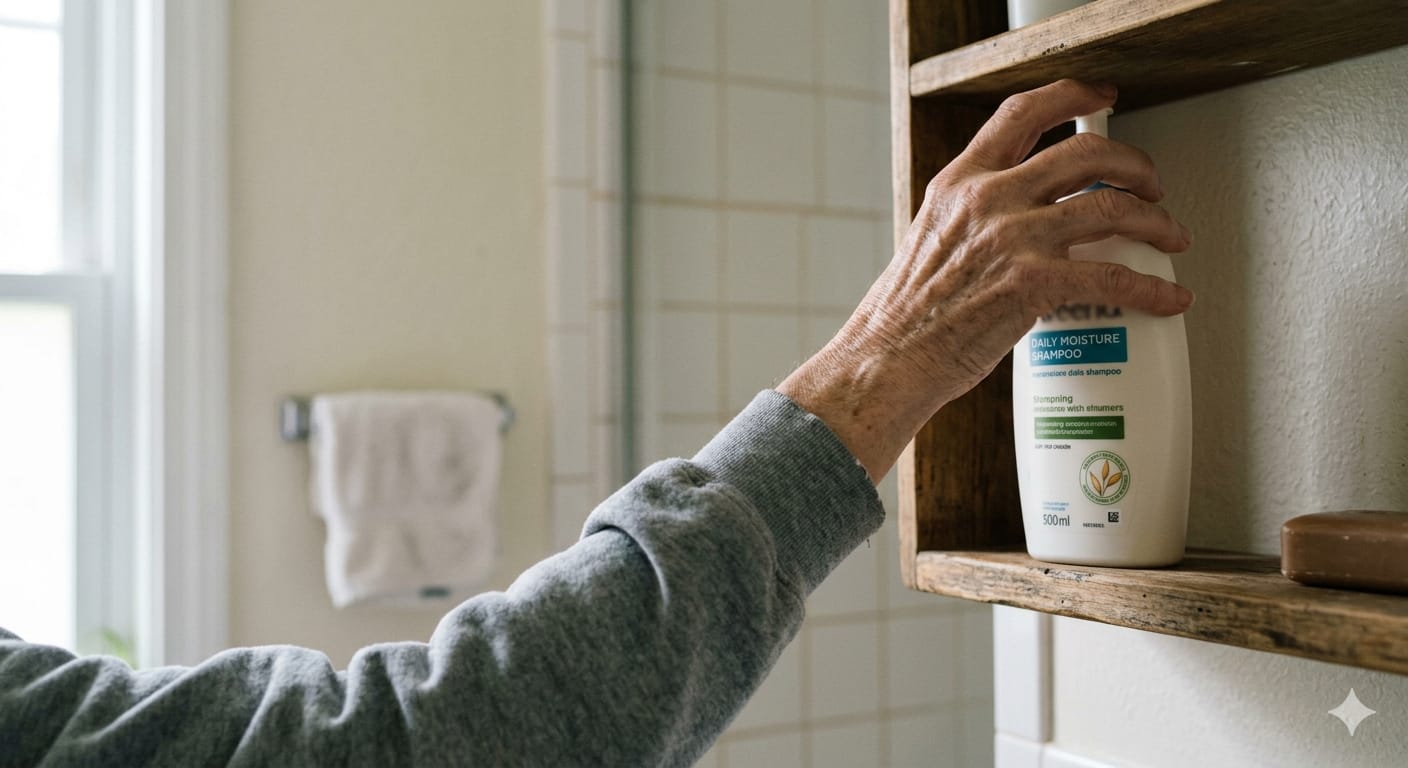
But the moment someone reaches for something—that’s when the environment changes.
A slight lean forward.
A stretch upward.
A twist to the side.
This is often where risk actually begins.
Reaching is rarely seen as a problem. It feels routine. Automatic.
But in reality, reaching is one of the most unstable movements in a bathroom.
Most people don’t notice this shift at first.
And that’s exactly why it becomes dangerous.
Table of Contents
- Signs Bathroom Storage Is Already Creating Risk
- What Actually Causes This Risk
- Common Storage Mistakes That Lead to Reaching Falls
- What These Patterns Usually Mean
- Practical Adjustments That Can Improve Safety
- Storage Risk and What It Indicates
- How Storage Risk Connects to Other Bathroom Hazards
- When to Consider Professional Evaluation
- Conclusion
- Frequently Asked Questions
- Disclaimer
- Reviewed by AgingAuthority Editorial Team
- Sources
Plan Your Bathroom Project
Organize bathroom project priorities and questions before comparing written proposals.
Signs Bathroom Storage Is Already Creating Risk
The early signs are easy to miss.
They don’t look like danger. They look like daily habits.
But those habits often reveal underlying instability.
In many bathrooms, you may notice:
- Stretching to reach items above shoulder height
- Bending down slowly and carefully, then pausing before standing
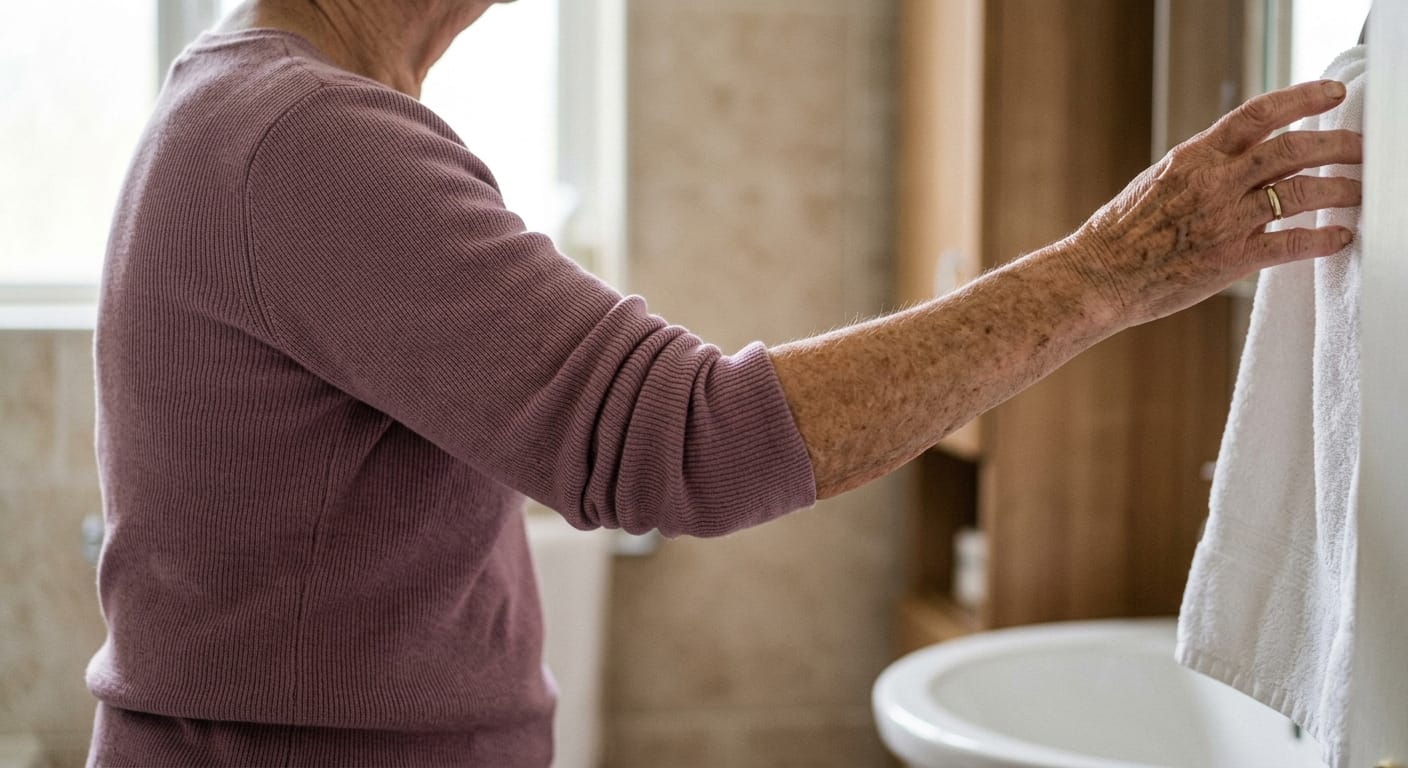
- Holding onto unstable surfaces like towel bars or sink edges
- Turning the body to reach behind instead of facing forward
- Taking an extra step just to grab something simple
- Slight hesitation before reaching
This is usually overlooked.
Even if nothing has happened yet, the risk is already increasing.
These are not random behaviors. They are adjustments.
And adjustments often mean the body is compensating.
Related: If you are evaluating the full bathroom setup, review 7 Hidden Bathroom Fall Risks Most Families Miss for other risk patterns that may appear before a fall.
What Actually Causes This Risk
This risk is not caused by one single factor.
It develops from the interaction between the body, the environment, and the layout.
1. Physical Changes in Movement
With age, balance, flexibility, and strength gradually change.
Reaching becomes less controlled. Recovery becomes slower.
A movement that once required no thought now requires adjustment.
This tends to happen slowly, not suddenly.
2. Storage Placement That Ignores Movement
In many bathrooms, storage is designed for space efficiency—not movement safety.
Items are placed:
- High to save space
- Low to avoid clutter
- Behind to maximize wall use
But these placements don’t match how the body moves safely.
This is not a small detail.
3. Environmental Constraints
Bathrooms add complexity:
- Wet floors reduce traction
- Tight layouts limit movement
- Lack of support removes recovery options
Even a small balance shift becomes harder to control here.
When these factors combine, reaching becomes a risk moment.
Common Storage Mistakes That Lead to Reaching Falls
1. Storing Items Above Shoulder Height
What it looks like:
Daily-use items placed in upper cabinets or high shelves.
Why it matters:
Reaching upward shifts balance backward and reduces stability.
What it indicates:
The environment is demanding more than the body can safely manage.
This is often where instability begins to show.
2. Placing Items Behind the Body
What it looks like:
Twisting to grab something instead of facing it directly.
Why it matters:
Twisting reduces visual control and disrupts balance.
What it indicates:
The layout is not aligned with natural forward movement.
This is usually overlooked.
3. Storage Too Low (Deep Bending)
What it looks like:
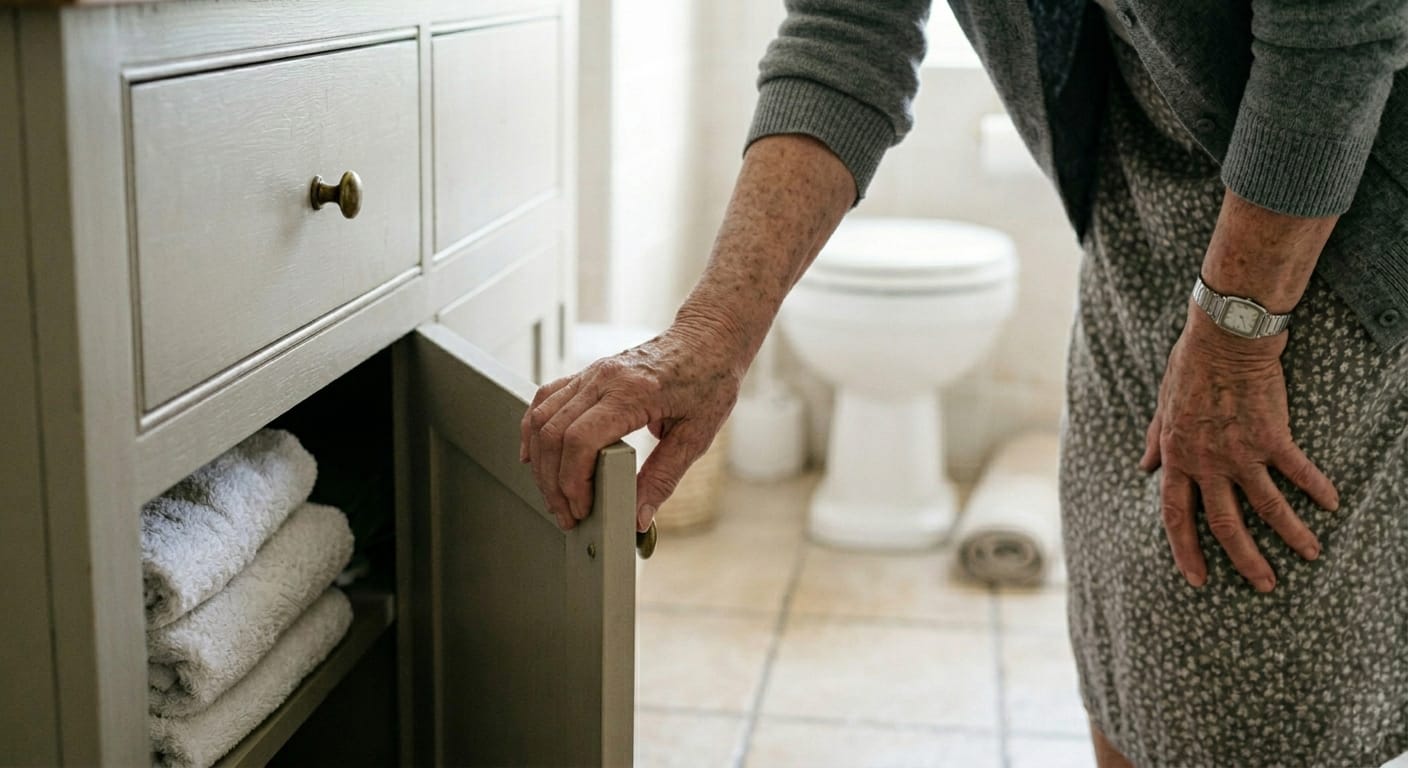
Items stored near the floor or in deep lower cabinets.
Why it matters:
Bending down and returning upright requires coordination and strength.
What it indicates:
The movement is more demanding than it appears.
At this point, recovery becomes slower and less stable.
4. Frequently Used Items Stored Too Far Away
What it looks like:
Toiletries or towels placed across the bathroom instead of nearby.
Why it matters:
Every extra step increases exposure to risk.
What it indicates:
The environment is not optimized for daily behavior.
This is not a minor inefficiency—it’s a repeated risk.
5. No Support Near Storage Zones
What it looks like:
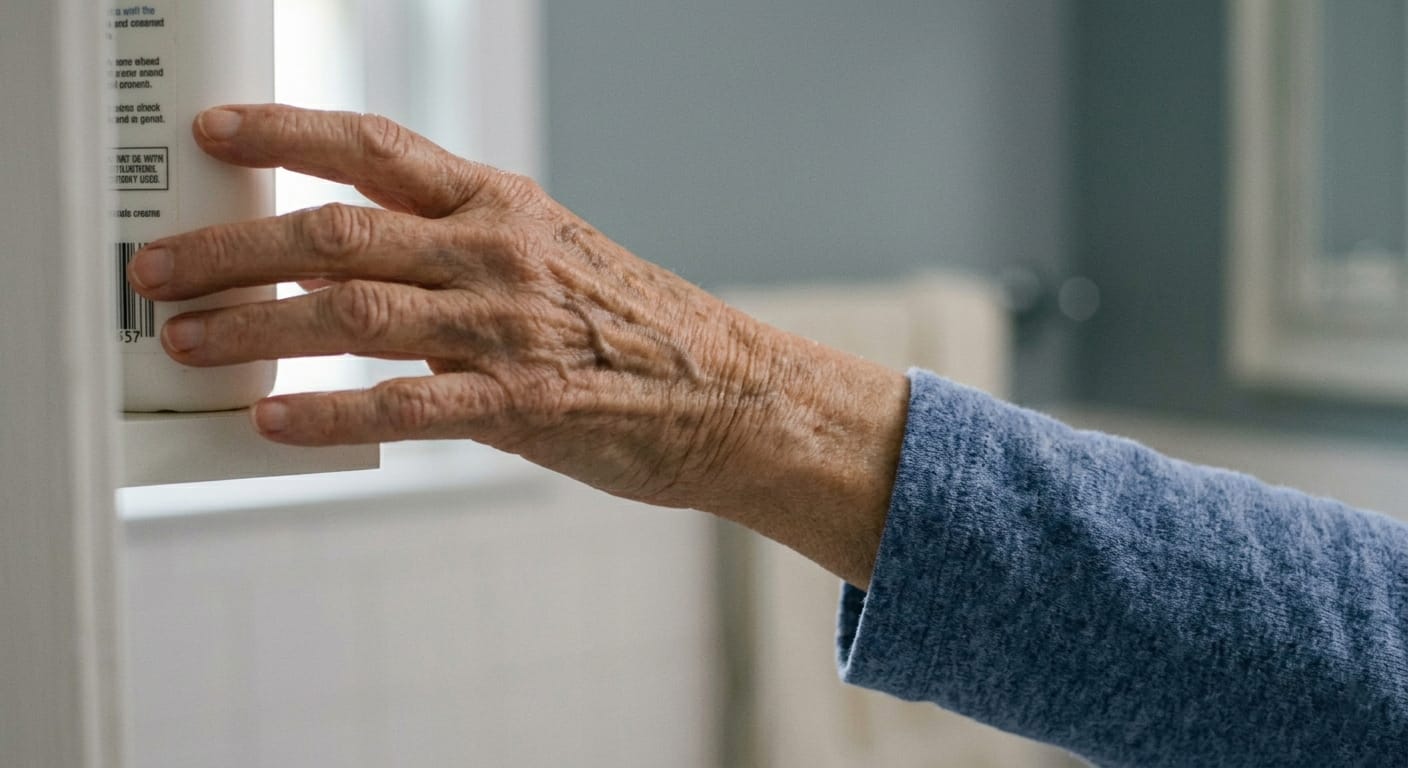
Reaching without anything stable to hold onto.
Why it matters:
If balance shifts, there is no recovery point.
What it indicates:
The bathroom lacks a basic safety layer.
Even a small misstep can escalate here.
6. Overloaded or Cluttered Storage
What it looks like:
Crowded shelves where items are hard to grab.
Why it matters:
It forces awkward hand positioning and extended reach time.
What it indicates:
The user is spending more time in unstable positions.
This tends to increase fatigue and hesitation.
What These Patterns Usually Mean
These patterns are not just inconvenient.
They are signals.
They usually indicate:
- Reduced safe reach range
- Increasing reliance on compensation (leaning, grabbing, pausing)
- Declining balance confidence
- A mismatch between the environment and the user
Most people don’t notice this transition.
But the body is already adapting.
Even if no fall has occurred, the system is under stress.
At this point, the setup is no longer fully safe.
Plan Your Bathroom Project
Organize bathroom project priorities and questions before comparing written proposals.
Practical Adjustments That Can Improve Safety
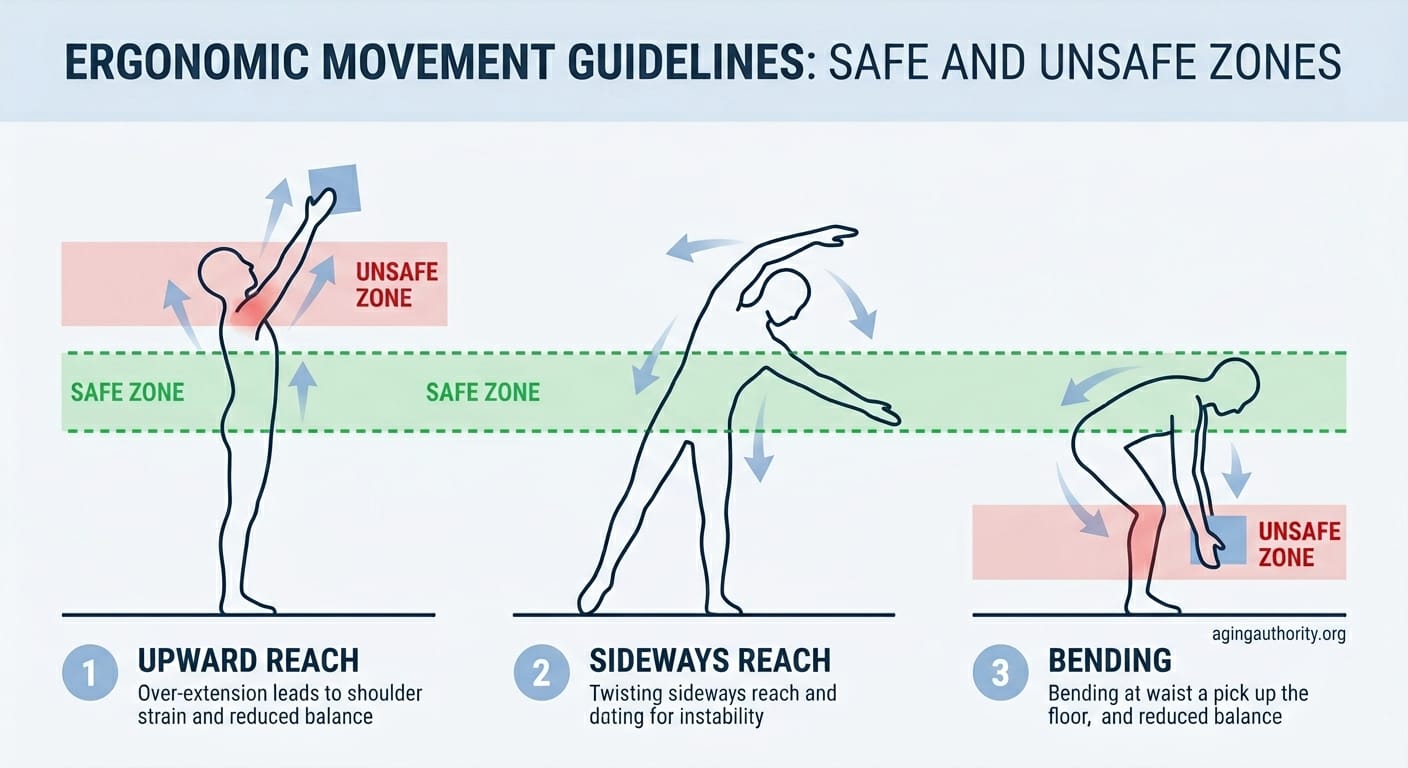
These changes focus on reducing unnecessary reaching and improving stability.
1. Move Daily Items to Waist–Chest Level
This should be addressed first.
Keeping items within this zone reduces both upward and downward strain.
It allows for more controlled movement.
2. Keep Reach Distance Within Arm’s Length
This has the highest impact.
Items used daily should not require stepping, leaning, or stretching.
This reduces repeated exposure to unstable positions.
3. Align Storage With Natural Standing Positions
Items should be placed directly in front of where the person stands.
For example:
- Shampoo near where you face in the shower
- Towels near the exit point
This can help reduce twisting.
4. Add Support Near Key Storage Areas
This is often the most overlooked fix.
Support points—such as properly installed grab bars—can help stabilize reaching movements.
Placement matters.
Guidance from Grab Bar Placement in Bathroom: Safe Locations for Seniors highlights how support must align with actual movement patterns, not just empty wall space.
5. Reorganize Before Renovating
In many cases, the problem is not the bathroom itself.
It’s how items are arranged.
Simple reorganization can often reduce risk significantly without major changes.
6. Separate Daily vs Occasional Items
Items used daily should always be within easy reach.
Less-used items can be placed higher or lower.
This reduces unnecessary exposure to risk.
This is often a quick but high-impact adjustment.
Related: For smaller layouts where storage and movement space are limited, see Small Bathroom Safety for Seniors (No Renovation).
Storage Risk and What It Indicates
| Storage Behavior | What It Indicates | Why It Matters |
|---|---|---|
| Reaching above shoulder | Reduced safe reach range | Balance becomes unstable |
| Twisting to access items | Poor layout alignment | Increases fall risk |
| Deep bending | Limited mobility | Harder to recover |
| Items placed far away | Inefficient setup | Repeated exposure to risk |
| No support nearby | Missing safety layer | No recovery point |
| Cluttered shelves | Prolonged unstable reach | Increases fatigue and error |
How Storage Risk Connects to Other Bathroom Hazards
Storage is rarely the only issue.
In many homes, it overlaps with other risks:
- Poor lighting makes reaching less precise
- Slippery flooring reduces recovery ability
- Tight layouts force awkward positioning
For example, insights from Best Non-Slip Bathroom Floor Solutions That Actually Work show how surface stability directly affects recovery during movement.
Similarly, 7 Hidden Bathroom Fall Risks Most Families Miss highlights how small environmental factors combine into larger risks.
This is not a single problem. It’s a system.
When to Consider Professional Evaluation
In some cases, adjustments may not be enough.
Consider professional evaluation if:
- Near-falls happen during reaching
- There is visible hesitation or instability
- The bathroom layout limits safe storage placement
- Multiple risk factors exist together
- Movement feels slower or more controlled than before
Professionals who may help include:
- Occupational therapists
- Home safety assessors
- Accessibility specialists
- Home modification contractors
They can assess how movement, storage, and layout interact in real conditions.
Conclusion
Bathroom safety does not usually fail all at once.
It changes gradually.
A simple reach becomes a stretch.
A stretch becomes a balance challenge.
A balance challenge becomes a risk.
This is often where the process begins.
Most people don’t notice it until something happens.
But the signals are there early.
Even small adjustments—like changing storage placement—can help reduce unnecessary strain and support more stable movement over time.
Plan Your Bathroom Project
Organize bathroom project priorities and questions before comparing written proposals.
Frequently Asked Questions
Can bathroom storage really increase fall risk?
Yes. Bathroom storage can increase fall risk when frequently used items require reaching, twisting, bending, stepping, or using unstable surfaces for support.
What is the safest height for daily bathroom items?
Daily bathroom items are usually safer when kept around waist to chest level, because this reduces deep bending, overhead reaching, and awkward posture changes.
Why is twisting dangerous in the bathroom?
Twisting can reduce visual control and disrupt balance, especially in tight bathrooms or when floors are wet.
Should grab bars be placed near bathroom storage?
Support near key storage areas may help when reaching is unavoidable, but grab bars must be properly installed and aligned with real movement patterns.
What should families change first?
The first step is usually reorganizing daily-use items so they are within easy reach and do not require bending, stretching, twisting, or taking extra steps.
Disclaimer
This article is for informational purposes only and does not replace professional medical advice, occupational therapy guidance, or an in-home safety evaluation. If falls, near-falls, dizziness, sudden weakness, or major mobility changes are present, consult a qualified healthcare or home safety professional.